


Wikipedia:Reference desk/Archives/Science/2016 August 7
| Science desk | ||
|---|---|---|
| < August 6 | << Jul | August | Sep >> | August 8 > |
| Welcome to the Wikipedia Science Reference Desk Archives |
|---|
| The page you are currently viewing is an archive page. While you can leave answers for any questions shown below, please ask new questions on one of the current reference desk pages. |
August 7
[edit]Shrink-wrapped Circuit Boards
[edit]Some RF circuit boards such as HC-05 and HC-06 (Bluetooth) are shipped shrink-wrapped.
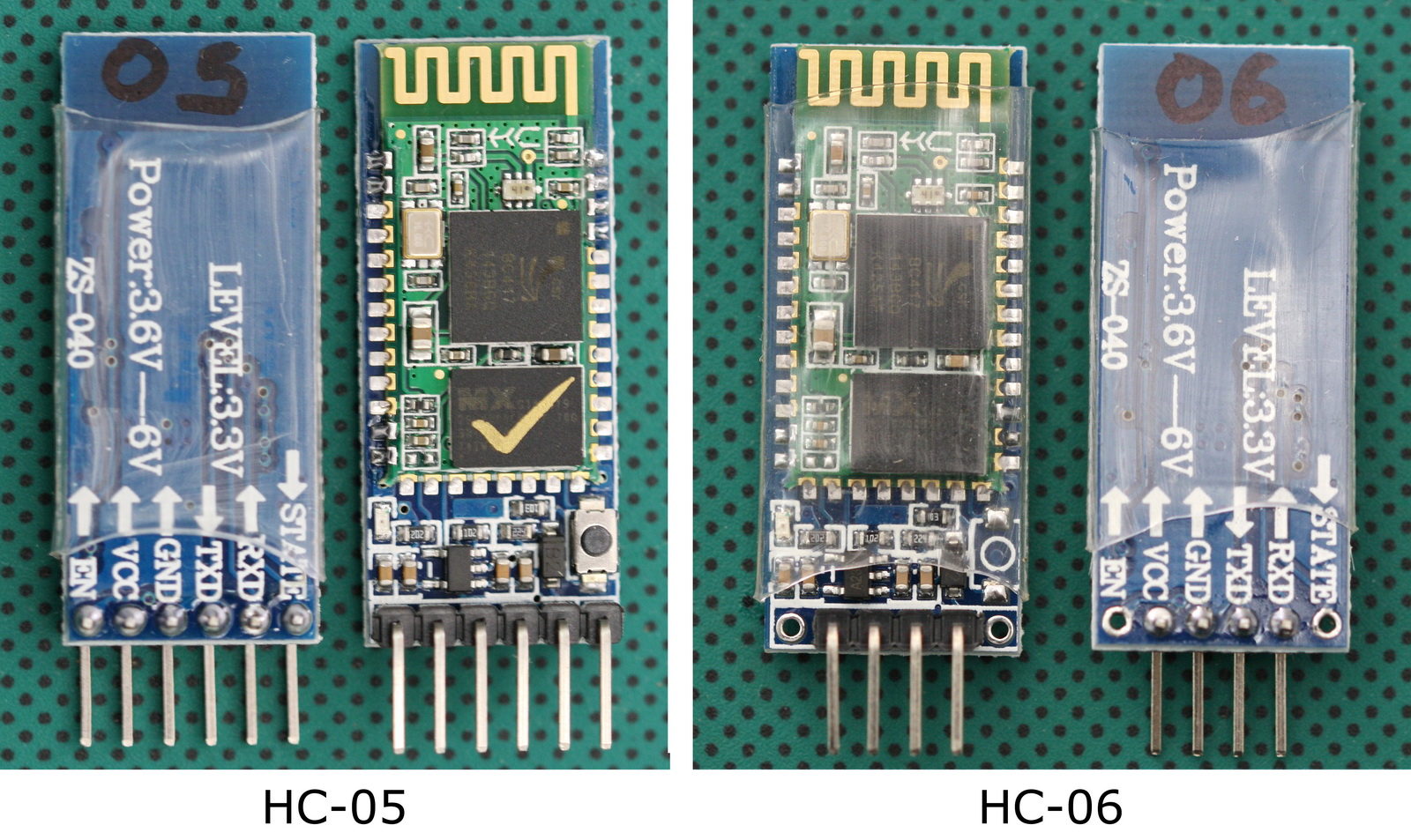
I have noticed that many other circuit boards such as PL2303HX (USB to TTL) are also shrink-wrapped. In fact, these wrappers are very thick. They may be about 0.5 mm in thickness. In the case of HC boards, the wrappers did not cover the antenna areas.
Did they use some sort of conductive wrapper to shield the circuits? -- Toytoy (talk) 15:13, 7 August 2016 (UTC)
- Looks like heat-shrink tubing to me - probably so your don't short out the board when you touch it. WegianWarrior (talk) 15:31, 7 August 2016 (UTC)
- I do not believe it's "shielding", as in RF shielding, I think it's is just cheap physical protection from damage, shortage and static. I think the fact the antenna is sticking out is due just to the fact that the protection is more for the "chips" than anything else hence BOTH ends are not covered precisely, and the antenna just happens to be on one end.. Would the plastic attenuate the signal? I'm actually not sure about that one, intuitively I'd say, probably not much if at all, but for bluetooth where the range is not large to begin with, any attenuation is undesirable. Vespine (talk) 00:56, 8 August 2016 (UTC)
- The antenna is not always outside the shrink wrap. It depends on the type of wrap used. I've seen some that are closed on the antenna end, completely encasing the board - even overlapping the pins a bit. The purpose is simply to keep people from putting it too close to other devices and shorting things out. 209.149.113.4 (talk) 19:30, 8 August 2016 (UTC)
- It's not really "shorting" things out, it's that at these UHF frequencies even a close spacing is a significant coupling - it doesn't need a galvanic contact. Andy Dingley (talk) 22:49, 9 August 2016 (UTC)
- The antenna is not always outside the shrink wrap. It depends on the type of wrap used. I've seen some that are closed on the antenna end, completely encasing the board - even overlapping the pins a bit. The purpose is simply to keep people from putting it too close to other devices and shorting things out. 209.149.113.4 (talk) 19:30, 8 August 2016 (UTC)