


Vitis mustangensis
| Mustang grape | |
|---|---|
 | |
Scientific classification  | |
| Kingdom: | Plantae |
| Clade: | Tracheophytes |
| Clade: | Angiosperms |
| Clade: | Eudicots |
| Clade: | Rosids |
| Order: | Vitales |
| Family: | Vitaceae |
| Genus: | Vitis |
| Species: | V. mustangensis |
| Binomial name | |
| Vitis mustangensis | |
| Synonyms[1] | |

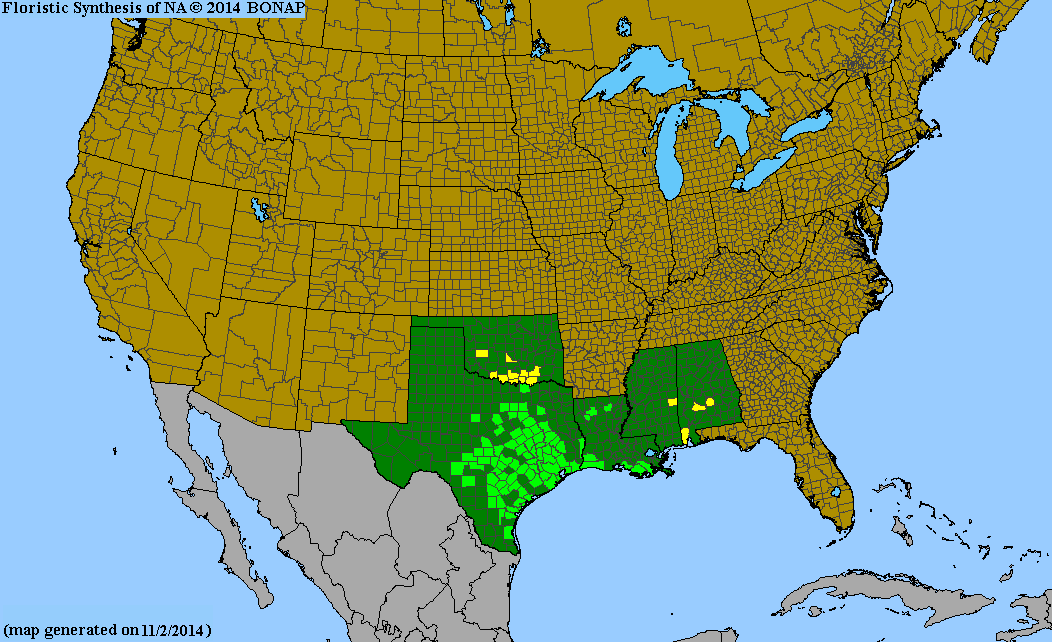
Vitis mustangensis, commonly known as the mustang grape, is a species of grape that is native to the southern United States. Its range includes parts of Mississippi, Alabama, Louisiana, Texas, and Oklahoma.[1][2]
Description
[edit]This woody species produces small clusters of hard green fruit that ripen into soft 3⁄4-inch (2 cm) dark purple berries between July –September.
They have a thick outer layer of flesh and on average contain four heart-shaped seeds. This variety of grape is recognized by the leaves that have a white velvet-like underside and lobed, cordate shape. These vines often cover trees, shrubs, fences and other objects that it grows near.[3]
V. mustangensis is dioecious, with only female vines bearing fruit.[4]
Culinary use
[edit]The fruit can be potentially irritating to the skin when handled, and are mildly unpleasant to eat raw because of bitterness and a high acidity content, however consuming the sweet inner flesh apart from the skins is common.
This grape has a list of culinary use as jelly, pie-filling, wine and grape juice, all of which are typically processed with heat and sweetened with sugar. [4]
Mustang grapes have been used to make mustang wine since before the Civil War.[5]
The fruit and leaves of Mustang Grapes may also be used to dye wool.[6]
References
[edit]- 1 2 "Vitis mustangensis". Germplasm Resources Information Network. Agricultural Research Service, United States Department of Agriculture. Retrieved 2010-12-07.
- ↑ "Floristic Synthesis of NA. Biota of North America Program 2014 county distribution map" (png). bonap.net. BONAP. 2004-02-11. Retrieved 2023-05-10.
- ↑ Lynch, Daniel. Native and Naturalized Woody Plants of Austin and the Hill Country. Saint Edward's University, 1981, p. 95.
- 1 2 "Wild Harvest: Texas' Bounty of Native Fruits|| TPW magazine|August/September 2013". tpwmagazine.com. Retrieved 2019-03-06.
- ↑ C. Allan Jones, Texas Roots: Agriculture and Rural Life Before the Civil War, College Station, Texas: Texas A&M University Press, 2005, pp. 148-149
- ↑ Tull, Delena. Edible and Useful Plants of Texas and the Southwest: A Practical Guide. University of Texas Press, 1987, pp. 206-208.
External links
[edit] Media related to Vitis mustangensis at Wikimedia Commons
 Data related to Vitis mustangensis at Wikispecies
- Aggie-horticulture.edu, Texas Native Shrubs — Vitis mustangensis (Mustang Grape)
- Natives of Texas.com: Mustang Grape (Vitis mustangensis)
- UTexas.edu: Image archive of Vitis mustangensis (Mustang Grape)
- Flora of North America: Vitis mustangensis
- Plants of the World Online: Vitis mustangensis


 | This Vitaceae-related article is a stub. You can help Wikipedia by adding missing information. |