Trailing cone

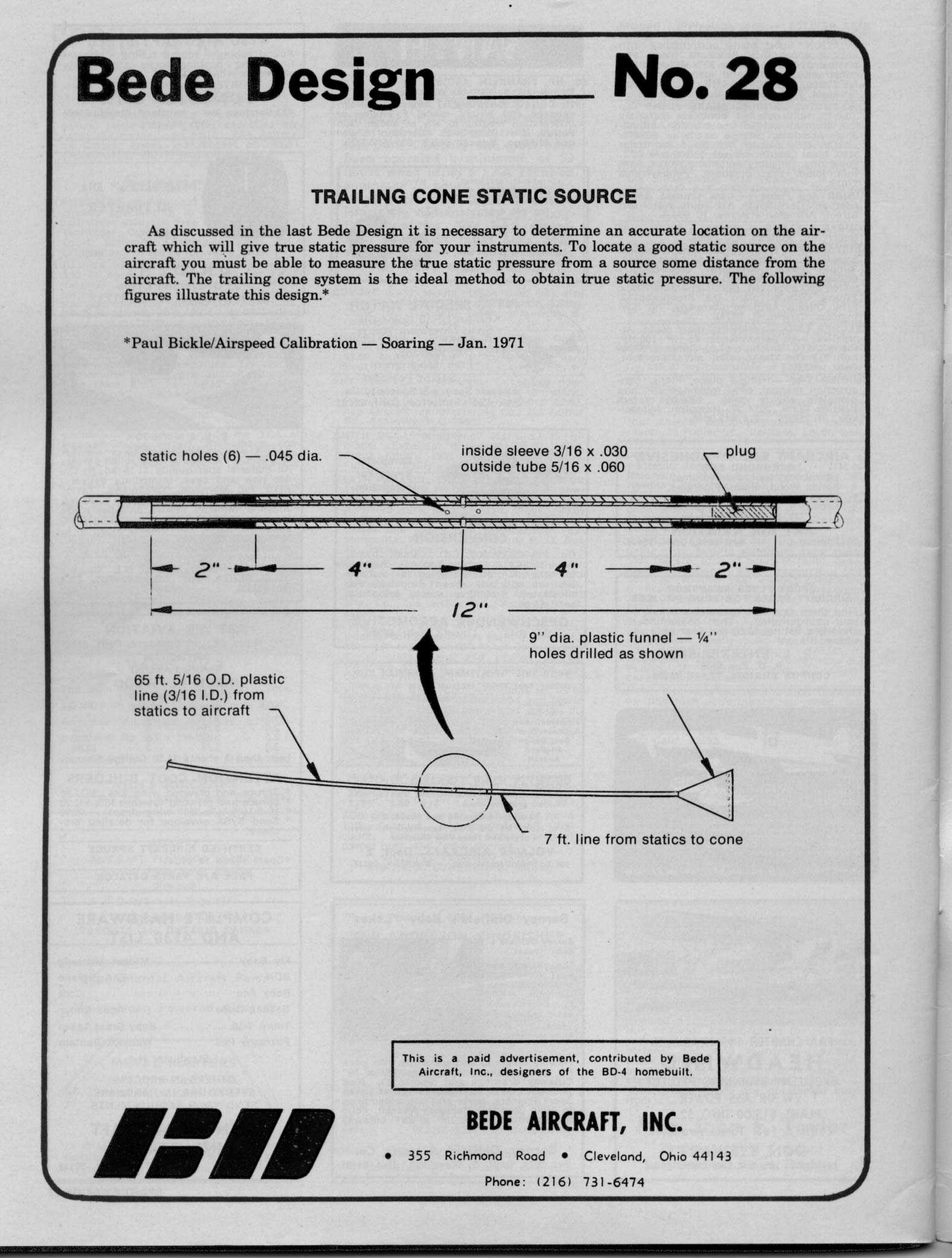
A trailing cone (also a trailing static cone or, incorrectly, a trailing wire) is an aviation calibration tool first developed and tested in the 1950s and 1960s as a simple means of determining or calibrating the static pressure (altitude reporting) of an aircraft's pitot-static system.[1] It does this by giving an accurate measurement of the ambient atmospheric pressure (static pressure) well clear of the aircraft's fuselage.[2] The trailing cone system typically trails at least one fuselage length behind the aircraft via a high-strength cable containing a tube or attached to a tube to cone or similar stabilizing device at the end. Static pressure is measured forward of the cone by several static ports.[3] The cone stabilizes and aligns the ports relative to the freestream airflow.[4]
Other precision static pressure measurement methods in test flight
[edit]As stated in FAA Advisory Circular AC 91-85A:
- Precision tracking radar in conjunction with pressure calibration of atmosphere at test altitude
- Chase aircraft
- Any other method acceptable to the approving authority
See also
[edit]References
[edit]External links
[edit]
- Guidance Material on the Approval of Operators/Aircraft for RVSM Operations
- Trailing Cones for RVSM Certification and Flight Test
- NASA TM-104316
- SpaceAge Control - Trailing Cones for RVSM Certification and Flight Test
- Trailing Cone Static Source (Bede Design No. 28)
- Position Error Calibration of a Pressure Survey Aircraft Using a Trailing Cone
- 100101 Trailing Cone
- B-21 Raider trailing cone