


Talk:Levantine Arabic
Add topic| This is the talk page for discussing Levantine Arabic and anything related to its purposes and tasks. This is not a forum for general discussion of the subject of the article. |
Article policies
|
| Find sources: Google (books · news · scholar · free images · WP refs) · FENS · JSTOR · TWL |
Archives: 1, 2, 3Auto-archiving period: 6 months  |
 | Levantine Arabic is a featured article; it (or a previous version of it) has been identified as one of the best articles produced by the Wikipedia community. Even so, if you can update or improve it, please do so. | ||||||||||||||||||||||||
 | This article appeared on Wikipedia's Main Page as Today's featured article on May 31, 2022. | ||||||||||||||||||||||||
| |||||||||||||||||||||||||


.svg)


.svg)
,_early_1900s,_Central_Africa,_Democratic_Republic_of_the_Congo,_Pende_people,_wood,_fiber_-_Cleveland_Museum_of_Art_-_DSC08700.JPG)

Subtitled video: Reviewing Levantine text
[edit]I made Levantine Arabic subtitles for the video on this page. I barely ever read Levantine Arabic, so I'd love if someone could review the spelling and grammar of the subtitles:
1 00:00:02,826 --> 00:00:09,760 وهل شعب ل كتير بيشبه اللبنانية، يعني، بيشبه لبنان بمحبته للحياة، بالجمال.
2 00:00:09,840 --> 00:00:13,120 إنتو ناس حلوين، وهيدا الشي ما من شوفو دايمًا.
3 00:00:14,076 --> 00:00:19,480 المغاربة والمغرب كتير بيشبه لبنان بشكل الحياة إلّي هوّ في،
4 00:00:19,560 --> 00:00:22,160 فأنا حسي حالي ببيتي، وهيدا الشي بيفرّحني.
5 00:00:22,438 --> 00:00:28,200 أول شي، نوع الموسيئى المغربيّة هيّ أصلًا بتعجبني، والفَنّانين كلن
6 00:00:28,280 --> 00:00:32,240 وسعي الفنانين المغاربي إنون يروحو ع العالامية.
7 00:00:32,899 --> 00:00:34,960 وإنتو ئادرين توصلو للعالمية.
8 00:00:35,958 --> 00:00:41,800 وهيدا التعاون الئريب رح تحبو، إن ٱللَّٰه راد، بين أنا والفنان المغربي.
9 00:00:41,880 --> 00:00:42,840 إنتِ محتالة.
10 00:00:42,920 --> 00:00:46,720 بنتبه ع بشرتي كتير. هيدا الأهم. لأنُ إذا كانِت بشرتك حلوة،
11 00:00:46,800 --> 00:00:49,960 [بالإنكليزي] شو ما بطحطي ع بشرتك بلَمِع.
12 00:00:50,041 --> 00:00:51,200 [باللبنان] إذا لأ، ما بِبَيِّن.
13 00:00:54,160 --> 00:00:59,480 "شتركو"
User:FunLater 22:06, 4 September 2023 (UTC)
- Hi @FunLater, thanks a lot for taking this initiative! I've just asked a few native speakers I know to review it and I'll let you know. a455bcd9 (Antoine) (talk) 07:34, 5 September 2023 (UTC)
- Thank you so much. FunLater (talk) 12:40, 5 September 2023 (UTC)
- Hi @FunLater, I was told:
- "there are a few spelling choices that, while it’s not possible to say they’re incorrect as there is no standard spelling system, nonetheless I would recommend a different spelling
- line 2, I’d spell it منشوفو as one word rather than two (من شوفو)
- line 3 last word I’d spell it as فيه because here it means “in it”
- line 4 second word I’d spell it حاسة
- line 5 personally I’d spell it الموسيقى just to be consistent with MSA and other dialects
- line 6 last word I’d spell it العالمية
- line 7 I’d spell it قادرين again for the same reason as in line 5
- there are a few spelling choices that, while it’s not possible to say they’re incorrect as there is no standard spelling system, nonetheless I would recommend a different spelling
- oh and line 8 I’d spell it القريب
- a lot of my spelling choices are “classicizing” I do realize, but it also helps facilitate cross-dialect recognition as well"
- So I assume it's a matter of personal preferences and you can keep your subtitles or choose the above suggestions. a455bcd9 (Antoine) (talk) 08:07, 6 September 2023 (UTC)
- Thank you, both of you. I applied all changes and added the subtitles in the Arabic slot, since there isn't one for Levantine.
- Make sure to thank them and let them know that they can edit the subtitles here if they want to change anything: https://commons.wikimedia.org/wiki/TimedText:Maya_Diab_interview_in_Morocco_-_Oct_28,_2017.webm.ar.srt FunLater (talk) 13:33, 6 September 2023 (UTC)
- Thanks a lot! I think the language code should be 'apc' instead of 'ar' if possible. a455bcd9 (Antoine) (talk) 14:32, 6 September 2023 (UTC)
- The usual dropdown for selecting languages doesn't show Levantine. I tried manually putting the code as apc, but it's not showing in the video player, so I asked at Commons' helpdesk. FunLater (talk) 19:20, 6 September 2023 (UTC)
- @FunLater Thanks! a455bcd9 (Antoine) (talk) 19:43, 6 September 2023 (UTC)
- A little late, but the issue is fixed now. FunLater (talk) 14:26, 20 June 2024 (UTC)
- @FunLater Thanks! a455bcd9 (Antoine) (talk) 19:43, 6 September 2023 (UTC)
- The usual dropdown for selecting languages doesn't show Levantine. I tried manually putting the code as apc, but it's not showing in the video player, so I asked at Commons' helpdesk. FunLater (talk) 19:20, 6 September 2023 (UTC)
- Thanks a lot! I think the language code should be 'apc' instead of 'ar' if possible. a455bcd9 (Antoine) (talk) 14:32, 6 September 2023 (UTC)
- Thank you so much. FunLater (talk) 12:40, 5 September 2023 (UTC)
Recent reversion of change from "Arabian" to "North Arabian"
[edit]@A455bcd9: While the source only says "Arabian", other sources referencing the same group refer to it as "North Arabian" to avoid ambiguity with Old and Modern South Arabian. Listing it as merely "Arabian" only creates ambiguity. Arctic Circle System (talk) 21:43, 14 March 2024 (UTC)
- The source says Arabian, so we write Arabian. Unless we have a better reliable source for the whole classification tree? (and not just for "Arabian", we don't do a patchwork of RS). a455bcd9 (Antoine) (talk) 08:26, 18 March 2024 (UTC)
Significance of knowing the Arabic script
[edit]I think the below statement in the article about Levantine speakers in Turkey is problematic because it implies that if one speaks Levantine Arabic, then it is expected that they would know the Arabic script. This expectation contradicts that this language is mostly a spoken language. E.g., if I found a source that says they don't know the Hebrew script, could we have added it to the article? It doesn't matter if the source says this, the sources, even if reliable, may propagate the existing biases. Also if you click on the link given for "illiterate", you can see that it does not describe the situation of Levantine speakers in Turkey. They use Levantine Arabic as their conversational language, and mostly Turkish as their professional/academic language. Labeling this as a form of illiteracy is misleading. Since this is a featured article, even if this is a small matter, I think it would be helpful to have a discussion. @FunLater, @Nardog, @Buidhe: curious about your thoughts.
In Turkey, article 42.9 of the Constitution prohibits languages other than Turkish from being taught as a mother tongue and almost all indigenous Arabic speakers are illiterate in the Arabic script unless they have learned it for religious purposes.[1]
TheJoyfulTentmaker (talk) 16:11, 20 July 2024 (UTC)
References
- ↑ Smith-Kocamahhul, Joan (2011). "Turkey". In Edzard, Lutz; de Jong, Rudolf (eds.). Encyclopedia of Arabic Language and Linguistics. Brill. doi:10.1163/1570-6699_eall_EALL_COM_0357.
- It specifically says "illiterate in the Arabic script". Some people are literate in one language but illiterate in others. Nothing in the literacy article contradicts this. (t · c) buidhe 16:46, 20 July 2024 (UTC)
- I agree with buidhe. As I said in my revert, the source mentions this point. I think it's worth mentioning as it distinguishes the practice in Turkey from other Levantine countries (Lebanon, Syria, Jordan, and Israel), where, even though Levantine Arabic isn't taught, and sometimes the medium of education isn't even MSA, students still learn MSA and are therefore literate in the Arabic script. (It also explains why Levantine speakers in Turkey [other than Syrians] exclusively use the Latin-based Turkish alphabet, a point mentioned in "Orthography and writing systems".) a455bcd9 (Antoine) (talk) 17:00, 20 July 2024 (UTC)
- Thank you both for responding to my invitation. I see your points, but I have to say I still don't think a) the hyperlinked article on functional illiteracy is describing the situation of non-Syrian Levantine speakers in Turkey accurately, and b) inclusion of this information (even if it is true) in the education section fits well with the overall narrative of the article that this language is mainly a spoken language; i.e. it does not have strong ties with one writing system or the other. However, I'll respect the decision if the consensus is in another direction. TheJoyfulTentmaker (talk) 18:12, 20 July 2024 (UTC)
- By the way, I just checked the source and the discussion there is about Arabic in general, not for Levantine Arabic specifically. This remark could have been appropriate for a section in the Arabic article, but not for the Levantine Arabic article, due to it being mostly a spoken-only language everywhere. And I don't see in the source that it is suggested that this situation is a result of article 42.9 of the Turkish constitution. It sounds to be a subjective point of view. Here is what the cited source says about Turkey: "Almost all Arabic speakers are illiterate in Arabic, unless they have learned Modern Standard Arabic or Classical Arabic for religious purposes." Sorry if I'm being too nit-picky, but this is a featured article, after all. :) My point, overall, is that if we are discussing a spoken-only language then everyone is equally literate or illiterate in it. MSA is a different language. TheJoyfulTentmaker (talk) 01:36, 21 July 2024 (UTC)
My point, overall, is that if we are discussing a spoken-only language then everyone is equally literate or illiterate in it.
: absolute non-sense. We have a whole section Levantine_Arabic#Orthography_and_writing_systems.And I don't see in the source that it is suggested that this situation is a result of article 42.9 of the Turkish constitution.
: From the source: "Furthermore, the new Constitution prohibited languages other than Turkish being taught as a mother tongue (Art. 42.9). Thus, Arabic could be taught as a foreign language but not as a mother tongue, not even to those for whom it was the latter. [...] Almost all Arabic speakers are illiterate in Arabic, unless they have learned Modern Standard Arabic or Classical Arabic for religious purposes. Usually, this only applies to men in leadership positions. Some learn Modern Standard Arabic in order to study in an Arabic-speaking country." in the section "3. Arabic as a minority language". (this is a major difference with the Greek, Armenian, Jewish, and Assyrian minorities who have minority schools teaching their language) a455bcd9 (Antoine) (talk) 07:35, 21 July 2024 (UTC)- Other sources (not necessarily reliable) showing that the illiteracy in the Arabic script of Levantine speakers in Hatay is deemed relevant by academics:
- A genre of oral poetry, the Fann, in the Alawi community in the Hatay (Antioch) province of Turkey: "Almost all Arabs in Hatay are illiterate in Arabic."
- The Arabic Dialect of the Jews of Iskenderun: "The usage of lam by a speaker in the Turkish province of Hatay, where it was always strictly forbidden to teach Arabic and who is therefore illiterate in Arabic is a strong support for Rosenbaum's opinion"
- DABKE FOLK DANCE WITH LYRICS AND MUSIC IN HATAY ARAB ALAWITE CULTURE: "The sources associate the Arabic language used by Arab Alawites living in Syria and Lebanon with the Cebel-i Nusayriye dialect used in Syria. In Hatay, the local dialect Arabic language is spoken by Arab Alawites, Arab Sunnis, Arab Christians and Arab Jews. Almost most of these Arabic speaking communities in Hatay are illiterate in Arabic. A few people who are raised, educated or served in religious settings can only read or write Classical Arabic with limited grammatical knowledge. Arabic spoken in Hatay continues its existence as a native spoken language in a local dialect style. As stated in the sources, a decreasing change occurred in the Arabic used and spoken in Hatay due to the language change process from Arabic to Turkish. In 1939, after the Hatay State decided to join the motherland, Arabic-speaking communities in Hatay used Turkish officially and daily, and Arabic on the street daily by the family or local people. In addition, although the Arabic spoken in Hatay exists linguistically, it is difficult to find any literary work written in this language on the oral tradition (Ağbaht, 2018: 183-184; Jastrow, 2015: 64-65). Since the local Arabic spoken by the Arab communities in Hatay is not used as a language of reading and writing, it is an oral language that is less used in the daily speaking environment."
- a455bcd9 (Antoine) (talk) 07:52, 21 July 2024 (UTC)
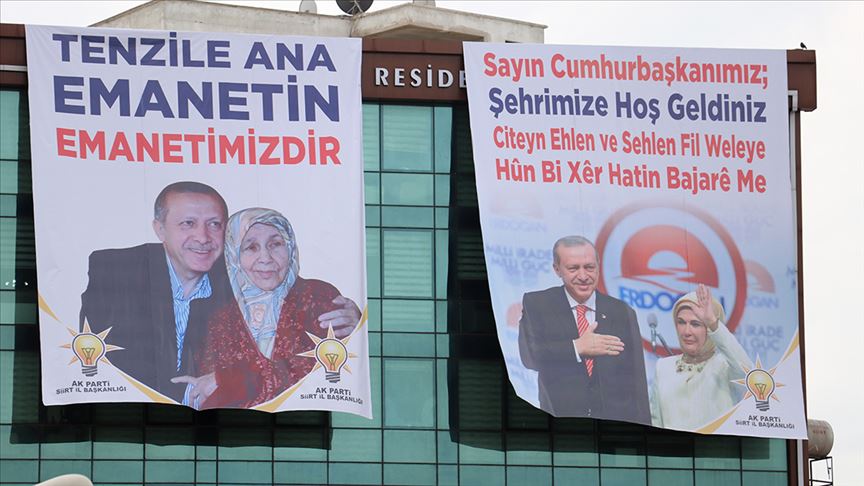
- By the way, I wish we had a free version of this image with Arabic written in the Turkish alphabet (source) on a billboard for RTE. a455bcd9 (Antoine) (talk) 07:55, 21 July 2024 (UTC)
- Other sources (not necessarily reliable) showing that the illiteracy in the Arabic script of Levantine speakers in Hatay is deemed relevant by academics:
- By the way, I just checked the source and the discussion there is about Arabic in general, not for Levantine Arabic specifically. This remark could have been appropriate for a section in the Arabic article, but not for the Levantine Arabic article, due to it being mostly a spoken-only language everywhere. And I don't see in the source that it is suggested that this situation is a result of article 42.9 of the Turkish constitution. It sounds to be a subjective point of view. Here is what the cited source says about Turkey: "Almost all Arabic speakers are illiterate in Arabic, unless they have learned Modern Standard Arabic or Classical Arabic for religious purposes." Sorry if I'm being too nit-picky, but this is a featured article, after all. :) My point, overall, is that if we are discussing a spoken-only language then everyone is equally literate or illiterate in it. MSA is a different language. TheJoyfulTentmaker (talk) 01:36, 21 July 2024 (UTC)
Merge both North Levantine and South Levantine Arabic into this article
[edit]- The following discussion is closed. Please do not modify it. Subsequent comments should be made in a new section. A summary of the conclusions reached follows.
- The result of this discussion was no consensus. Open for two weeks with no comments other than the original filer of the ISO code proposal. Surayeproject3 (talk) 00:18, 13 June 2025 (UTC)
The merge proposal...
An ISO code proposal in 2023 deprecated both North Levantine Arabic and South Levantine Arabic into the ISO for standard Levantine Arabic due to both high mutual intelligibility and because of a lack of classification of Levantine varieties into "North" and "South". Noting this, as well as the two articles basically only discussing their former ISO codes and how they were defined by Ethnologue, I think it makes more sense to create a new section in this article about them or have them discussed in an already existing section. I believe that redirects from these two to this article can occur to the section where the information is included if a merge is decided, and this is more beneficial than having two separate articles for them. Surayeproject3 (talk) 20:30, 29 May 2025 (UTC)
and discussion...
- I'm the author of the ISO merge request ("Primary Person submitting request" in the PDF). North and South Levantine were an invention of Ethnologue not found anywhere else in the literature (which was a reason for the merge) so there's no point mentioning them here and their old pages (mentioning the arbitrary territorial division of the time) can remain. a455bcd9 (Antoine) (talk) 05:30, 30 May 2025 (UTC)
Edit request 12 June 2026
[edit] | This edit request has been answered. Set the |answered= parameter to no to reactivate your request. |
Description of suggested change: I feel like this is a typo, especially considering the context.
Diff:
| − | Palestinian (Arabic)<code>{{[[Template:Efn|efn]]|According to the authors: "we decided to adopt a flexible approach and use a form of transcription that reflects the spelling used by native Arabic speakers when they write brief colloquial texts on computer, | + | Palestinian (Arabic)<code>{{[[Template:Efn|efn]]|According to the authors: "we decided to adopt a flexible approach and use a form of transcription that reflects the spelling used by native Arabic speakers when they write brief colloquial texts on computer, tablet or smartphone."}}</code> |
MonAx (talk) 07:07, 12 June 2026 (UTC)
 Done. Nehme1499 (talk) 08:59, 12 June 2026 (UTC)
- Wikipedia featured articles
- Featured articles that have appeared on the main page
- Featured articles that have appeared on the main page once
- Old requests for peer review
- Wikipedia Did you know articles that are featured articles
- FA-Class level-5 vital articles
- Wikipedia level-5 vital articles in Society and social sciences
- FA-Class vital articles in Society and social sciences
- FA-Class language articles
- High-importance language articles
- WikiProject Languages articles
- FA-Class Lebanon articles
- Top-importance Lebanon articles
- WikiProject Lebanon articles
- FA-Class Syria articles
- Top-importance Syria articles
- WikiProject Syria articles
- FA-Class Turkey articles
- Low-importance Turkey articles
- All WikiProject Turkey pages
- FA-Class Palestine-related articles
- Top-importance Palestine-related articles
- WikiProject Palestine articles
- FA-Class Jordan articles
- Top-importance Jordan articles
- WikiProject Jordan articles
- FA-Class Israel-related articles
- Top-importance Israel-related articles
- WikiProject Israel articles
- FA-Class Arab world articles
- High-importance Arab world articles
- WikiProject Arab world articles
- FA-Class Asia articles
- Mid-importance Asia articles
- Articles created or improved during WikiProject Asia's 10,000 Challenge
- WikiProject Asia articles
- FA-Class Anthropology articles
- Top-importance Anthropology articles
- FA-Class Oral tradition articles
- Unknown-importance Oral tradition articles
- Oral tradition taskforce articles
- Wikipedia pages with to-do lists