


Portal:South East England

The South East England Portal

South East England is one of the nine official regions of England that are in the top level category for statistical purposes. It consists of the nine counties of Berkshire, Buckinghamshire, East Sussex, Hampshire, the Isle of Wight, Kent, Oxfordshire, Surrey and West Sussex. South East England is the third-largest region of England, with a land area of 19,072 square kilometres (7,364 sq mi), and is also the most populous with a total population of 9,642,942 in 2024.
South East England contains eight legally chartered cities: Brighton and Hove, Canterbury, Chichester, Milton Keynes, Oxford, Portsmouth, Southampton and Winchester. Officially it does not include London, which is a separate region. The geographical term for "South East England" may differ from the official definition of the region; for example, London, Bedfordshire, Hertfordshire and Essex are sometimes colloquially referred to as being in the south east of England. This article only considers the South East as being the official statistical region.
In medieval times, South East England included much of the Kingdom of Wessex, which was the precursor to the modern state of England. Winchester was the capital of England after unification of the various states, including the kingdoms of Kent, Sussex and Mercia. Winchester stopped being the administrative capital of England some time in the 13th century as its influence waned while the City of London dominated commerce. The last monarch to be crowned at Winchester was Richard II in 1377, although the last monarch to be crowned by the Bishop of Winchester was Queen Mary I in 1553.
Today, the region's close proximity to London has led to South East England becoming a prosperous economic hub with the largest economy of any region in the UK, after London. The region is home to Gatwick Airport (the UK's second busiest airport). The coastline along the English Channel provides numerous ferry crossings to mainland Europe. South East England is also known for its countryside, which includes two national parks: the New Forest and the South Downs, as well as the North Downs, the Chiltern Hills and part of the Cotswolds. The River Thames flows through the region and its basin is known as the Thames Valley.
It is also the location of a number of internationally known places of interest, such as HMS Victory in Portsmouth, Cliveden in Buckinghamshire, Thorpe Park and RHS Wisley in Surrey, Blenheim Palace in Oxfordshire, Windsor Castle in Berkshire, Leeds Castle, the White Cliffs of Dover and Canterbury Cathedral in Kent, Brighton Palace Pier, and Hammerwood Park in East Sussex, and Wakehurst Place in West Sussex. The region has many universities; the University of Oxford is the oldest in the English-speaking world, and ranked among the best in the world.
South East England is host to various sporting events, including the annual Henley Royal Regatta, Royal Ascot and The Derby, and sporting venues include Wentworth Golf Club and Brands Hatch. Some of the events of the 2012 Summer Olympics were held in the south east, including the rowing at Eton Dorney and part of the cycling road race in the Surrey Hills. (Full article...)
Selected article

High Wycombe, often referred to as Wycombe (/ˈwɪkəm/ WIK-əm), is a market town in Buckinghamshire, England. Lying in the valley of the River Wye surrounded by the Chiltern Hills, it is 29 miles (47 km) west-northwest of Charing Cross in London, 13 miles (21 km) south-southeast of Aylesbury, 23 miles (37 km) southeast of Oxford, 15 miles (24 km) northeast of Reading and 8 miles (13 km) north of Maidenhead.
According to the 2021 United Kingdom census, High Wycombe's built up area has a population of 127,856, making it the largest town in the ceremonial county of Buckinghamshire. The High Wycombe Urban Area, the conurbation of which the town is the largest component, has a population of 140,684. Part of the urban area constitutes the civil parish of Chepping Wycombe, which had a population of 14,455 according to the 2001 census – this parish represents that part of the ancient parish of Chepping Wycombe which was outside the former municipal borough of Wycombe. There has been a market held in the High Street since at least the Middle Ages. The market is currently held on Tuesday, Friday and Saturday. (Full article...)
Selected pictures
-
 Virginia Water Lake on the southern edge of Windsor Great Park (from Portal:Berkshire/Selected pictures)
 -
 Twyford Post Office and stores, between Winchester and Southampton (from Portal:Hampshire/Selected pictures)
 -
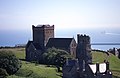 Credit: Marco SinibaldiAround AD 50 the Romans built a lighthouse which still stands to its full height in the grounds of Dover Castle. (from Portal:Kent/Selected pictures)
 -
![Image 4 Credit: Michael Wilmore The Kent & East Sussex Railway was opened by Colonel H.F. Stephens, the railway engineer, in 1900. At its fullest extent, it ran nearly 22 miles[35km] from Robertsbridge on the Tonbridge to Hastings main line to Headcorn on the main line between Tonbridge and Ashford, Kent. More about the Kent & East Sussex Railway... (from Portal:Kent/Selected pictures)](https://upload.wikimedia.org/wikipedia/commons/thumb/2/2f/KentAndEastSussexRailway%28MichaelWilmore%29Oct2005.jpg/120px-KentAndEastSussexRailway%28MichaelWilmore%29Oct2005.jpg) Credit: Michael WilmoreThe Kent & East Sussex Railway was opened by Colonel H.F. Stephens, the railway engineer, in 1900. At its fullest extent, it ran nearly 22 miles[35km] from Robertsbridge on the Tonbridge to Hastings main line to Headcorn on the main line between Tonbridge and Ashford, Kent. (from Portal:Kent/Selected pictures)
Credit: Michael WilmoreThe Kent & East Sussex Railway was opened by Colonel H.F. Stephens, the railway engineer, in 1900. At its fullest extent, it ran nearly 22 miles[35km] from Robertsbridge on the Tonbridge to Hastings main line to Headcorn on the main line between Tonbridge and Ashford, Kent. (from Portal:Kent/Selected pictures) -

-
 Credit: Michael HaslamHowletts Wild Animal Park was set up as a private zoo in 1958 by John Aspinall in Canterbury, Kent. (from Portal:Kent/Selected pictures)
 -
 Walton Bridge built in the 2010s is a landmark of the northerly Spelthorne and Elmbridge boroughs (from Portal:Surrey/Selected pictures)
 -
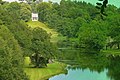 Painshill Park in Cobham has follies on natural, but landscaped slopes by part of the Mole disguised as ornamental lakes and the Great Cedar thought to be the largest Cedar of Lebanon in Europe. In the mid-north of the county. (from Portal:Surrey/Selected pictures)
 -
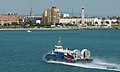 Hovercraft passing the mixed architecture, public gardens and shingle beach at Southsea, Portsmouth (from Portal:Hampshire/Selected pictures)
 -
 Remains of the undercroft of the lay brothers' refectory at Waverley Abbey, near Farnham, main town of the Borough of Waverley (from Portal:Surrey/Selected pictures)
 -
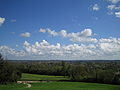 A view of Newbury, Berkshire and its surroundings (from Portal:Berkshire/Selected pictures)
 -

-
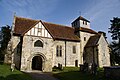 The church at Breamore in the west of the county, north of the New Forest (from Portal:Hampshire/Selected pictures)
 -
-
 Credit: Hans MusilCanterbury Cathedral is one of the oldest and most famous Christian structures in England and forms part of a World Heritage Site. (from Portal:Kent/Selected pictures)
 -
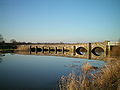 Credit: CharlesdrakewThe bridge over the River Arun at Greatham. (from Portal:West Sussex/Selected pictures)
 -
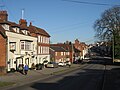 View looking east along West Street, New Alresford (from Portal:Hampshire/Selected pictures)
 -
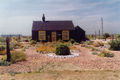 Credit: Lancevortex (from Portal:Kent/Selected pictures)
 -
 Epsom Downs, a racecourse which hosts The Derby annually. One of four in the county. (from Portal:Surrey/Selected pictures)
 -
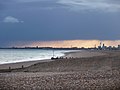 Hayling Island's mainly shingle beach with Portsmouth's Spinnaker Tower beyond (from Portal:Hampshire/Selected pictures)
 -
 Autumn at Denbies Vineyard looking across the Mole Gap to Box Hill, the steepest slopes of the North Downs (from Portal:Surrey/Selected pictures)
 -
 Credit: O1iveSt Mary in Castro (or St Mary de Castro) is the church at Dover Castle.(from Portal:Kent/Selected pictures)
 -
 Credit: Tony HobbsScotney Castle is a country house with gardens in the valley of the River Bewl in Kent, England. (from Portal:Kent/Selected pictures)
 -
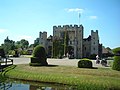 Credit: James ArmitageHever Castle, in Kent, England (in the village of Hever), was the seat of the Boleyn family, later bestowed to Anne of Cleves following her divorce from King Henry VIII. (from Portal:Kent/Selected pictures)
 -

-
 McLaren Technology Centre, Woking (from Portal:Surrey/Selected pictures)
 -

-
 Credit: Michael RoweDover Castle is situated at Dover, Kent and has been described as the "Key to England" due to its defensive significance throughout history. (from Portal:Kent/Selected pictures)
 -

-
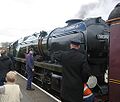 A train on the Watercress Line (from Portal:Hampshire/Selected pictures)
 -
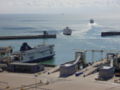 Credit: O1iveDover is a major channel port in the English county of Kent (from Portal:Kent/Selected pictures)
 -

-
 The seafront and beach at Lee-on-the-Solent (from Portal:Hampshire/Selected pictures)
 -

-
 Reading Festival in 2007 (from Portal:Berkshire/Selected pictures)
 -
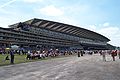 The grandstand at Ascot Racecourse (from Portal:Berkshire/Selected pictures)
 -
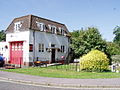 West End Fire Station, near Southampton, designed by Herbert Collins (from Portal:Hampshire/Selected pictures)
 -

-
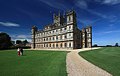 Highclere Castle in the far north of Hampshire, a large country house in the Jacobethan style by the architect Charles Barry, with a large park designed by Capability Brown, used as the set for Downton Abbey. (from Portal:Hampshire/Selected pictures)
 -
 Paragliders over the Litlington White Horse (from Portal:East Sussex/Selected pictures)
 -
 Panoramic view of Blenheim Palace (from Portal:Oxfordshire/Selected pictures)
 -
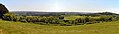 View of the Vale of Holmesdale and Winterfold Forest from Newlands Corner, near Clandon and Albury, east of Guildford (from Portal:Surrey/Selected pictures)
 -
 Credit: XtrememachineukThe Channel Tunnel is a 31 mile long rail tunnel beneath the English Channel connecting England to France. (from Portal:Kent/Selected pictures)
 -
 Mermaid Street in Rye showing typically steep slope and cobbled surface (from Portal:East Sussex/Selected pictures)
 -
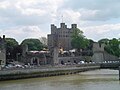 Credit: PireotisRochester is a large town in Kent, England, at the lowest bridging point of the River Medway about 30 miles (50 km) from London. (from Portal:Kent/Selected pictures)
 -

-

-
 The lower end of the Staines-upon-Thames reach of the Thames, showing typical trees of the next reach and Penton Hook Island, a small nature reserve. (from Portal:Surrey/Selected pictures)
 -
 The Radcliffe Camera in Oxford, as viewed from the tower of the Church of St Mary the Virgin. (from Portal:Oxfordshire/Selected pictures)
 -
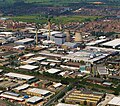 Slough Trading Estate plays a major part in making Slough an important business centre in South East England (from Portal:Berkshire/Selected pictures)


![Image 4 Credit: Michael Wilmore The Kent & East Sussex Railway was opened by Colonel H.F. Stephens, the railway engineer, in 1900. At its fullest extent, it ran nearly 22 miles[35km] from Robertsbridge on the Tonbridge to Hastings main line to Headcorn on the main line between Tonbridge and Ashford, Kent. More about the Kent & East Sussex Railway... (from Portal:Kent/Selected pictures)](/restyle/wiki/File:KentAndEastSussexRailway(MichaelWilmore)Oct2005.jpg)


Selected biography

Sir Jerome Horsey (c. 1550 – 1626), of Great Kimble, Buckinghamshire, was an English explorer, diplomat and politician in the 16th and 17th centuries.
He spent much time in Russia over the course of seventeen years, first arriving in 1573 and leaving in 1591. He got to know well many leading people at the Russian court. He first travelled to Moscow as an agent for the Russia Company, and later acted as an envoy of Tsar Ivan the Terrible to Queen Elizabeth and then from the English court under Queen Elizabeth to Ivan. After returning to England, Horsey served in the House of Commons, sitting on many committees including the Committee for Returns, Elections, and Privileges. Knighted in 1603, he wrote accounts of his time in Russia which have been published several times, and was the subject of two novels. (Full article...)
On This Day in South East England
31 July:
1978: Coldplay drummer Will Champion was born in Southampton
Categories

Related portals


WikiProjects

Topics

Associated Wikimedia
The following Wikimedia Foundation sister projects provide more on this subject:
-
 Commons
Free media repository -
 Wikidata
Free knowledge base -
 Wikiquote
Collection of quotations -
 Wikisource
Free-content library -
 Wikiversity
Free learning tools -
 Wikivoyage
Free travel guide -
 Wiktionary
Dictionary and thesaurus


