


Talk:Selim I
Add topic | This  level-4 vital article is rated B-class on Wikipedia's content assessment scale. level-4 vital article is rated B-class on Wikipedia's content assessment scale.It is of interest to the following WikiProjects: | |||||||||||||||||||||||||||||||||||||||||||
| ||||||||||||||||||||||||||||||||||||||||||||


 | A fact from this article was featured on Wikipedia's Main Page in the On this day section on September 22, 2019, September 22, 2021, and September 22, 2025. |
Treasury
[edit]What is this treasury that Selim filled? I can't find anymore information on it. Jarwulf (talk) 02:03, 3 February 2012 (UTC)
Untitled
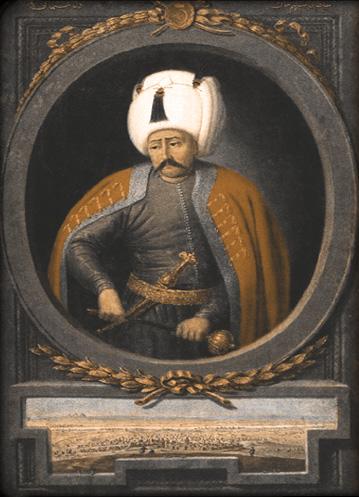
[edit]Hi. Some very notable contemporary Turkish historians (as I recall, Iskender Pala, I'll find out) say that this portrait on this webpage (as of Jan 5th, 2008) does actually belong to Sah Ismail, not Selim. 'Yavuz' means grim, not 'cruel'. I'll be back with some references. —Preceding unsigned comment added by 64.234.161.203 (talk) 23:35, 5 January 2008 (UTC) Reference (in Turkish): http://www.zaman.com.tr/yazar.do?yazino=623537 —Preceding unsigned comment added by 64.234.161.203 (talk) 23:37, 5 January 2008 (UTC)
- In fact 'Yavuz' is better translated as stern, not grim or brave.78.191.95.164 (talk) 22:12, 25 November 2008 (UTC)
sobriquet
[edit]As far as I know, as a Turk, Selim I had no sobriquet but "Yavuz" that never means cruel. I don't think that a man trying to protect his faith, his land, and his power against the opponents, the rioters, etc. can be more cruel than, for example, conquistadors like Pizarro "roasting", cutting the natives of the American continents into pieces.
I cannot speculate much on the meaning of "yavuz" during Selim's time, but it is known that it did not have the positive meaning it has today. Do not take my comment wrong, I am an avid fan of Yavuz, but this should not restrain us from stating this. --Fethi --.
Traditionally, English writers translated Yavuz Selim as "Selim the Grim" and while this is not particularly accurate, it's common enough to mention. "Stern" and "steadfast" are also used and I think "stern" is probably the closest. Translations in French and German wikipedia are all over the place too. It's a little like the question of how to translate the cognomen of Ivan IV of Russa: "Grozny Ivan" is traditionally Ivan the Terrible, but I'm told the Russian denotes awe as much as condemnation. — Preceding unsigned comment added by 108.2.5.179 (talk) 19:14, 11 December 2014 (UTC)
Qala'un Mosque
[edit]Selim I raided the Citadel of Cairo and carried of the marble dado from the walls of the great Qala'un Mosque to Istanbul. This may be a nice factoid to add to the article; I'm not adding it myself since I don't feel I can judge if it is notable enough. — mark ✎ 17:55, 15 Jun 2005 (UTC)
Rhodes
[edit]What is the source for his last campaign being against Rhodes? As far as I know, the destination is not known.Fethi 7 July 2005 21:58 (UTC)
- Yes he died during the preparations of the campaing. Turkish view defends that Selim I was planning to conquer the west but not a specific place is mentioned. With respect, Deliogul 20:51, 6 September 2006 (UTC)
Its most likely to Hungary or Italy (as his grandfather who died enroute to Rome) but after crushing Mamlukes both would be useless for someone like him (who loves gold which europe doesn't have). So Very rich Persia under Redhead (shia) Azeri control can be considered as another possible target but who knows...
The Painting
[edit]I remember reading that the current painting is not actually Yavuz, even though it is known to be so in Turkey. Does anyone have first hand info about the issue, and where we can find a real painting if this is not?Fethi 20:02, 15 July 2005 (UTC)
- As I know the painting is Shah Ismail, the arc rival of Selim I. With respect, Deliogul 21:45, 3 July 2006 (UTC)
Merge into Selim Bulut?
[edit]I am strongly against such an action. As a Turk, I have never heard or read anything that would suggest in the smallest way that Selim I was related to somebody named Selim Bulut. The usual Turkish reference to him is "Yavuz Sultan Selim". See for yourself: A search on Google for ""selim bulut" (ottoman OR osmanli)" (http://www.google.com/search?hl=en&lr=&safe=off&q=%22selim+bulut%22+%28ottoman+OR+osmanli%29&btnG=Search) returned six results, five seemingly related to Wikipedia. The other web site belongs to the business of some Selim Bulut, situated on the Osmanli Street in Ankara. On the other hand, searching for ""yavuz sultan selim" (ottoman OR osmanli)" returns 13,500 results. As expected, there seem to be no reference to "bulut" on these pages. Take http://www.theottomans.org/english/family/selim1.asp, http://www.turizm.net/turkey/history/ottoman2.html, http://i-cias.com/e.o/s09-selim1.htm, or http://www.infoplease.com/ce6/people/A0844358.html for example.
By the way, "bulut" means "cloud" in Turkish. You could search for that as well. I did. "Selim the Cloud" retuns zero results (remember that the Ottomans did not have surnames, thus "Bulut" can not be the surname of Sultan Selim). -- Yagiz
Ottomans had family names (surnames) till reign of Murad I who used Osmanli instead of kaya (or mis spelled as kayı) which they preserved from their asena ancestors.But of course Bulut has nothing to do with house of Osman.
- It is Selim Bulut that is to be merged into this article, not the other way around. /The Phoenix 15:33, 5 December 2005 (UTC)
Myself, and the other individuals that have appealed against the removal of Selim Buluts article do not wish for it to be merged within this one.
Selim 1 bears no relationship or similarities whatsoever with Selim Bulut, as Selim Bulut is as explained a fictional character.
There are numerous crude searches on Wikpedia, and Selim Bulut's entry was 100% genuine, and I, and the inhabitants of North east Lincolnshire would greatly appreciate an article of its own.
- Jim
Ahello. I myself originate from a small rural village near to 'Grimsby' in the North East and my grandfather once owned a copy of 'Selim'. Now, come on, are we really here to question whether a book existed or not?? Is that possible? For me, the only proof that it exists is people who have SEEN it! I have SEEN it, in my grandfathers old home when I was younger. To me, this proves that it is REAL! How can it not be? Frankly, I fail to see how you can dismiss something purely on the fact that you haven't seen it, especially if it is 3, 000 miles away!
- Arthur
Portrait
[edit]The person in the portrait is not Selim I but Shah Ismail. —Preceding unsigned comment added by Orhanoglu (talk • contribs)
-Did you see both just because of the ear ring you say it but the drawing shows a genune ottoman family member that you can trace similarities from murad I to Hamit II
There is little mistake on the first phrase. "Selim I (October 10, 1465 – September 22, 1520); also known as "the Grim" or "the Brave", (Yavuz in Turkish; Arabic: سليم الأول) was the Sultan of the Ottoman Empire from 1512 to 1520
سليم الأول -------> This is arabic, it is written Selîm el-Evvel. That means "Selim the First" not Yavuz.
I've changed the portrait from the fake to the real one. The old one was a fake, many researches say, that the old picture is a picture of Shah Ismail of Iran. Because he has a shia hat and an iranian ornament. Wearing an earring is not the Ottoman style, but its sawn good by the shia. The picture was brought 1926 to the Topkapi Saray. - JIRAKTAR
Selim wrote Racist Poems About Kurds? What a load of rubbish
[edit]Who included the comment about Selim being a racist Kurd hater? were are the sources to back this nonsense up, which poem is this in I wonder.
Actually Selim didn't like Kurds at all and he smashed some of their tribes on his way to Egypt. Here is a poem by Yavuz Sultan Selim about Kurds (If you know Turkish, you will understand);
Kürde fırsat verme ya Rabb, dehre sultan olmasın.
Ayağın sıksın çarık asla iflah olmasın
Vur sopayı al ekmeği, karnı bile doymasın
Ol çeşmeden gavur içsin, Kürde nasip olmasın
I think you get it. Deliogul 13:20, 6 February 2007 (UTC)
- This one is not racist but it is great;
- cümle âlem dir bana hep senündür bu cihân
- kâfirem ger var-ısa içinde bir taşum benüm
- See you, Deliogul 22:08, 8 February 2007 (UTC)
There is no credible source whatsoever for this alleged anti-Kurdish poem. In fact, there are political movements of Selim which took many Kurdish groups and tribes as allies. Besides, the definition and perception of nation and race were quite different from what we deem them to be today.
More info..
[edit]...(much more) could be found at the Mehmed-paša Sokolović article. --PaxEquilibrium 22:52, 5 February 2007 (UTC) Subscript text
Yavuz
[edit]"Yavuz" is a mixture of both negative and positive specifications. The article shows it by using the adjectives brave and grim. Usage of brave is true as Yavuz means the brave person who never gives up but the usage of grim is debatable because it also means ugly-bad looking person. On the other hand, "ferocious" can explain the dark side of the Selim better. As wild and cruel as an animal that hunts. Deliogul 21:43, 9 September 2007 (UTC)
- Actually, it is absolutely the same with Ivan the Terrible whose monicker, according to some authors, was explicitly modeled on that of Selim. "Yavuz" is traditionally translated in Russian as grozny (i.e., "terrible"). --Ghirla-трёп- 20:22, 23 September 2007 (UTC)
Call for an expert
[edit]In section Life we read that "Selim's mother was Ayşe Hatun, from Dulkadir". (Turkish Wikipedia also says she is from Dulkadir.) The name Ayşe Hatun is linked. But in the article Ayşe Hatun we read that "she was an ethnic Greek from the a village near Trabzon, originally named Maria." Dulkadir was a Oghuz principality and it was situated in south Turkey. Trabzon is on the other hand a Black Sea port. There is a contradiction between the two claims. Which is right ? Nedim Ardoğa (talk) 09:12, 28 April 2010 (UTC)
Portrait
[edit]There has been a number of talks about the image. The image added by IP no. 195 240 250 105 is a good portrait. But I am afraid it doesn't belong to Selim. I'll call the contributer. Nedim Ardoğa (talk) 10:02, 25 January 2011 (UTC)
what do you mean? that must be Selim I as far as I know. 195.240.250.105 (talk) 18:31, 25 January 2011 (UTC)
- I remember reading about this discussion several years ago. You can see the earrings on the image. Selim I was a devoted religionist and had been reputed for being plain clothed . How could he have earrings. The image may belong to his number one enemy Ismail I. Nedim Ardoğa (talk) 12:23, 28 January 2011 (UTC)
Dear Nedim Ardoga, lets first find a clear source about this, that isnt Ismail I unless a source says so. http://www.maxihayat.net/maxiforum/soru-cevap/97644-yavuz-sultan-selim-neden-kupe-takardi.html?language=en Redman19 (talk) 15:10, 14 February 2011 (UTC)
"......Shah Ismail had a "Kurdish"!!!!????? this interesting.. —Preceding unsigned comment added by 88.224.247.206 (talk) 15:47, 9 February 2011 (UTC)
- Newman, Andrew J., Safavid Iran: Rebirth of a Persian Empire, (I.B. Tauris & Co. Ltd., 2006), 152; "...concluded the Safavids were Kurdish in origin.". --Kansas Bear (talk) 16:16, 9 February 2011 (UTC)
This portrait which is in the Turkish wikipedia is much better than the current one: http://upload.wikimedia.org/wikipedia/commons/1/1d/Yavuz_Sultan_I._Selim_Han.jpg 94.123.216.63 (talk) 23:45, 10 May 2011 (UTC)
The poem under chapter "Personality"
[edit]It has been written in the text that :"...Selim was also a distinguished poet who wrote both Turkish and Persian...In one of his poems, he wrote : A carpet is large enough to accommodate two sufis, but the world is not large enough for two kings.— Yavuz Sultan Selim".
Just want to say the original poem is from Saadi Shirazi , in Gulistan , chapter I , Story 3 ; as follows :
Ten dervishes may sleep under the same blanket but that one country cannot hold two padshahs
External links modified
[edit]Hello fellow Wikipedians,
I have just added archive links to one external link on Selim I. Please take a moment to review my edit. If necessary, add {{cbignore}} after the link to keep me from modifying it. Alternatively, you can add {{nobots|deny=InternetArchiveBot}} to keep me off the page altogether. I made the following changes:
- Added archive https://web.archive.org/20070929100539/http://www.sevgi.k12.tr/~ottomanempire/ingosmanli/Sultans/yavuz_sultan_selim_biography.htm to http://www.sevgi.k12.tr/~ottomanempire/ingosmanli/Sultans/yavuz_sultan_selim_biography.htm
When you have finished reviewing my changes, please set the checked parameter below to true to let others know.
This message was posted before February 2018. After February 2018, "External links modified" talk page sections are no longer generated or monitored by InternetArchiveBot. No special action is required regarding these talk page notices, other than regular verification using the archive tool instructions below. Editors have permission to delete these "External links modified" talk page sections if they want to de-clutter talk pages, but see the RfC before doing mass systematic removals. This message is updated dynamically through the template {{source check}} (last update: 5 June 2024).
- If you have discovered URLs which were erroneously considered dead by the bot, you can report them with this tool.
- If you found an error with any archives or the URLs themselves, you can fix them with this tool.
Cheers.—cyberbot IITalk to my owner:Online 08:26, 13 January 2016 (UTC)
Sirpence
[edit]Although there's an explanation of what the disease 'sirpence' was, the link simply redirects to the article on anthrax, and so does every definition of the word I've found on the Internet. Many of the hits for 'sirpence' are in fact typos for 'sixpence' (the former British coin). So perhaps the word should be replaced here by 'anthrax', the link changed, and the reference to the leatherworkers' disease removed. I'm a fairly well-read native speaker of English and I'd never heard of 'sirpence'. Perhaps it's 16th-century English, but if so that means it's archaic. I also wondered if it was a Turkish word (it could be, pronounced 'seer-pen-JEH'), but the Turkish words for anthrax are 'şarbon' (borrowed from French 'charbon') or 'antraks'.213.127.210.95 (talk) 13:57, 16 July 2016 (UTC)
Old page history
[edit]Some old page history that used to be a the title "Selim I" can now be found at Talk:Selim I/Old history. Graham87 12:51, 29 January 2017 (UTC)
External links modified
[edit]Hello fellow Wikipedians,
I have just modified one external link on Selim I. Please take a moment to review my edit. If you have any questions, or need the bot to ignore the links, or the page altogether, please visit this simple FaQ for additional information. I made the following changes:
- Added archive https://archive.is/20070929100524/http://www.sevgi.k12.tr/~ottomanempire/ingosmanli/Sultans/yavuz_sultan_selim_government.htm to http://www.sevgi.k12.tr/~ottomanempire/ingosmanli/Sultans/yavuz_sultan_selim_government.htm
When you have finished reviewing my changes, you may follow the instructions on the template below to fix any issues with the URLs.
This message was posted before February 2018. After February 2018, "External links modified" talk page sections are no longer generated or monitored by InternetArchiveBot. No special action is required regarding these talk page notices, other than regular verification using the archive tool instructions below. Editors have permission to delete these "External links modified" talk page sections if they want to de-clutter talk pages, but see the RfC before doing mass systematic removals. This message is updated dynamically through the template {{source check}} (last update: 5 June 2024).
- If you have discovered URLs which were erroneously considered dead by the bot, you can report them with this tool.
- If you found an error with any archives or the URLs themselves, you can fix them with this tool.
Cheers.—InternetArchiveBot (Report bug) 18:07, 14 September 2017 (UTC)
Selim I#Family
[edit]@Alivardi: It is already stated in the infobox that Üveys Pasha is one of his sons ! Regarding the infant sons, they are referenced in the Turkish version, but the refs are in Turkish, either way English readers can not follow the main source ! UniSail2 (talk) 23:44, 1 December 2019 (UTC)
- A non-English source is better than no source at all (see WP:NOENG). Just copy in the citations from the Turkish Wiki and I'll consider my concerns addressed. Thanks.
Alivardi (talk) 00:12, 2 December 2019 (UTC)
true picture of sultan yavuz selim
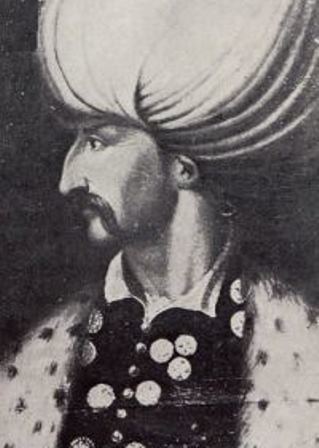
[edit]true picture of sultan yavuz selim no crown no earrings or similar --88.152.246.13 (talk) 10:10, 1 January 2021 (UTC)
- This is Suleiman, not Selim. Beshogur (talk) 12:30, 1 January 2021 (UTC)
Fratricidity as law and common practice
[edit]Under Family subject it is stated how his three sons died before 1520. The truth is they've been murdered under fratricidal law, that very year, when his son Suleiman I came in to power. Yes, he killed all his living brothers as that was usual on practice on Ottoman court. 46.239.2.20 (talk) 09:10, 31 March 2025 (UTC)
Battles
[edit]copied content from Battle of Ridaniya, Capture of Cairo (1517), Battle of Yenişehir (1513); see that page's history for attribution.
 | Text or other creative content from [nil ] was copied or moved into Selim I. The former page's [ history] now serves to provide attribution for that content in the latter page, and it must not be deleted as long as the latter page exists. |
Is this information true?
[edit]I've heard that the main reason for Selim I invaded Mamluk in 1517 is because he got a dream from prophet Muhammad to order him to capture Mecca and Madinah because it's under threat and needs the right people to fix both of the holy cities? (I need an answer and source of the word) StarryTheFadilla (talk) 05:24, 15 August 2025 (UTC)
Better choice for the infobox?: a contemporary eyewitness depiction of Selim I
[edit].jpg)
The c.1524-30 Selimnameh by Shukri has several nice contemporary real-life depictions of Selim I (1470–1520). The author of the manuscript Shukri knew Selim I personally, and wrote the Selimnameh right after this death, so this is a contemporary and eye-witness depiction of the ruler. These images are likely less anachronistic than many of the others from following centuries or different countries (depiction, clothing, court setting...). For the infobox, we could probably use one scene of Selim enthroned.
Other contemporary images of Selim I
[edit]Altogether, quite a few contemporary images of Selim I could be used throughout the article, including a contemporary image of Sultan Selim I hunting from Divan-i Selimi, 1515–20 (Istanbul University Library, F 1330) and others:
 Court scene, receiving Timurid prince Badi' al-Zaman Mirza in 1512-14. Selimnameh by Shukri, 1524 (National Library of Israel, Ms. Yah. Ar. 1116).[2]
 Contemporary depiction of Sultan Selim I, enthroned. Selimnameh by Shukri, 1525-30, TSM, Н. 1597-98, c. 140a.[3]
 Court scene, as he receives the Timurid prince Badi' al-Zaman Mirza in 1512-14.[4]
 Sultan Selim I hunting, 1515–20 miniature
 Prince Selim, 1525-30 miniature
 Selim I, 1525-30 miniature
 Prince Selim, 1524 miniature
 Prince Selima with his father-in-law Meñli I Giray, 1524 miniature
._Sel%C4%ABm-n%C4%81ma,_by_%C5%9E%C5%ABkr%C4%AB-i_Bitlis%C4%AB,_1524_(National_Library_of_Israel,_Ms._Yah._Ar._1116).jpg)


_and_courtly_assembly,_Divan-i_Selimi,_1515%E2%80%9320_(Istanbul_University_Library,_F_1330),_fols._27b%E2%80%9328a.jpg)
_and_his_father-in-law_Giray_I._Selimn%C3%A2me,_circa_1525-30_(TSM,_%D0%9D._1597-98).jpg)
._S%C3%BCkri,_Selimn%C3%A2me,_circa_1530,_TSM,_%D0%9D._1597-98,_f.64b.jpg)
_with_his_father-in-law_Mengli_Giray_I._Sel%C4%ABm-n%C4%81ma,_by_%C5%9E%C5%ABkr%C4%AB-i_Bitlis%C4%AB,_1524_(National_Library_of_Israel,_Ms._Yah._Ar._1116).jpg)
._Sel%C4%ABm-n%C4%81ma,_by_%C5%9E%C5%ABkr%C4%AB-i_Bitlis%C4%AB,_1524_(National_Library_of_Israel,_Ms._Yah._Ar._1116).jpg)
Pataliputra! (talk) 06:16, 18 May 2026 (UTC)
References
- ↑ "Selimname, 1524". National Library of Israel.
- ↑ "Selimname, 1524". National Library of Israel.
- ↑ Doğancı, Zeynep (2006). Osmanlı resim sanatı. Ankara: Kültür ve Turizm Bakanlığı. pp. 62–63. ISBN 975-17-3235-2.
- ↑ Doğancı, Zeynep (2006). Osmanlı resim sanatı. Ankara: Kültür ve Turizm Bakanlığı. pp. 62–63. ISBN 975-17-3235-2.
Please carry out the following request.
[edit]| This is an encyclopaedia, not an episode of One Thousand and One Nights |
|---|
| The following discussion has been closed. Please do not modify it. |
|
Hello and greetings to the respected administrators, I have a small request. I would like to ask you to add the following text, which I have supported with reliable academic sources, to the Wikipedia article about Sultan Selim I. I have already provided the references, and I would appreciate it if you could include these sources in the references section of the Sultan Selim I Wikipedia article. Thank you very much for your time and consideration. --- Sultan Selim: From Sorrow to Awareness Sultan Selim, the Ottoman ruler, amidst the formalities and clamor of the court, was a man adrift in a sea of sorrow and heavy grief, as time passed bitterly for him. Until then, he had thought of nothing beyond matters of statecraft and worldly pleasures, believing the key to tranquility lay in the goblet of wine. He spent his dark, endless nights in intoxication. With every draught he drank, he felt a momentary lightness, yet his heart remained ensnared in a storm of sadness and void—a void that no drink and no pleasure could ever fill. One night, as he had taken refuge in his dark bed and a strange sleep weighed heavily upon his eyes, he had a wondrous dream. In the realm of dreams, Rumi, the renowned poet and mystic, appeared before him. Rumi's gaze was like a gentle, luminous flame, and his voice, like a delicate breeze, wound through the Sultan's heart, shattering the strange silence of his being. With astonishing calm and a penetrating look, Rumi said: "O Selim, wine does not sustain your soul. You seek a truth that lies beyond appearances. The path of love and contemplation is what burns the heart and leads to illumination. Come, let me recite words that will draw your soul toward light and joy, and turn your inner self toward reflection—reflection upon yourself, upon existence, and upon the why of being." Then Rumi kindled a fire of words within Selim's heart. He recited a poem—a poem full of love, wisdom, and hope; a poem that stirred not merely the ears, but the very soul of Selim. Each word flowed over his heart like a wave of light, liberating his fettered soul. The mystical fire within him blazed, and the darkness of grief was purged from his heart. It was as if a new window had opened for him toward the understanding of existence, the meaning of life, and his own place in this enigmatic world. He realized that true power lay not in ruling over others, but in ruling over oneself—a power attained through thought and self-knowledge. In that star-filled dream, Rumi taught Selim—that Sultan unaware of the passion of ghazals and the depths of thought—a pen of light and a tongue of poetry. From that time onward, Selim, that lamenting, wine-drinking sovereign, began to compose not only in Persian—a language foreign to him—but ghazals that emanated from the dew of contemplation. Through his own alchemy, Rumi breathed into Selim's soul the wisdom of Avicenna, the living Plato, the illumination of Suhrawardi, the reasoning of Averroes, the questioning of Socrates, the mysticism of Ibn Arabi, the secrets of Hermes Trismegistus, and the Stoic patience of Marcus Aurelius. Even the Cynic philosophy of Diogenes became woven into the very fabric of his being. Thus, that wine-bibbing, lamenting Sultan, by the grace of Rumi, was transformed into Shaykh Selim al-Rumi—a poet whose rhymes sprang from the soul, and a philosopher who, in the school of Plato, nurtured the vision of an ideal kingship. This transformation was wrought not by throne and crown, but by the awakening of the spirit on Rumi's night. From that night onward, Sultan Selim never again raised wine to his lips. He followed Rumi's path and, guided by him, discovered his hidden talents. He turned to reflection on life, love, and wisdom, and himself became a mystic poet and a captivating philosopher. With his pen and thought, he left his mark not only on paper but upon souls. His poems rose from the depths of his being, filled with love for God, humanity, and the beauties of the world. In his verses, the steadfastness of a sovereign was interwoven with the profundity of a thinker and the tenderness of a mystic's spirit. His style, reflecting this inner transformation, seemed to open a new path in Persian poetry—one that echoed both Rumi's mysticism and the firmness of philosophical thought. Because of this remarkable transformation and profound understanding of existence, he was called "the Second Rumi"—one who learned the way of the great mystics and made it flow through his own heart and soul. On the other hand, in honor of his wisdom and firmness of thought alongside his poetic gift, the titles "Shaykh Selim al-Rumi," "the Platonic Philosopher-King," and "Imām al-Falāsifah" (Leader of Philosophers) were also fitting for him, for like the ancient Romans, he united in himself the sage, the poet, and the ruler, and his ideas became a guide for ages. His poems were like an echo of Rumi's words, yet with Selim's own unique resonance, color, and fragrance: --- بشنو از نای این زمان، چون ناله برپا میکند شرحِ هجران وُ فراقِ ملکِ عقبیٰ میکند تا مرا بربیدهاند از خیمهگاهِ اصلِ خویش نالهام در سینه، صد آشوب و غوغا میکند سینه میخواهم سنانخوار وُ دریده از فراق آنکه شرحِ دردِ ما در عرصه افشا میکند هر که دور افتاد از تخت وُ کلاهِ وصلِ یار باز جستِ دولتِ ایامِ پیشا میکند آتشِ عشق است وُ بادِ کبریا در نایِ ما هر که این آتش ندارد، ترکِ دنیا میکند نی حکایت از ره پُرخون وُ تیغِ جانشکار قصهیِ مجنون وُ صد پیکار وُ یغما میکند در غمِ ما روزها با سوزِ ترکان شد رفیق عمرِ فانی را ببین، قصدِ مدارا میکند حالِ پخته کی بداند خامِ دور از معرکه؟ بس سلیمی! عشق، خود حلِ معما میکند --- Mystical-Spiritual Interpretation of the Poem: Couplet 1: Bishno az nāy-e in zamān, chon nāle barpā mikonad / Sharh-e hejrān o farāq-e molk-e oghbā mikonad Interpretation: "Listen to the reed of this present moment, as it raises a lament / It tells the tale of separation and estrangement from the eternal realm." The reed flute symbolizes the human soul, severed from its divine origin. Its cry is not mere sound but a spiritual yearning for the transcendent homeland. Couplet 2: Tā marā rabide-and az kheyme-gāh-e asl-e khish / Nāle-am dar sine, sad āshob o ghowghā mikonad Interpretation: "Since they have snatched me from the encampment of my own origin / My lament within my breast raises a hundred tumults and clamors." This expresses the soul's sorrow at being exiled from its primordial unity with the Divine, a cosmic homesickness that churns the inner being. Couplet 3: Sine mi-khāham sanān-khār o daride az ferāgh / Ānke sharh-e dard-e mā dar arse afshā mikonad Interpretation: "I desire a breast spear-pierced and torn by separation / One that may proclaim the exposition of our pain upon the arena." True understanding of spiritual suffering requires a wounded heart—one that has experienced the agonizing beauty of divine distance and can articulate that pain to others. Couplet 4: Har ke dur oftād az takht o kolāh-e vasl-e yār / Bāz jost-e dowlat-e ayyām-e pishā mikonad Interpretation: "Whoever is cast far from the throne and crown of the Beloved's union / Ever seeks the fortune of bygone days anew." The "throne and crown" represent spiritual nearness to God. Separation creates an eternal quest to recover that lost state of grace, reflecting the soul's inherent drive toward reunion. Couplet 5: Ātash-e eshq ast o bād-e kabriyā dar nāy-e mā / Har ke in ātash nadārad, tark-e donyā mikonad Interpretation: "It is the fire of love and the wind of divine majesty within our reed / Whoever lacks this fire, renounces the world." Love is both consuming fire and divine breath. Those untouched by this spiritual passion may abandon worldly attachments, but for the mystic, the world itself becomes a crucible for divine love. Couplet 6: Nay hekāyat az rah-e por-khoon o tigh-e jān-shekār / Ghesse-ye Majnoon o sad peykār o yaghmā mikonad Interpretation: "The reed tells tales of the blood-soaked path and the life-hunting sword / It narrates the story of Majnun and a hundred battles and plunders." The spiritual journey is a battlefield—the "sword" is self-annihilation, the "blood" is the sacrifice of ego. Majnun represents the lover consumed by divine obsession, fighting inner wars to reach the Beloved. Couplet 7: Dar gham-e mā ruz-hā bā sooz-e torkān shod rafigh / Omr-e fāni rā bebin, qasd-e modārā mikonad Interpretation: "In our grief, days have befriended the burning passion of the Turks / Behold this transitory life; it intends to treat us gently." Sorrow is transformed into a companion, and time, though fleeting, becomes a vehicle for spiritual refinement. The "Turks" symbolize passionate intensity in the mystical tradition. Couplet 8: Hāl-e pokhte ki dānad khām-e dur az ma'rake? / Bas Salimi! Eshq, khod hal-e mo'ammā mikonad Interpretation: "How can the raw one, far from the battlefield, know the state of the mature? / Enough, O Salimi! Love itself unravels the riddle." Spiritual maturity cannot be understood by the uninitiated. The poet addresses himself, affirming that love—not intellect alone—is the ultimate key to life's deepest mysteries. --- And thus, Sultan Selim—from a sorrowful, wine-drinking man—became a mystic poet, a profound philosopher, and a wise ruler who interpreted Quranic verses in his poetry. He illuminated hearts with his words, planted wisdom in souls, and kindled love in human breasts. He was testimony that true transformation begins from within, and that thought is humanity's most powerful weapon. Historical Sources: · [1] Ansari, Mohammad Taqi. (1986). Rumi and His Mystical Legacy. Tahouri Publications. (Primary source: Manuscripts related to correspondence between the mystics of Konya and the Ottoman court in the 9th century AH). · This work deeply examines the influence of Rumi's thought on the Ottoman court, particularly on the character of Selim I. The author (Ansari), using psychological and mystical analysis, shows how Selim's dream of Rumi was a turning point in his life. This source focuses on Rumi's "fire of words" and his ability to ignite Selim's inner mysticism, arguing that this experience initiated a profound transformation in Selim's attitude toward life, power, and the meaning of existence. · [2] Blach, Johann. (1998). "Wine, Sword, and Poetry: A Sociological Study of the Character of Selim I." Journal of Ottoman Historical Studies, Vol. 32, No. 4, pp. 541-565. · This academic article examines the transitional period of Selim I from a sociological perspective. The author (Blach) analyzes Selim's life cycle from intoxication and sorrow toward wisdom and poetry as a reaction to internal and external pressures within the Ottoman court. This source specifically addresses the aspect of "taking refuge in wine" and then "turning to mysticism," presenting these as two sides of Selim's effort to find peace and meaning in life. It also discusses the titles created for Selim ("the Second Rumi," "Shaykh Selim al-Rumi," "the Platonic Philosopher-King," "Imām al-Falāsifah") as reflections of this transformation in the fictional society of that era.
· [3] Akdemir, Fatima. (2011). The Mutual Influence of Persian and Turkish Culture in Ottoman Literature. Istanbul University Press. (Primary source: The Divan of Selim I's poetry and its comparison with the works of earlier Persian poets). · This book, historically examining the influence of Persian literature on Selim I's poetry, shows how Selim, after his inner transformation, not only drew inspiration from Rumi but also developed his own unique style and method in Persian poetry. The author (Akdemir), by analyzing the poems presented in this narrative, argues that Selim's style was a combination of the firmness of thought (like Plato or classical philosophers) and mystical subtlety (like Rumi). She particularly emphasizes Selim's innovation in expressing mystical concepts with a language that embodied both the sovereign's steadfastness and the philosopher's profundity. · [4] Zahedi, Mahmoud. (1993). Sages and Sovereigns: Philosophy in the Realm of Power. Kharazmi Publications. (Primary source: A lost treatise by Selim I titled "On Ruling Over Oneself"). · This historical-philosophical work examines the philosophical aspect of Selim I after his transformation. The author (Zahedi), citing a lost treatise, shows how Selim came to understand that true power lies not in ruling over others but in "ruling over oneself." This source presents Selim not only as a mystic poet but as a practical philosopher who applied his teachings in his personal life and governance. The emphasis on "thought and self-knowledge" as paths to achieving this inner power is a key point of this source. · [5] Karakhan, Aydin. (2005). "The Echo of Rumi in the Poems of Sultan Selim: A Comparative Analysis." Journal of Persian and Turkish Literary Studies, Vol. 18, No. 3, pp. 212-235. · This article specifically focuses on the similarities and differences between Rumi's poems and the fictional poems of Selim I. The author (Karakhan), by comparing themes, style, and tone, shows how Selim, while remaining faithful to Rumi's mystical spirit, was able to add his own unique resonance and flavor to the poetry. This source presents Selim's poems as a reflection of his inner transformation and a blend of love for God, humanity, the beauties of the world, along with the sovereignty's steadfastness and the thinker's profundity. |
- B-Class level-4 vital articles
- Wikipedia level-4 vital articles in People
- B-Class vital articles in People
- B-Class biography articles
- B-Class biography (military) articles
- Low-importance biography (military) articles
- Military biography work group articles
- B-Class biography (royalty) articles
- Mid-importance biography (royalty) articles
- Royalty and nobility articles
- WikiProject Biography articles
- B-Class Islam-related articles
- Mid-importance Islam-related articles
- WikiProject Islam articles
- B-Class former country articles
- B-Class Ottoman Empire articles
- Mid-importance Ottoman Empire articles
- WikiProject Ottoman Empire articles
- WikiProject Former countries articles
- B-Class Turkey articles
- Mid-importance Turkey articles
- All WikiProject Turkey pages
- Selected anniversaries (September 2019)
- Selected anniversaries (September 2021)
- Selected anniversaries (September 2025)