


WD-11
The WD-11 vacuum tube, a triode, was introduced by the Westinghouse Electric corporation in 1922 for their Aeriola RF model radio and found use in other contemporary regenerative receivers (used as a detector-amplifier) including the Regenoflex and Radiola series.
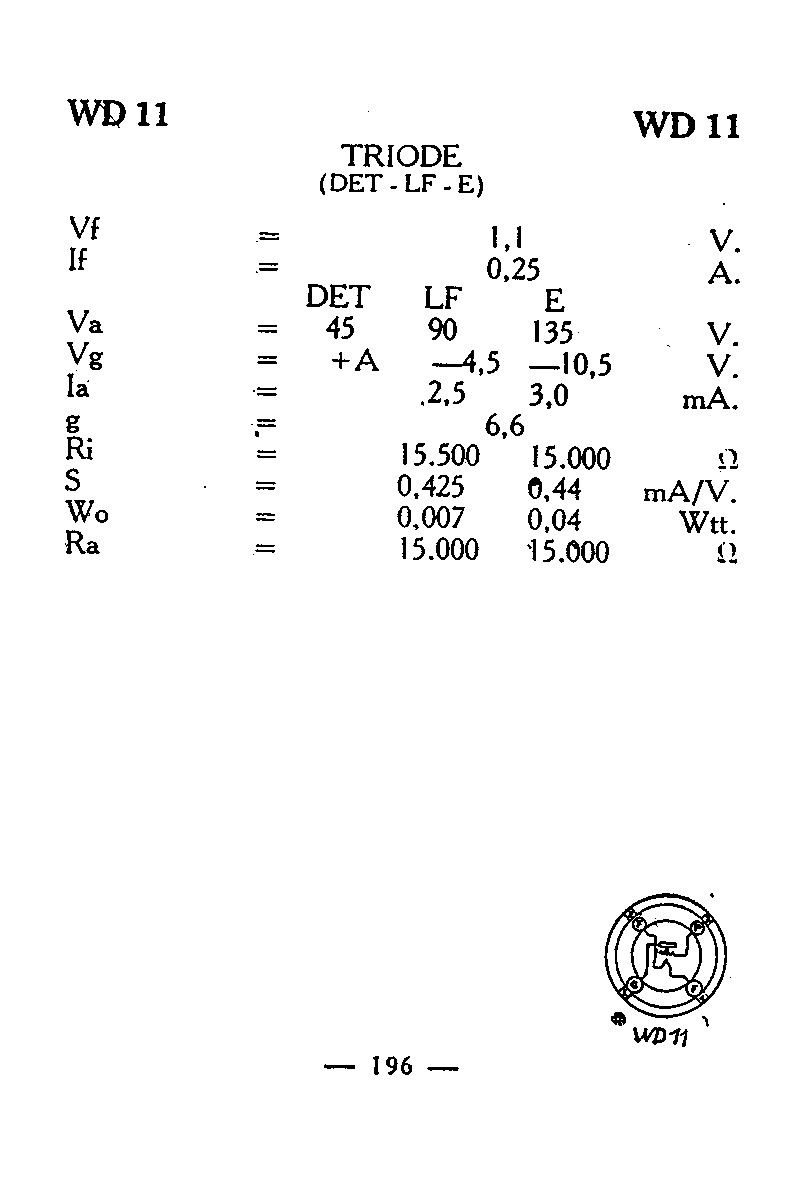
The WD11 and "RCA-11"[1] (and later simply named "11" by RCA[2] and Philips/Miniwatt[3]) have the following characteristics:
| Socket: | UV4 (also known as WD-4-Pin) | |
|---|---|---|
| EIA/RETMA base diagram: | 4F | |
| Description: | Detector Amplifier Triode | |
| Filament: | Directly heated 1.1 V | 0.25 A |
| Plate (anode) voltage: | 90 V | 135 V maximum |
| Grid voltage: | −4.5 V | −10.5 V |
| Plate current | 2.5 mA | 3.0 mA |
| Plate resistance: | 15.5 kΩ | 15 kΩ |
| Amplification Factor (mu): | 6.6 | 6.6 |
| Transconductance (gm or S): | 0.425 mA/V | 0.44 mA/V |
| Power output: (Po): | 0.007 W | 0.04 W[4] |
| Grid-plate Capacitance (Cga): | 3.3 pF | |
Drawbacks
[edit]

The design of the WD-11 is somewhat flawed. When the filament burns out, it has a tendency to contact the plate. This feeds high voltages back through the heater circuitry, subsequently burning out the filaments on the remaining tubes.
The WD-11 has a unique 4-pin base layout that was unlike any subsequent UV and UX style tube bases. It had 3 "small" pins and one "large" pin. Later UV based tubes relied on an index pin on the side of the tube base and UX tubes had 2 large and 2 small pins to ensure proper indexing.
It was replaced a year after its introduction by higher performance tubes which were less likely to encounter the filament shorting problem, Westinghouse Electric's WD-12 and General Electric's UX-199. No radios using the WD-11 tube were designed after 1924. RCA ceased production and issued a service bulletin describing how to retrofit existing sets to use the newer UX-199 triodes.
Collectibility
[edit]Because of the rarity of the WD-11, it has become one of the most valuable vacuum tubes in the world. New-old-stock tubes have sold for as much as US$180 and used tubes have sold for over $100, more than the original price of the radios that use them. Collectors rarely use these tubes for fear of burning them out.[citation needed]
Substitution
[edit]Sets that use the costly WD-11 and UV-199 tubes can be modified to use the inexpensive 1A5/GT octal power pentode by wiring a 5.1 ohm resistor between the pins of the filament and fabricating an octal-to-four pin adaptor. The pin for the 1A5's suppressor is left unconnected and the screen connected to the plate.
The type 12 (also known as RCA-12) is electrically identical to the type 11, but with a more common UX4 base.
External links
[edit]Here is a link on how to modify other tubes to use in place of a wd11: