


Talk:Romania
Add topic| This is the talk page for discussing improvements to the Romania article. This is not a forum for general discussion of the subject of the article. |
Article policies
|
| Find sources: Google (books · news · scholar · free images · WP refs) · FENS · JSTOR · TWL |
Archives: 1, 2, 3, 4, 5, 6, 7, 8, 9, 10, 11, 12, 13, 14, 15Auto-archiving period: 3 months  |
 | This article is written in British English, which has its own spelling conventions (colour, travelled, centre, defence, artefact, analyse) and some terms may be different or absent from other varieties of English. According to the relevant style guide, this should not be changed without broad consensus. |


 | This  level-4 vital article is rated B-class on Wikipedia's content assessment scale. level-4 vital article is rated B-class on Wikipedia's content assessment scale.It is of interest to the following WikiProjects: | |||||||||||||||||||||||||||||||||||||||||
| ||||||||||||||||||||||||||||||||||||||||||


 | The contentious topics procedure applies to this article. This article relates to the Balkans or Eastern Europe. Editors who repeatedly or seriously fail to adhere to the purpose of Wikipedia, any expected standards of behaviour, or any normal editorial process may be blocked or restricted by an administrator. |
WP:NPOV and sourcing
[edit]@CivicWeaver:, why do you consider a text supported primarily by references to primary sources, language manuals, and works published during the Communist period in Romania to be preferable to one based on more recent peer-reviewed scholarship? Furthermore, under WP:NPOV, theories should not be presented as established facts. It would therefore be inappropriate to treat one interpretation of Romanian ethnogenesis as definitive, particularly when citing a scholar (Vékony) who in fact represents a contrasting position. Borsoka (talk) 04:45, 6 March 2026 (UTC)
- Borsoka: Your recent edits involve the wholesale removal of established historical context regarding the Dacian Kingdom and Roman Dacia, which is problematic under several core policies:
- WP:NPOV: While Wikipedia recognizes that historical interpretations can vary,
- WP:WEIGHT requires us to give prominence to the prevailing academic consensus. The Romanization of Dacia and the subsequent Daco-Roman culture is not a "Communist-era theory"; it is the standard historical framework used by international archaeology and linguistics.
- WP:FRINGE: Attempting to relegate the Daco-Roman continuity to a "minority theory" while prioritizing negationist views (like those often found in Vékony) violates the policy against giving undue weight to fringe or minority positions.
- WP:TEND: Deleting well-sourced, foundational history about the Dacian tribes and the Roman conquest (106 AD) rather than refining the text is a form of disruptive editing.
- The dismissal of archaeological data as 'Communist-era' appears to be an attempt to bypass WP:RS (Reliable Sources) in order to facilitate WP:POV pushing. Archeological evidence—such as Roman inscriptions, castra, and Daco-Roman pottery—is not subject to political ideology; these are empirical data points. Dismissing established history regarding the Romanization of Dacia under the guise of 'modernization' is a common hallmark of WP:TEND (Tendentious Editing) and WP:FRINGE revisionism.
- If you wish to challenge the academic consensus of the Daco-Roman continuity, you must provide (International) peer-reviewed sources that explicitly refute these findings instead of specific nationalist sources, rather than unilaterally deleting sections to suit a specific Hungarian nationalist narrative. Any further attempts to 'blank' this history without WP:CONSENSUS will be treated as a violation of WP:GS CivicWeaver (talk) 05:55, 6 March 2026 (UTC)
- There is no academic consensus on the continuity theory. For instance, The Cambridge History of the Romance Languages concludes that the "historical, archaeological and linguistic data available do not seem adequate to give a definitive answer" in the debate about the Romanian ethnogenesis [Andreose, Alvise; Renzi, Lorenzo (2013). "Geography and distribution of the Romance languages in Europe". In Maiden, Martin; Smith, John Charles; Ledgeway, Adam (eds.). The Cambridge History of the Romance Languages, Volume II: Contexts. Cambridge University Press. pp. 283–334 (on page 287). ISBN 978-0-521-80073-0.] This view is repeated by The Oxford Guide to the Romance Languages, published in 2016, which reiterates that "the location and extent of the territory where "Daco-Romance" originated" is uncertain [Maiden, Martin (2016). "Romanian, Istro–Romanian, Megleno–Romanian, and Arumanian". In Ledgeway, Adam; Maiden, Martin (eds.). The Oxford Guide to the Romance Languages. Oxford University Press. pp. 91–125 (on page 91). ISBN 978-0-19-967710-8.]. I still do not understand why primary sources, language manuals and books published in the 1970s and 1980s should be preferred to recently published peer reviewed academic works. Borsoka (talk) 06:06, 6 March 2026 (UTC)
- Hi, this is English international Wikipedia in 21st century, and not a one sided 20th century nationalcommunist book.
- adding "Dacia as a Romania state" is a hardcore national-communist ideological dacopathy propaganda. The nationalcommunist dictator Caecescu also celebrated in 1980 the anniversary of "2050th years Romania" in North Korea style and claimed himself of the incarnation of Dacian king Burebista (a communist want to be a king, an ideology tweak?) Followers of a theory produced many absurd fake history maps, like "Dacia" state between 800-1300 between Tisza-Dniester with historical irredentist political motivations. National communist maps in museum, Romania 1400s: [1] [2] between Tisza-Dniester. These absurd falsified maps at the expense of real history and history of another countries, clearly tells a lot about the political motivations of this political nationalist theory. (International history maps not like that File:Europe mediterranean 1190.jpg)
- Should we add also Roman Pannonia as a Hungarian state? Roman Britannia for England? Byzantine Empire for Turkey? Gallia for France?... etc I dont think so.
- 1 CivicWeaver Daco-Roman addition while he removed the paleolitic things, he also extended the text with a lot of Dacian contents, while he removed 1000 years history in the region of others like Goths, Huns, Slavs, Avars, Hungarians, etc...
- Daco-Roman theory (theory=not fact) is not accepted at all outside Romania (even inside Romania also not every Romanian historians accept it) and especially by neighboring countries as it does not match at all with their own historiography. Because it is a supermassive 1000+ years black gap between Dacians and late medieval Vlachs (ancestor of Romanians). (Despite, the followers of the theory claim "always majority population")
- Harsh critics of this theory and its nationalistic political motivation:
- Romanian historian, Cătălin Nicolae Popa [48] 2016 Cambridge University Press
- "One of the peaks of the Dacomaniac phenomenon was reached in 1980, when, following the Iranian model that Ceauşescu witnessed, celebrations were held for the 2,050th anniversary of the first unitary Romanian state, that of the Geto-Dacian king Burebista"
- "the Dacomaniac movement took shape, under the guidance of top Communist Party members. The adepts of these ideas continued the interwar protochronistic discourse and saw the Dacians as the only, or at least the most important, element that led to the ethnogenesis of the Romanians."
- "how the Dacians and Romanians came to be connected, a process that resulted from a combination of nationalistic zeal on behalf of archaeologists and the nationalist propaganda of the Ceauşescu regime during the 1970s and 1980s."
- "the latter that were chosen to provide an ancestral golden age, since the Dacian past alone, dating back to the Late Iron Age, supplied the uniqueness sought by Romanian nationalists and, at the same time, legitimated the 20th-century borders of the country."
- "Some of the Dacian narratives produced in this environment are infused with strong nationalist messages and have the potential to fuel extreme right-wing and even xenophobic movements"
- "during the first two decades of Communism, nationalist interpretations from the interwar period were disguised under a veneer of Marxist–Leninist discourse, which flooded the whole spectrum of archaeological writing."
- "the deliberate intervention of the state, helped by museums, national education and targeted propaganda, the inhabitants of Romania were literally transformed into descendants of the Dacians, a process that I have named the ‘Dacianization’ of the Romanians. Such a development was likely aided by the framework of the totalitarian regime, which was able to control all the main sources of information."
- Romanian historian, Andrei Gandila 2018 Cambridge University Press
- "Although to some extent the manipulation of archaeological material was true of most Eastern European schools between 1945 and 1989, the Romanian case became the most conspicuous in its attempt to distort the past in order to serve the communist regime’s quest for legitimacy in the 1970s and 1980s. Along with the pressures of an increasingly abusive dictatorship" ... "Indeed, the nationalistic discourse dominating the last communist decades in Eastern Europe distorted not only the interpretation of the archaeological evidence discussed in the previous chapter, but also views on the development of Christianity. Most studies shared a common agenda: to demonstrate the cultural continuity of the Daco-Roman population across centuries of vicissitude when the descendants of the Roman colonists had to deal with numerous barbarian invasions, while struggling to maintain their connection to the Roman world and assimilate the newcomers into their superior culture." ... "such theories developed in the 1970s and 1980s in the context of national-communism remain firmly entrenched in historiography to this day."
- Romanian historian, Ioan Marian Tiplic 2005
- "the end of the 9th century to the beginning of the 12th is still a debated subject. Due to the lack of archaeological data that could prove the existence of the Romanian population in Transylvania, starting with the 19th century, the Romanian historiography transformed the stages of the formation of Romanian people into a political issue related to that time’s status-quo...Identifying archaeological artefacts belonging to the Hungarian population within the Carpathian Basin is only a routine exercise for today’s archaeologists...the medieval archaeology, regarded as a branch of the Romanian historical researches, it is not a surprise that a big part of the results are corrupted and unreal."
- Romanian historian, Dennis Deletant 1992
- "Most Romanian historians claim a continuous Romanian presence in Transylvania from the time of the Roman colonization of Dacia after its conquest by Trajan at the beginning of the second century AD. The Romans introduced into the province settlers from all parts of the Empire who intermarried with the local Dacian population and Romanized it, I bus producing the Daco-Roman people who were the forebears of the Romanians. After the Roman withdrawal from the province in 271-75, (lie province became a gateway to the south for successive invaders, with the Daco-Romans seeking refuge in the mountainous regions, thus preserving their Latin language and culture. This explanation of the Romanian presence in Transylvania is known as the theory of Daco- Roman continuity. The use of the word theory can be justified in the absence of convincing archaeological and historical evidence to support the case and it is precisely because of this that it is open to question. Hungarian historians discount the continuity theory by claiming that when the Romans abandoned Dacia its inhabitants accompanied them and by arguing that when the Magyars entered the central Danubian basin at the end of the ninth century, Transylvania's only inhabitants were Slavonic tribes."
- "More extreme in its fancy and tone is the assumption by Lieutenant- General Dr Ilie Ceau§escu, a brother of the former President and until late the historian with the highest political profile in Romania, that the voivodes Geiou, Glad and Menumorout were Romanians who ’succeeded, behind the resistance organized by the communities' population on the border, in mobilizing the entire army of the voivodship and meeting (896) the Magyar aggressor shortly after the latter had invaded the Romanian territory’,66 Such aberrations by champions of Anonymus serve not only to provide ammunition for the opponents of Geiou and the Vlachs, but also bring us back to the realm of mythos."
- British historian, Martyn Rady 2000
- "The sources consistently refer to Wallachia as being a largely uninhabited woodland before the thirteenth century, and, until this time, they contain no explicit references to Vlachs either here or anywhere in Hungary and Transylvania."
- There is no academic consensus on the continuity theory. For instance, The Cambridge History of the Romance Languages concludes that the "historical, archaeological and linguistic data available do not seem adequate to give a definitive answer" in the debate about the Romanian ethnogenesis [Andreose, Alvise; Renzi, Lorenzo (2013). "Geography and distribution of the Romance languages in Europe". In Maiden, Martin; Smith, John Charles; Ledgeway, Adam (eds.). The Cambridge History of the Romance Languages, Volume II: Contexts. Cambridge University Press. pp. 283–334 (on page 287). ISBN 978-0-521-80073-0.] This view is repeated by The Oxford Guide to the Romance Languages, published in 2016, which reiterates that "the location and extent of the territory where "Daco-Romance" originated" is uncertain [Maiden, Martin (2016). "Romanian, Istro–Romanian, Megleno–Romanian, and Arumanian". In Ledgeway, Adam; Maiden, Martin (eds.). The Oxford Guide to the Romance Languages. Oxford University Press. pp. 91–125 (on page 91). ISBN 978-0-19-967710-8.]. I still do not understand why primary sources, language manuals and books published in the 1970s and 1980s should be preferred to recently published peer reviewed academic works. Borsoka (talk) 06:06, 6 March 2026 (UTC)

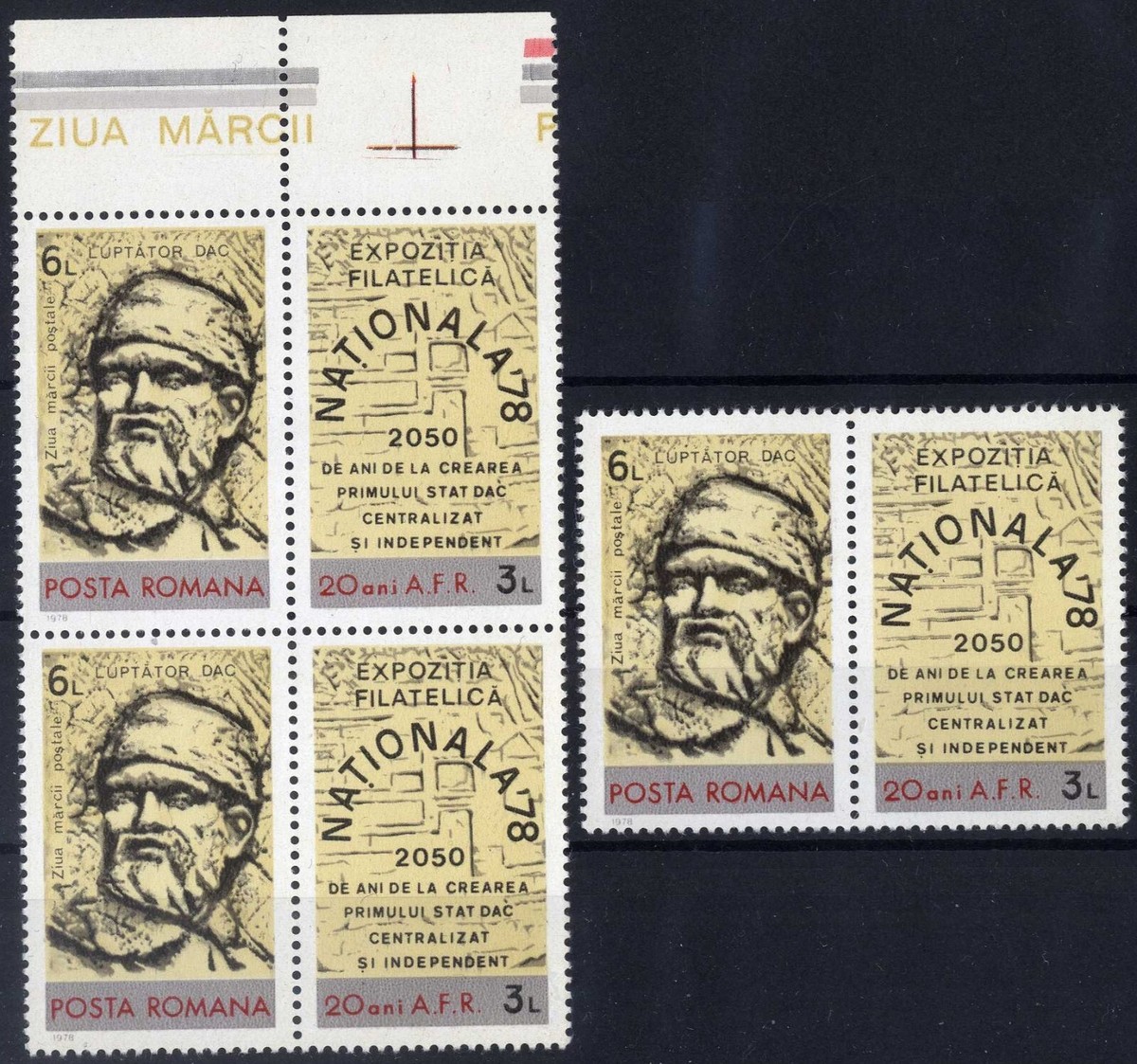

![[1]](https://dynamic-media-cdn.tripadvisor.com/media/photo-o/2a/af/6d/3d/caption.jpg?w=1200&h=-1&s=1)
![[2]](https://dynamic-media-cdn.tripadvisor.com/media/photo-o/2a/af/6d/3f/caption.jpg?w=1200&h=-1&s=1)

OrionNimrod (talk) 12:03, 6 March 2026 (UTC)
- "Should we add also Roman Pannonia as a Hungarian state? Roman Britannia for England? Byzantine Empire for Turkey? Gallia for France?... etc I dont think so."
- The ancestors of Hungarians we're a nomadic people in Eurasia (just like Romani people are in romania), arriving from Mongolia to the Ural Mountains and then illegally occupied the Carpathian Basin and started endless wars with Dacian Kingdom and Roman Dacia over Dacian Territory of Transylvania, Dacians (Ancestors of modern Romanians) had Transylvania since 82 BC before getting occupied illegally by the Huns in 895 – 900 AD. CivicWeaver (talk) 15:49, 6 March 2026 (UTC)
- Please show me any war from this "endless Hungarian wars with ancient Dacian kingdom and Roman Dacia from around 900", modern academic international source please. OrionNimrod (talk) 16:01, 6 March 2026 (UTC)
Dear CivicWeaver, The Vlach ancestors of modern Romanians were the latest shepherd nomad people among the present-day nations of Europe. Vast majority of Wallachians were shepherd nomads until the early modern period (!) Here is the collection of books and exact quotes of Western academic historians about the late nomadism of Romanians: https://daco-roman.blogspot.com/2021/02/romanians-latest-nomadic-ethnic-group.html Good reading ! --Adacks (talk) 18:29, 11 March 2026 (UTC)
- That Romanians practiced transhumance: granted. But I find hard to believe they were all nomads. tgeorgescu (talk) 01:38, 3 June 2026 (UTC)
CivicWeaver
[edit] | This discussion has been disrupted by block evasion, ban evasion, or sockpuppetry from the following user:
Their comments should be excluded from assessments of consensus. |
@CivicWeaver could you please tell me which organizations classify Romania as a developed country? And we should stick to precise criteria for what determines a major city. Keeping it top 5 & above 250k inhabitants is a precise criterium. Brasov is the 6th most populous and its population is below 250k. Also, what do you have against Central-Eastern Europe? This more general category fits Romania better I think and with less controversy while preserving both words Maxbeirut (talk) 00:21, 10 April 2026 (UTC)
- That works for me, but why did you remove 'economic center' from the Bucharest description? CivicWeaver (talk) 09:15, 10 April 2026 (UTC)
Semi-protected edit request on 25 April 2026
[edit] | This edit request has been answered. Set the |answered= parameter to no to reactivate your request. |
Under section World War II, add link regarding holocaust in Romania with specific reference to wikipedia page "The Holocaust in Romania" Blimpy2 (talk) 05:42, 25 April 2026 (UTC)
 Not done: it's not clear what changes you want made. Please detail the specific changes in a "change X to Y" format and provide a reliable source if appropriate. Please clarify where exactly you would like this to be added. Day Creature (talk) 19:07, 26 April 2026 (UTC)
Semi-protected edit request on 3 May 2026
[edit]>
| This edit request has been answered. Set the |answered= parameter to no to reactivate your request. |
"I want to add to the Economy section" Paul Jivcovici (talk) 05:38, 3 May 2026 (UTC)
- Not done: it's not clear what changes you want made. Please detail the specific changes in a "change X to Y" format and provide a reliable source if appropriate. Cannolis (talk) 05:56, 3 May 2026 (UTC)
Economy section
[edit]Table of salaries by County at the end of 2024, by the National Institute of Statistics. Paul Jivcovici (talk) 06:15, 3 May 2026 (UTC)
Geographic location
[edit] | This discussion has been disrupted by block evasion, ban evasion, or sockpuppetry from the following user:
Their comments should be excluded from assessments of consensus. |
Is Romania really central European ? Isn't it Eastern European? Falcon1234567885 (talk) 17:55, 7 May 2026 (UTC)
- It's not either-or. It's both Central European and Southeastern European. SE Europe includes Eastern Europe. tgeorgescu (talk) 01:35, 3 June 2026 (UTC)
Actually most sources describe it only as Southeastern Europe. I don't see a single source describing it as Central Europe except for Romanian textbooks kek. There is some professional/historical literature describing ONLY Romania's northwestern part that belonged to Hungary before WW1/WW2 as part of Austria-Hungary, as that part being part of the historical Central Europe. But not a single source describing Romania as Central Europe. Someone with an account should really remove that Central Europe label and just leave it as Southeastern Europe (as the least controversial option) ~2026-41472-08 (talk) 16:39, 24 July 2026 (UTC)
- Wikipedia articles that use British English
- Former good article nominees
- Old requests for peer review
- B-Class level-4 vital articles
- Wikipedia level-4 vital articles in Geography
- B-Class vital articles in Geography
- B-Class Romania articles
- Top-importance Romania articles
- All WikiProject Romania pages
- B-Class European Union articles
- Mid-importance European Union articles
- WikiProject European Union articles
- B-Class country articles
- WikiProject Countries articles