


Shock factor
Shock factor is a commonly used figure of merit for estimating the amount of shock experienced by a naval target from an underwater explosion as a function of explosive charge weight, slant range, and depression angle (between vessel and charge). [1]
Equation
[edit]
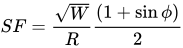
- R is the slant range in feet
- W is the equivalent TNT charge weight in pounds = charge weight (lbs) · Relative effectiveness factor
- is the depression angle between the hull and warhead.

The application scenario for the equation is illustrated by Figure 1.
The numeric result from computing the shock factor has no physical meaning, but it does provide a value that can be used to estimate the effect of an underwater blast on a vessel. Table 1 describes the effect of an explosion on a vessel for a range of shock factors.[2]
| Shock Factor | Damage |
|---|---|
| < 0.1 | Very limited damage. Generally considered insignificant |
| 0.1–0.15 | Lighting failures; electrical failures; some pipe leaks; pipe ruptures possible |
| 0.15–0.20 | Increase in occurrence of damage above; pipe rupture likely; machinery failures |
| 0.2 | General machinery damage |
| ≥ 0.5 | Usually considered lethal to a ship |
Background
[edit]The idea behind the shock factor is that an explosion close to a ship generates a shock wave that can impart sudden vertical motions to a ship's hull and internal systems. Many of the internal mechanical systems (e.g. engine coupling to prop) require precise alignment in order to operate. These vibrations upset these critical alignments and render these systems inoperative. The vibrations can also destroy lighting and electrical components, such as relays.
The explosion also generates a gas bubble that undergoes expansion and contraction cycles. These cycles can introduce violent vibrations into a hull, generating structural damage, even to the point of breaking the ship's keel. In fact, this is a goal of many undersea weapon systems.[3] The magnitude of an explosion's effects have been shown through empirical and theoretical analyses to be related to the size of the explosive charge, the distance of the charge from the target, and the angular relationship of the hull to the shock wave.[4]
References
[edit]- ↑ Keil, A.H. (November 1961). The Response Of Ships To Underwater Explosion (PDF). New York, N.Y.: Department Of The Navy. Archived from the original (PDF) on July 26, 2018. Retrieved 2018-07-07.
- ↑ Nawara, Terrence (September 2003). Exploratory Analysis Of Submarine Tactics For Mine Detection And Avoidance (PDF). Monterey, CA: Naval Postgraduate School. Retrieved 2006-06-10.[dead link]
- ↑ "MK 48 Torpedo Firing". Jane's Information Group. Archived from the original on 2006-04-27. Retrieved 2006-06-11.
- ↑ Naval Sea Systems Command (ed.). Introduction to Weapon Effects for Ships (Metric) (PDF). Washington, DC: US Department of Defense. MIL-HDBK-297(SH). Retrieved 2006-06-10.