


// Workers AI · dad joke modeWhat did Shinnersoseris say to its friend? Leaf me alone.
| Shinnersoseris | |
|---|---|
 | |
| Shinnersoseris rostrata | |
Scientific classification  | |
| Kingdom: | Plantae |
| Clade: | Tracheophytes |
| Clade: | Angiosperms |
| Clade: | Eudicots |
| Clade: | Asterids |
| Order: | Asterales |
| Family: | Asteraceae |
| Subfamily: | Cichorioideae |
| Tribe: | Cichorieae |
| Subtribe: | Microseridinae |
| Genus: | Shinnersoseris Tomb |
| Species: | S. rostrata |
| Binomial name | |
| Shinnersoseris rostrata (A.Gray) Tomb | |
| Synonyms[1] | |
| |

Shinnersoseris is a genus of flowering plants in the family Asteraceae.[2][3]
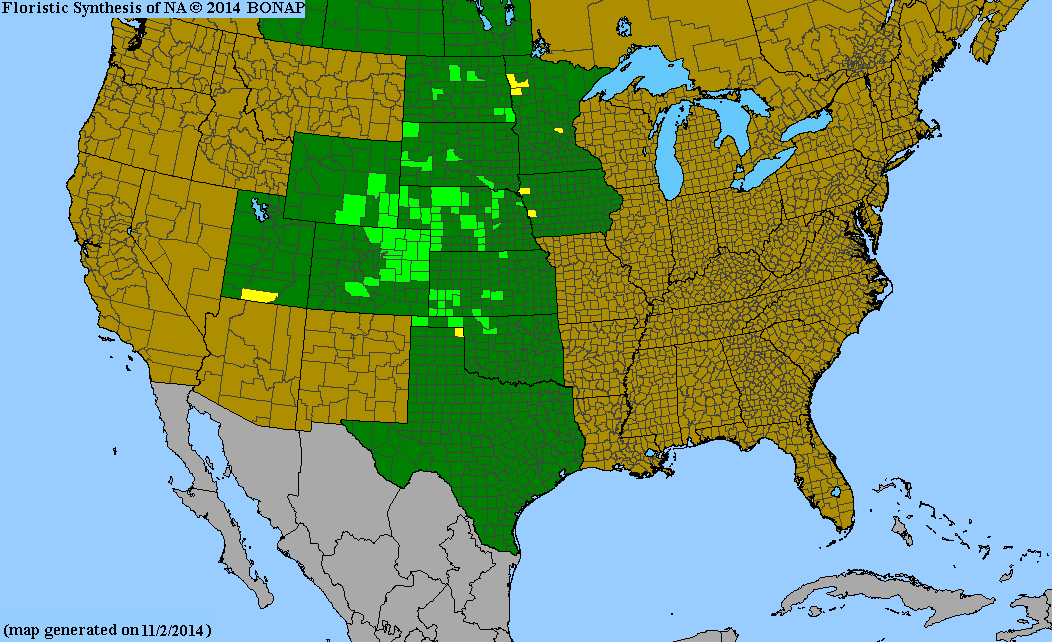
There is only one known species, Shinnersoseris rostrata, with the common names of beaked skeletonweed [4] and annual skeleton-weed.[5] It is native to the Great Plains of central North America (Alberta, Saskatchewan, Manitoba, United States (ND SD MN IA NE KS OK TX CO WY UT)).[6][7]
It was formerly in the genus Lygodesmia.[8]
Description
[edit]Shinnersoseris rostrata is an annual with long branches with long linear leaves, the branches end with five or more pink flowers.[5] Plants are uncommon and populations are local being generally restricted to sand dunes of the Great Plains. It is a threatened species in Minnesota, where it exists naturally on one sand dune complex in the extreme western part of the state. In Minnesota it is found on unstable sand dunes where wind blowouts produce shifting sand, the colonies are threatened by the suppression of fire which allows grasses and woody plants to take over the habitat.[5]
References
[edit]- ↑ Flann, C (ed) 2009+ Global Compositae Checklist Deprecated link archived 2014-11-21 at archive.today
- ↑ Tomb, Andrew Spencer. 1974. Sida 5(3): 186-189 genus description in Latin, species description in English; three pages of illustrations showing habit, pollen, and distribution
- ↑ Tropicos, Shinnersoseris rostrata (A. Gray) Tomb
- ↑ NRCS. "Shinnersoseris rostrata". PLANTS Database. United States Department of Agriculture (USDA). Retrieved 12 November 2015.
- 1 2 3 Barbara Coffin; Lee Pfannmuller (1988). Minnesota's Endangered Flora and Fauna. U of Minnesota Press. p. 111. ISBN 978-0-8166-1689-3.
- ↑ Flora of North America, Beaked skeleton-weed, Shinnersoseris Tomb, Sida. 5: 186, figs. 1–3. 1974.
- ↑ Biota of North America Program 2013 county distribution map
- ↑ p.999 of Flora of the Great Plains, Barker
 | This Cichorieae article is a stub. You can help Wikipedia by adding missing information. |