


// Workers AI · dad joke modeWhat did the shendyt say? It was wrapped up.
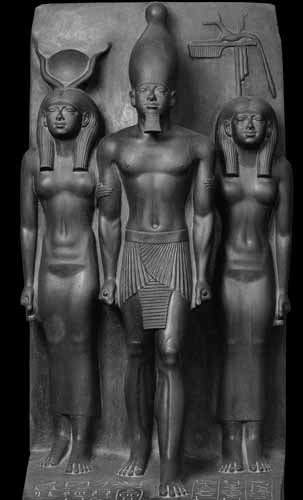
 Statue of Tjahapimu wearing a shendyt, Metropolitan Museum of Art | |
| Type | skirt worn around the waist, typically extending above knees |
|---|---|
| Material | linen |
| ||||
| Shendyt (šnḏ.t) in hieroglyphs | ||||
|---|---|---|---|---|


The shendyt (šnḏyt, Schenti, Schent, Shent, Skent)[1] was a type of loincloth similar to a skirt. It was a kilt-like garment worn in ancient Egypt. It was made of cloth and was worn around the waist, typically extending to above the knees. Shendyts are depicted on pharaohs, deities, and commoners in a variety of situations in Egyptian artwork.
The shendyt may have been an adaptation of early hunting skirts which allowed freedom of movement for the wearer. Members of the military wore a version of the shendyt, as they too would need freedom of movement in battle. Shendyts worn by those of higher rank or class would have been made of finer materials.
Gallery
[edit]The following files are the variations of Schenti worn in ancient Egyptian society.
.svg)


.jpg)

References
[edit]- ↑ Tortora, Phyllis G. (1998). Survey of historic costume: a history of Western dress. New York: Fairchild Publications. p. 29. ISBN 978-1-56367-142-5.
- Vassilika, Eleni (1989). Ptolemaic Philae (Orientalia Lovaniensia Analecta). David Brown. ISBN 978-90-6831-200-3.
External links
[edit]
- Appearance of the shendyt in Egyptian culture
- Statue image of King Men-Kau-Re wearing the shendyt kilt
- Group Statue of Ramesses III wearing the shendyt kilt with Horus and Seth
.png) | This article about subjects relating to ancient Egypt (c. 3150 BC – 30 BC) is a stub. You can help Wikipedia by adding missing information. |
 | This clothing-related article is a stub. You can help Wikipedia by adding missing information. |