


Luscombe 4
| Luscombe 4 | |
|---|---|
| General information | |
| Type | Civil Ultility Aircraft |
| Manufacturer | Luscombe Aircraft |
| Designer | |
| Number built | 6 |
| History | |
| First flight | 3 October 1937 |
| Variant | Luscombe Phantom |
The Luscombe 4, also known as Luscombe Sprite or Luscombe 90, was a civil utility aircraft produced in small numbers in the United States in the late 1930s.
In 1936, Luscombe designed and began flying a simplified version of the Phantom known as the Luscombe 90, or Model 4. Much of the Phantom's complex compound-curved sheet metal was eliminated in favor of simplified single-curved sheets, and the hand-formed fairings were eliminated. Performance was not impressive.
Specifications: Model 4 (Luscombe 90)
[edit]Data from Aerofiles:Luscombe[1]
General characteristics
- Capacity: 622 lb (282 kg) useful load
- Length: 20 ft 11 in (6.38 m)
- Wingspan: 32 ft 1 in (9.78 m)
- Height: 6 ft 6 in (1.98 m)
- Gross weight: 1,725 lb (782 kg)
- Powerplant: 1 × Warner Scarab Junior 5-cyl. air-cooled radialpiston engine, 90 hp (67 kW)
Performance
- Maximum speed: 136 mph (219 km/h, 118 kn)
- Cruise speed: 120 mph (190 km/h, 100 kn)
- Range: 580 mi (930 km, 500 nmi)
References
[edit]- ↑ Eckland, E.O. "Luscombe". Aerofiles. Retrieved 24 October 2014.
External links
[edit]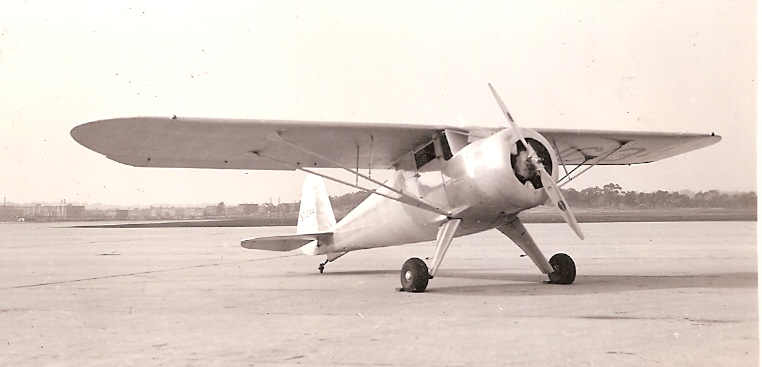
 | This aircraft of the 1930s article is a stub. You can help Wikipedia by adding missing information. |