1000 (number)
| ||||
|---|---|---|---|---|
| Cardinal | one thousand | |||
| Ordinal | 1000th (one thousandth) | |||
| Factorization | 23 × 53 | |||
| Divisors | 1, 2, 4, 5, 8, 10, 20, 25, 40, 50, 100, 125, 200, 250, 500, 1000 | |||
| Greek numeral | ,Α´ | |||
| Roman numeral | M, m | |||
| Roman numeral (unicode) | M, m, ↀ | |||
| Unicode symbol | ↀ | |||
| Greek prefix | chilia | |||
| Latin prefix | milli | |||
| Binary | 11111010002 | |||
| Ternary | 11010013 | |||
| Senary | 43446 | |||
| Octal | 17508 | |||
| Duodecimal | 6B412 | |||
| Hexadecimal | 3E816 | |||
| Tamil | ௲ | |||
| Chinese | 千 | |||
| Punjabi | ੧੦੦੦ | |||
| Devanagari | १००० | |||
| Armenian | Ռ | |||
| Egyptian hieroglyph | 𓆼 | |||

1000 or one thousand is the natural number following 999 and preceding 1001. In most English-speaking countries, it can be written with or without a comma or sometimes a period separating the thousands digit: 1,000.
A group of one thousand units is sometimes known, from Ancient Greek, as a chiliad.[1] A period of one thousand years may be known as a chiliad or, more often from Latin, as a millennium. The number 1000 is also sometimes described as a short thousand in medieval contexts where it is necessary to distinguish the Germanic concept of 1200 as a long thousand. It is the first 4-digit integer.
Notation
[edit source]- The decimal representation for one thousand is
- 1000—a one followed by three zeros, in the general notation;
- 1 × 10³—in engineering notation, which for this number coincides with:
- 1 × 10³ exactly—in scientific normalized exponential notation;
- 1 E+3 exactly—in scientific E notation.
- The SI prefix for a thousand units is "kilo-", abbreviated to "k"—for instance, a kilogram or "kg" is a thousand grams. This is sometimes extended to non-SI contexts, such as "ka" (kiloannum) being used as a shorthand for periods of 1000 years. In computer science, however, "kilo-" is used more loosely to mean 2 to the 10th power (1024 or 210).
- In the SI writing style, a non-breaking space can be used as a thousands separator, i.e., to separate the digits of a number at every power of 1000.
- Multiples of thousands are occasionally represented by replacing their last three zeros with the letter "K" or "k": for instance, writing "$30k" for $30,000 or using "Y2K" to denote the Year 2000 computer problem.
- A thousand units of currency, especially dollars or pounds, are colloquially called a grand. In the United States, this is sometimes abbreviated with a "G" suffix.
In mathematics
[edit source]Numbers in the range 1001–1999
[edit source]1001 to 1099
[edit source]1001
[edit source]1002
[edit source]1002 = 2 × 3 × 167. It is a sphenic number, an abundant number, and a zero of Mertens function. There are 1002 partitions of 22.
1003
[edit source]1003 = the product of some prime p and the pth prime, namely p = 17.
1004
[edit source]1004 = 22 × 251. It is a heptanacci number.[3]
1006
[edit source]1006 = 2 × 503. It is an unusual number, an equidigital number, and a square-free number. It is a record gap between twin primes.[4] There are 1006 compositions (ordered partitions) of 22 into squares 1006 undirected Hamiltonian paths in 4 by 5 square grid graph.[5]
1009
[edit source]1009 is the smallest four-digit prime, a Lucky prime, and Chen prime. It is palindromic in bases 11, 15, 19, 24 and 28: (83811, 47415, 2F219, 1I124, 18128).
1011
[edit source]1011 = 3 × 337. It is a Harshad number in bases 5, 10, 15, 20, 25, 30, 35, 40, 45, 50, 55, 60, 65, 70, 75 (and 202 other bases). It is the largest natural number n such that 2n contains 101 and does not contain 11011. There are 1011 partitions of 1 into reciprocals of positive integers <= 16 Egyptian fraction.[6]
1012
[edit source]1012 = 22 × 11 × 23. There are 1012 partitions of 1 into reciprocals of positive integers <= 17 Egyptian fraction.[6]
1013
[edit source]1013 is a prime number, a Sophie Germain prime,[7] and a centered square number,[8]
1016
[edit source]1016 = 23 × 127. It is stella octangula number and a member of the Mian–Chowla sequence.[9] There are 1016 surface points on a cube with edge-length 14.[10]
1019
[edit source]1019 is a prime number, a Sophie Germain prime,[7] a safe prime,[11] and a Chen prime.
1021
[edit source]1021 is a prime number, a Lucky prime, and a twin prime with 1019.
1023
[edit source]1024
[edit source]1025
[edit source]1025 = 52 × 41. It is a Jacobsthal-Lucas number and the hypotenuse of a primitive Pythagorean triangle. It is a Proth number because 1025 = 210 + 1. It is a member of the Moser–de Bruijn sequence because its base-4 representation (1000014) contains only digits 0 and 1, or equivalently, it's a sum of distinct powers of 4 (45 + 40).
1028
[edit source]1028 = 22 × 257. It is sum of totient function for first 58 integers. There are 1029 primes <= 213.[12]
1031
[edit source]1031 is a prime number, a Sophie Germain prime,[7] a super-prime, and a Chen prime. It is the exponent and number of ones for the fifth base-10 repunit prime.[13]
1033
[edit source]1033 is a prime number and an emirp. It forms a twin prime pair with 1031.
1035
[edit source]1035 = 32 × 5 × 23. It is a hexagonal number[14] and the 45th triangular number.[15]
1039
[edit source]1039 is a prime of the form 8n+7,[16] a Chen prime, and a Lucky prime. There are 1039 partitions of 30 that do not contain 1 as a part.[17]
1040
[edit source]1040 = 24 × 5 × 13. There are 1040 pieces that could be seen in a 6 × 6 × 6× 6 Rubik's Tesseract.
1046
[edit source]1046 = 2 × 523. It is a coefficient of f(q), the 3rd order mock theta function.[18]
1047
[edit source]1047 = 3 × 349. There are 1047 ways to split a strict composition of 18 into contiguous subsequences that have the same sum.[19]
1049
[edit source]1049 is a prime number, a Sophie Germain prime,[7] a highly cototient number,[20] and a Chen prime.
1051
[edit source]1051 is a prime number, a centered pentagonal number,[21] and a centered decagonal number.
1056
[edit source]1056 = 25 × 3 × 11. It is a pronic number.[22]
1060
[edit source]1060 = 22 × 5 × 53. It is the sum of the first twenty-five primes from 2 through 97 (the number of primes less than 100)[23] and the sixth sum of 10 consecutive primes, starting with 23 through 131.[24]
1061
[edit source]1061 is a prime number, an emirp, and a twin prime with 1063. There are 1061 prime numbers between 1000 and 10000 (or, number of four-digit primes in decimal representation).[25]
1063
[edit source]1063 is a prime number, a super-prime, a twin prime with 1061, a near-wall-sun-sun prime.[26] and the sum of seven consecutive primes (137 + 139 + 149 + 151 + 157 + 163 + 167)
1069
[edit source]1076
[edit source]1076 = 22 × 269. There are 1076 strict trees weight 11.[28]
1078
[edit source]1078 = 2 × 72 × 11. It is an Euler transform of negative integers.[29]
1080
[edit source]1080 = 23 × 33 × 5. It is a pentagonal number[30] and a largely composite number.[31]
1081
[edit source]1081 = 23 × 47. It is the 46th triangular number[15] and a member of Padovan sequence.[32]
1086
[edit source]1086 = 2 × 3 × 181. It is a Smith number[33] and the sum of totient function for the first 59 integers.
1087
[edit source]1087 is a prime number, a super-prime, a cousin prime, and a lucky prime.[34]
1089
[edit source]1091
[edit source]1091 is a prime number, a cousin prime, and a twin prime with 1093.
1093
[edit source]1093 is a twin prime with 1091. Together with 1091 and 1097, it forms a prime triplet. It is a happy prime and a star[35] prime. It is also the smallest Wieferich prime. 1093 is a repunit prime in base 3 because:

1096
[edit source]1096 = 23 × 137. There are 1096 strict solid partitions of 18.[36]
1097
[edit source]1097 is a prime number, an emirp,[27] and a Chen prime.
1100 to 1199
[edit source]1102
[edit source]1102 = 2 × 19 × 29. It is the sum of the totient function for the first 60 integers.
1103
[edit source]1103 is a prime number, a Sophie Germain prime,[7] and a balanced prime.[37]
1104
[edit source]1104 = 24 × 3 × 23. It is a Keith number[38]
1105
[edit source]1107
[edit source]1107 = 33 × 41. There are 1107 non-isomorphic strict T0 multiset partitions of weight 8.[39]
1109
[edit source]1109 is a Friedlander-Iwaniec prime[40] and a Chen prime.
1113
[edit source]1113 = 3 × 7 × 53. There are 1113 strict partions of 40.[41]
1114
[edit source]1114 = 2 × 557. There are 1114 ways to write 22 as an orderless product of orderless sums.[42]
1117
[edit source]1117 is a Chen prime. There are 1117 diagonally symmetric polyominoes with 16 cells.[43]
1118
[edit source]1118 = 2 × 13 × 43. There are 1118 unimodular 2 × 2 matrices having all terms in {0,1,...,21}.[44]
1119
[edit source]1119 = 3 × 373. There are 1119 bipartite graphs with 9 nodes.[45]
1122
[edit source]1122 = 2 × 3 × 11 × 17. It is a pronic number.[22]
1123
[edit source]1123 is a balanced prime.[37]
1124
[edit source]1124 = 22 × 281. It is a Leyland number[46] using 2 & 10: 1124 = 210 + 102. It is a spy number.
1126
[edit source]1126 = 2 × 563. There are 1126 2 × 2 non-singular integer matrices with entries from {0, 1, 2, 3, 4, 5}.[47]
1127
[edit source]1127 = 72 × 23. It is the maximum number of pieces that can be obtained by cutting an annulus with 46 cuts.[48]
1128
[edit source]1128 = 23 × 3 × 47. It is the 47th triangular number[15] and the 24th hexagonal number.[14] 1128 is the dimensional representation of the largest vertex operator algebra with central charge of 24, D24.[49]
1151 is the first prime number following a prime gap of 22.[50] It is also a Chen prime.
1152
[edit source]1152 = 27 × 32. It is a highly totient number,[51] a 3-smooth number, and an Achilles number.
1153
[edit source]1153 is a super-prime and a Proth prime.[52]
1159
[edit source]1159 = 19 × 61. It is a centered octahedral number[53] and a member of the Mian–Chowla sequence.[9]
1160
[edit source]1160 = 23 × 5 × 29. It is an octagonal number.[54]
1161
[edit source]1161 = 33 × 43. It is the sum of the first twenty-six primes.
1162
[edit source]1162 = 2 × 7 × 83. It is the sum of the totient function for the first 61 integers and a pentagonal number.[30]
1163
1163 is a Chen prime.
1164
[edit source]1164 = 22 × 3 × 97. There are 1164 chains of multisets that partition a normal multiset of weight 8, where a multiset is normal if it spans an initial interval of positive integers[55]
1169
[edit source]1169 = 7 × 167. It is a highly cototient number[20]
1171
[edit source]1171 is a super-prime.[citation needed]
1173
[edit source]1173 = 3 × 17 × 23. There are 1173 simple triangulations on a plane with 9 nodes.[56]
1174
[edit source]1174 = 2 × 587. There are 1174 widely totally strongly normal compositions of 16. (sequence A332337 in the OEIS).
1175
[edit source]1175 = 52 × 47. It is the maximum number of pieces that can be obtained by cutting an annulus with 47 cuts.[48]
1176
[edit source]1176 = 23 × 3 × 72. It is the 48th triangular number.[15]
1178
[edit source]1178 = 2 × 19 × 31. There are 1178 surface points on a cube with edge-length 15.[10]
1179
[edit source]1179 = 32 × 131. There are 1179 different permanents of binary 7 by 7 matrices.[57]
1182
[edit source]1182 = 2 × 3 × 197. There are 1182 necklaces possible with 14 beads of 2 colors (that cannot be turned over).[58]
1184
[edit source]1184 = 25 × 37. It is an amicable number with 1210.[59]
1186
[edit source]1186 = 2 × 593. There are 1186 diagonally symmetric polyominoes with 15 cells.[43]
1187
[edit source]1187 is a safe prime,[11] a Stern prime,[60] a balanced prime,[37] and a Chen prime.
1190
[edit source]1190 = 2 × 5 × 7 × 17. It is a pronic number.[22] Building a 28-tier house of cards requires 1190 cards.[61]
1191
[edit source]1191 = 3 × 397 = 352 - 35 + 1 = H35, the 35th Hogben number.[62]
1192
[edit source]1192 = 23 × 149. It is the sum of the totient function for the first 62 integers.
1193
[edit source]1193 is a Chen prime.
1198
[edit source]1198 = 2 × 599. It is a centered heptagonal number.[63]
1200 to 1299
[edit source]1200
[edit source]1200 = 24 × 3 × 52. There are 1200 households in the Nielsen ratings sample.[64]
1200 is known as the long thousand or ten "long hundreds" of 120 each. It is the traditional reckoning of large numbers in Germanic languages.
1201
[edit source]1201 is a super-prime, a centered square number,[8] and a centered decagonal number.
1202
[edit source]1202 = 2 × 601. There are a maximum of 1202 regions when the plane is divided by 25 ellipses.[65]
1203
[edit source]1203 = 3 × 401. It is the smallest number greater than 1000 in the coordinating sequence for the (2,6,∞) tiling of the hyperbolic plane.[66]
1204
[edit source]1204 = 22 × 7 × 43. It is the magic constant for a 7 × 7 × 7 magic cube.[67]
1205
[edit source]1205 = 5 × 241. There are 1205 partitions of 28 such that the number of odd parts is a part[68]
1207
[edit source]1207 = 17 × 71. It is a composite de Polignac number.[69]
1208
[edit source]1208 = 23 × 151. There are 1208 strict chains of divisors starting with the superprimorial A006939(3).[70]
1210
[edit source]1210 = 2 × 5 × 112. It is an amicable number with 1184[71] and a Self-descriptive number.
1211
[edit source]1211 = 7 × 173. It is a composite de Polignac number[69]
1212
[edit source]1212 = 22 × 3 × 101 = , where is the number of partions of .[72]


1213
[edit source]1213 is a prime number and an emirp.
1214
[edit source]1214 = 2 × 607. It is a spy number and the sum of the first 39 composite numbers.[73]
1215
[edit source]1215 = 35 × 5. There are 1215 edges in the hexagonal triangle T(27)[74]
1216
[edit source]1216 = 26 × 19. It is a nonagonal number[75]
1217
[edit source]1217 is a super-prime and a Proth prime.[52]
1219
[edit source]1219 = 23 × 53. It is a centered triangular number[76] and a zero of Mertens function.
1220
[edit source]1220 = 22 × 5 × 61. It is a zero of Mertens function. There are 1220 binary vectors of length 16 containing no singletons.[77]
1222
[edit source]1222 = 2 × 13 × 47. It is a hexagonal pyramidal number.
1223
[edit source]1223 is the 200th prime number.[37] It is also a Sophie Germain prime[7] and a balanced prime.
1224
[edit source]1224 = 23 × 32 × 17. There are 1224 edges in the join of two cycle graphs, both of order 34.[78]
1225
[edit source]1225 = 52 × 72 = 352. It is the smallest number greater than 1 to be a triangular number,[15] a square number and a hexagonal number.[14][79] It is the second square triangular number greater than 1.[80] It is the 49th triangular number, the 35th square number, the 25th hexagonal number, a centered octagonal number,[81] a 29-gonal number,[82] a 60-gonal number,[83] and a 124-gonal number. It is the sum of 5 consecutive odd cubes:
1225 = 13 + 33 + 53 + 73 + 93.
1226
[edit source]1226 = 2 × 613. There are 1226 rooted identity trees with 15 nodes.[84]
1228
[edit source]1228 = 22 × 307. It is the sum of the totient function for the first 63 integers.
1229
[edit source]1229 is a Sophie Germain prime[7] and an emirp. There are 1229 primes less than 10,000.
1230
[edit source]1230 = 2 × 3 × 5 × 41 = T(9, 6), the Mahonian number.[85]
1231
[edit source]1231 is a prime number and an emirp.
1232
[edit source]1232 = 24 × 7 × 11. There are 1232 labeled ordered set of partitions of a 7-set into odd parts.[86]
1234
[edit source]1240
[edit source]1240 = 23 × 5 × 31. It is a square pyramidal number.[87]
1241
[edit source]1241 = 17 × 73. It is a centered cube number[88] and a spy number.
1243
[edit source]1243 = 11 × 113. It is a composite de Polignac number.[69]
1244
[edit source]1244 = 22 × 311. There are 1244 complete partitions of 25.[89]
1245
[edit source]1245 = 3 × 5 × 83. There are 1245 labeled spanning intersecting set-systems on 5 vertices.[90]
1247
[edit source]1247 = 29 × 43. It is a pentagonal number.[30]
1249
[edit source]1249 is a prime number, an emirp, and a trimorphic number.[91]
1257
[edit source]1257 = 3 × 419. There are 1257 lattice points inside a circle of radius 20.[92]
1259
[edit source]1259 is a prime number and a highly cototient number.[20]
1260
[edit source]1260 = 22 × 32 × 5 × 7. It is a pronic number,[22] the smallest vampire number,[93] the 16th highly composite number,[94] and the sum of the totient function for the first 64 integers. There are 1260 strict partions of 41.[41]
1261
[edit source]1261 = 13 × 97. It is a star number[35] and a zero of Mertens function.
1264
[edit source]1264 = 24 × 79. It is the sum of the first 27 primes.
1265
[edit source]1265 = 5 × 11 × 23. There are 1265 rooted trees with 43 vertices in which vertices at the same level have the same degree.[95]
1266
[edit source]1266 = 2 × 3 × 211. It is a centered pentagonal number[21] and a zero of Mertens function.
1269
[edit source]1269 = 33 × 47. Completing 11 revolutions in the Spiral of Theodorus requires 1269 triangles. [96]
1275
[edit source]1275 = 3 × 52 × 17. It is the 50th triangular number.[15]
1276
[edit source]1276 = 22 × 11 × 29. There are 1276 irredundant sets in the 25-cocktail party graph.[97]
1277
[edit source]1277 is a prime number. It is the start of a prime constellation of length 9 (a "prime nonuple").
1278
[edit source]1278 = 2 × 32 × 71. There are 1278 Narayana's cows and calves after 20 years.[98]
1279
[edit source]1279 is a prime number and a Mersenne prime exponent.
1280
[edit source]1280 = 28 × 5. There are 1280 parts in all compositions of 9.[99]
1281
[edit source]1281 = 3 × 7 × 61. It is an octagonal number.[54]
1283
[edit source]1283 is a safe prime.[11]
1284
[edit source]1284 = 22 × 3 × 107 = 641 + 643, the sum of a twin prime pair.[100]
1285
[edit source]1285 = 5 × 257. There are 1285 free nonominoes.
1286
[edit source]1286 = 2 × 643. There are 1286 inequivalent connected planar figures that can be formed from five 1 X 2 rectangles (or dominoes) such that each pair of touching rectangles shares exactly one edge, of length 1, and the adjacency graph of the rectangles is a tree.[101]
1288
[edit source]1288 = 23 × 7 × 23. It is a heptagonal number.[102]
1289
[edit source]1289 is Sophie Germain prime[7] and a twin prime with 1291. 1289 is a deficient number because the sum of all its positive divisors (except itself) totals less than 1289. 1289 is an evil number because it has an even number of 1's contained in its binary expansion.
1291
[edit source]1291 is a twin prime with 1289.
1296
[edit source]1296 = 24 × 34 = 64 = 362. It is the sum of the cubes of the first eight positive integers:
13 + 23 + 33 + 33 + 43 + 53 + 63 + 73 + 83 = 1296.
There are 1296 rectangles on a normal 8 × 8 chessboard. There are 1296 combinations of 2 alphanumeric characters.
1297
[edit source]1297 is a super-prime, a pinwheel number,[103] and a zero of Mertens function.
1300 to 1399
[edit source]1300
[edit source]1300 = 22 × 52 × 13. It is a zero of Mertens function and the smallest even odd-factor hyperperfect number. It is the sum of the first 4 fifth powers:
1300 = 15 + 25 + 35 + 45.
1301
[edit source]1301 is a prime number and a centered square number.[8] There are 1301 trees with 13 unlabeled nodes.[104]
1306
[edit source]1306 = 2 × 653. It is a centered triangular number.[76]
1307
[edit source]1307 is a safe prime.[11]
1308
[edit source]1308 = 22 × 3 × 109. It is the sum of the totient function for the first 65 integers.
1312
[edit source]1312 = 25 × 41. It is a member of the Mian-Chowla sequence.[9]
1319
[edit source]1319 is a safe prime.[11]
1325
[edit source]1325 = 52 × 53. It is a Markov number[105] and a centered tetrahedral number.[106]
1326
[edit source]1326 = 2 × 3 × 13 × 17. It is the 51st triangular number[15] and a hexagonal number.[14]
1327
[edit source]1327 is the smallest prime number preceding a prime gap of 34.
1328
[edit source]1328 = 24 × 83. It is the sum of the totient function for the first 66 integers.
1330
[edit source]1330 = 2 × 5 × 7 × 19. It is a tetrahedral number.[107] It forms a Ruth–Aaron pair with 1331 under second definition.
1331
[edit source]1331 = 113. It is a centered heptagonal number.[63] It forms a Ruth–Aaron pair with 1330 under second definition.
1335
[edit source]1335 = 3 × 5 × 89. It is a pentagonal number.[30]
1342
[edit source]1342 = 2 × 11 × 61 = .[108]

1346
[edit source]1346 = 2 × 673. There are 1346 locally disjointed rooted trees with 10 nodes.[109]
1350
[edit source]1350 = 2 × 33 × 52. It is a nonagonal number.[75]
1361
[edit source]1361 is first prime number following a prime gap of 34[50] and the 3rd Mills' prime. It is a centered decagonal number
1364
[edit source]1364 = 22 × 11 × 31. It is a Lucas number.[110]
1365
[edit source]1365 = 3 × 5 × 7 × 13. It is a pentatope number.[111]
1367
[edit source]1367 is a safe prime[11] and a balanced prime. It is the sum of three, nine, and eleven consecutive primes: (449 + 457 + 461, 131 + 137 + 139 + 149 + 151 + 157 + 163 + 167 + 173, and 101 + 103 + 107 + 109 + 113 + 127 + 131 + 137 + 139 + 149 + 151),[37]
1371
[edit source]1371 = 3 × 457. It is the sum of the first 28 primes.
1377
[edit source]1377 = 34 × 17. It is the maximal number of pieces that can be obtained by cutting an annulus with 51 cuts[48]
1378
[edit source]1378 = 2 × 13 × 53. It is the 52nd triangular number[15]
1379
[edit source]1379 = 7 × 197. It is the magic constant of n × n normal magic square and n-queens problem for n = 14.
1380
[edit source]1380 = 22 × 3 × 5 × 23. There are 1380 8-step mappings with 4 inputs.[112]
1381
[edit source]1381 is a prime number and a centered pentagonal number.[21]
1384
[edit source]1384 = 23 × 173 = [108]

1385
[edit source]1385 = 5 × 277. It is an up/down number.[113]
1387
[edit source]1387 = 19 × 73. It is the 5th Fermat pseudoprime of base 2,[114] the 22nd centered hexagonal number, the 19th decagonal number,[115] and the second Super-Poulet number.[116]
1388
[edit source]1388 = 22 × 347. Because 1388 = 4 × 192 - 3 × 19 + 1, is on the x-axis of Ulams spiral.[117]
1394
[edit source]1394 = 2 × 17 × 41. It is the sum of the totient function for the first 67 integers.
1395
[edit source]1395 = 32 × 5 × 19. It is a vampire number[93] and a member of the Mian–Chowla sequence[9]
1396
[edit source]1396 = 22 × 349. It is a centered triangular number.[76]
1399
[edit source]1399 is a prime number and an emirp.[118]
1400 to 1499
[edit source]1403
[edit source]1403 = 23 × 61. It is the smallest number x such that M(x) = 11, where M() is Mertens function[119]
1404
[edit source]1404 = 22 × 32 × 13. It is a heptagonal number.[102]
1405
[edit source]1405 = 5 × 281 = 262 + 272 = 72 + 82 + ... + 162. It is a centered square number[8]
1406
[edit source]1406 = 2 × 19 × 37. It is a semi-meandric number.[120]
1409
[edit source]1409 is a super-prime, a Sophie Germain prime,[7] and a Proth prime.[52]
1410
[edit source]1410 = 2 × 3 × 5 × 47. It is the denominator of the 46th Bernoulli number[121]
1418
[edit source]1418 = 2 × 709. It is the smallest number x such that M(x) = 13, where M() is Mertens function[119]
1425
[edit source]1425 = 3 × 52 × 19. It is a self-descriptive number in base 5.
1426
[edit source]1426 = 2 × 23 × 31. It is a pentagonal number[30] and the sum of the totient function for the first 68 integers. There are 1426 strict partions of 42.[41]
1427
[edit source]1427 is a twin prime with 1429.[122]
1428
[edit source]1428 = 22 × 3 × 7 × 17. There are 1428 complete ternary trees with 6 internal nodes or, equivalently, 18 edges.[123]
1429
[edit source]1429 is a twin prime with 1427.[122]
1430
[edit source]1430 = 2 × 5 × 11 × 13. It is a Catalan number.[124]
1431
[edit source]1431 = 33 × 53. It is the 53rd triangular number[15] and a hexagonal number.[14]
1432
[edit source]1432 = 23 × 179. It is a member of the Padovan sequence.[32]
1433
[edit source]1433 is a super-prime.[125]
1435
[edit source]1435 = 5 × 7 × 41. It is a vampire number.[93]
1436
[edit source]1436 = 22 × 359. It is the discriminant of a totally real cubic field.[126]
1439
[edit source]1440
[edit source]1440 = 25 × 32 × 5. It is a highly totient number.[51]
1441
[edit source]1441 = 11 × 131. It is a star number.[35]
1447
[edit source]1447 is a super-prime number and a happy number.
1451
[edit source]1451 is a Sophie Germain prime.[7]
1452
[edit source]1452 = 22 × 3 × 112. It is the first Zagreb index of the complete graph K12.
1453
1453 is a Sexy prime with 1459.
1458
[edit source]1458 = 2 × 36. It is the maximum determinant of an 11 by 11 matrix of zeroes and ones[127] and a 3-smooth number.
1458 is one of three numbers which, when its base 10 digits are added together, produces a sum which, when multiplied by its reversed self, yields the original number:
1459
[edit source]1459 is a Sexy prime with 1453 and a Pierpont prime. It is the sum of nine consecutive primes:
1459 = 139 + 149 + 151 + 157 + 163 + 167 + 173 + 179 + 181.
1462
[edit source]1462 = 2 × 17 × 43. Because 1462 = (35 - 1) × (35 + 8), it is the first Zagreb index of the wheel graph with 35 vertices[129]
1467
[edit source]1467 = 32 × 163. There are 1467 partitions of 39 with zero crank.[130]
1469
[edit source]1469 = 13 × 113. It is an octahedral number[131] and a highly cototient number.[20]
1470
[edit source]1470 = 2 × 3 × 5 × 72. It is the sum of the totient function for the first 69 integers.
1471
[edit source]1471 is a super-prime number and a centered heptagonal number.[63]
1480
[edit source]1480 = 23 × 5 × 37. It is the sum of the first 29 primes.
1481
[edit source]1481 is a Sophie Germain prime.[7]
1485
[edit source]1485 = 33 × 5 × 11. It is the 54th triangular number.[15]
1486
[edit source]1486 = 2 × 743. There are 1486 strict solid partitions of 19.[36]
1487
[edit source]1487 is a safe prime.[11]
1489
[edit source]1489 is a prime number and a centered triangular number.[76]
1490
[edit source]1490 = 2 × 5 × 149. It is a tetranacci number.[132]
1491
[edit source]1491 = 3 × 7 × 71. It is a nonogonal number.[75]
1492
[edit source]1492 = 22 × 373. It is the discriminant of a totally real cubic field.[126]
1493
[edit source]1493 is a Stern prime.[60]
1494
[edit source]1494 = 2 × 32 × 83. It is the sum of the totient function for the first 70 integers.
1496
[edit source]1496 = 23 × 11 × 17. It is a square pyramidal number.[87]
1499
[edit source]1499 is a Sophie Germain prime[7] and a super-prime.
1500 to 1599
[edit source]1500
[edit source]1500 = 22 × 3 × 53. It is the hypotenuse of three different Pythagorean triangles.[133]
1501
[edit source]1501 = 19 × 79. It is a centered pentagonal number.[21]
1503
[edit source]1503 = 32 × 167. Completing 12 revolutions of the Spiral of Theodorus requires 1503 triangles.[96]
1510
[edit source]1510 = 2 × 5 × 151. 1510 is an untouchable number.
1511
[edit source]1513
[edit source]1513 = 17 × 89. It is a centered square number.[8]
1520
[edit source]1520 = 24 × 5 × 19. It is a pentagonal number.[30] It forms a Ruth–Aaron pair with 1521 under the second definition.
1521
[edit source]1521 = 32 × 132 = 392. It is a centered octagonal number.[81] It forms a Ruth–Aaron pair with 1520 under the second definition.
1523
[edit source]1523 is a super-prime, a safe prime,[11] and a member of the Mian–Chowla sequence.[9]
1525
[edit source]1525 = 52 × 61. It is a heptagonal number.[102]
1526
[edit source]1526 = 2 × 7 × 109. There are 1526 conjugacy classes in the alternating group A27.[134]
1529
[edit source]1529 = 11 × 139. It is a composite de Polignac number.[69]
1530
[edit source]1530 = 2 × 32 × 5 × 17. It is a vampire number.[93]
1531
[edit source]1531 is a prime number and a centered decagonal number.
1532
[edit source]1532 = 22 × 383. There are 1532 series-parallel networks with 9 unlabeled edges,[135]
1535
[edit source]1535 = 5 × 307. It is a Thabit number.
1537
[edit source]1537 = 29 × 53. It is a Keith number.[38]
1539
[edit source]1539 = 34 × 19. A maximum of 1539 pieces can be obtained by cutting an annulus with 54 cuts.[48]
1540
[edit source]1540 = 22 × 5 × 7 × 11. It is the 55th triangular number,[15] a hexagonal number,[14] a decagonal number,[115] and a tetrahedral number.[107]
1541
[edit source]1541 = 23 × 67. It is an octagonal number.[54]
1549
[edit source]1549 is a de Polignac prime.[136]
1557
[edit source]1557 = 32 × 173. There are 1557 graphs with 8 nodes and 13 edges.[137]
1559
[edit source]1559 is a Sophie Germain prime.[7]
1561
[edit source]1561 = 7 × 223. It is a centered octahedral number.[53]
1564
[edit source]1564 = 22 × 17 × 23. It is the sum of the totient function for the first 71 integers.
1572
[edit source]1572 = 22 × 3 × 131. It is a member of the Mian–Chowla sequence.[9]
1573
[edit source]1573 = 112 × 13. It is the discriminant of a totally real cubic field.[126]
1583
[edit source]1583 is a Sophie Germain prime.
1585
[edit source]1585 = 5 × 307. It is a centered triangular number.[76]
1588
[edit source]1588 = 22 × 397. It is the sum of the totient function for the first 72 integers.
1589
[edit source]1589 = 7 × 227. It is a composite de Polignac number.[69]
1593
[edit source]1593 = 33 × 59. It is the sum of the first 30 primes.
1594
[edit source]1594 = 2 × 797. It is the minimal cost of a maximum height Huffman tree of size 17.[138]
1596
[edit source]1596 = 22 × 3 × 7 × 19. It is the 56th triangular number.[15]
1597
[edit source]1597 is a super-prime, a Fibonacci prime,[139] a Markov prime,[105] and an emirp.
1600 to 1699
[edit source]1601
[edit source]1601 is a Sophie Germain prime and a Proth prime.[52]
1607, 1609, and 1613
[edit source]1607, 1609, and 1613 form a prime triple.
1617
[edit source]1617 = 3 × 72 × 11. It is a pentagonal number.[30]
1618
[edit source]1618 = 2 × 809. It is a centered heptagonal number.[63]
1619
[edit source]1619 is a safe prime.[11]
1621
[edit source]1621 is a super-prime.
1624
[edit source]1624 = 23 × 7 × 29. There are 1624 squares in the Aztec diamond of order 28.[140]
1625
[edit source]1625 = 53 × 13. It is a centered square number.[8]
1626
[edit source]1626 = 2 × 3 × 271. It is a centered pentagonal number.[21]
1633
1633 = 23 × 71. It is a star number.[35]
1634
[edit source]1634 = 2 × 19 × 43. It is the smallest four-digit Narcissistic number in base 10.
1637
[edit source]1637 is a prime island: it is the smallest prime whose adjacent primes are exactly 30 apart.[141]
1638
[edit source]1638 = 2 × 32 × 7 × 13. It is a harmonic divisor number.[142]
1639
[edit source]1639 = 11 × 149. It is a nonagonal number.[75]
1646
[edit source]1646 = 2 × 823. There are 1646 graphs with 8 nodes and 14 edges.[137]
1649
[edit source]1649 = 17 × 97. It is a highly cototient number[20] and a Leyland number[46] using 4 and 5: 1649 = 45 + 54.
1651
[edit source]1651 = 13 × 127. It is a heptagonal number.[102]
1653
[edit source]1653 = 3 × 19 × 29. It is the 57th triangular number[15] and a hexagonal number.[14]
1657
[edit source]1657 is a cuban prime.[143]
1660
[edit source]1660 = 22 × 5 × 83. It is the sum of the totient function for the first 73 integers.
1665
[edit source]1665 = 32 × 5 × 37. It is a centered tetrahedral number.[106]
1669
[edit source]1669 is a super-prime. It is the smallest prime with a gap of exactly 24 to the next prime.[144]
1679
1679 = 23 × 73. It is a highly cototient number.[20]
1680
[edit source]1680 = 24 × 3 × 5 × 7. It is the 17th highly composite number.[94]
1681
[edit source]1681 = 412 = 402 + 40 + 41. It is the smallest number yielded by the formula n2 + n + 41, where n is a natural number, that is not a prime. It is also a centered octagonal number.[81]
1682 and 1683
[edit source]1682 and 1683 form a Ruth–Aaron pair under the first definition.
1684
[edit source]1684 = 22 × 421. It is a centered triangular number.[76]
1691
[edit source]1691 = 19 × 89. It is a strobogrammatic number.[145]
1695
[edit source]1695 = 3 × 5 × 113. It is the magic constant of n × n normal magic square and the n-queens problem for n = 15.
1696
[edit source]1696 = 25 × 53. It is the sum of the totient function for the first 74 integers.
1700 to 1799
[edit source]1705
[edit source]1705 = 5 × 11 × 13. It is a tribonacci number.[146]
1710
[edit source]1710 = 2 × 32 × 5 × 19. A maximum of 1710 pieces can be obtained by cutting an annulus 57 times.[48]
1711
[edit source]1711 = 29 × 59. It is the 58th triangular number[15] and a centered decagonal number.
1717
[edit source]1717 = 17 × 101. It is a pentagonal number.[30]
1719
[edit source]1719 = 32 × 131. it is a composite de Polignac number.[69]
1720
[edit source]1720 = 23 × 5 × 43. It is the sum of the first 31 primes.
1721
[edit source]1721 is a twin prime with 1723.[147]
1722
[edit source]1722 = 2 × 3 × 7 × 41. It is a Giuga number[148] and a pronic number.[22]
1723
[edit source]1723 is a twin prime with 1721. It is also a super-prime.
1728
[edit source]1729
[edit source]1733
[edit source]1733 is a Sophie Germain prime. It is palindromic in bases 3, 18, and 19.
1736
[edit source]1736 = 23 × 7 × 31. It is the sum of the totient function for the first 75 integers.
1740
[edit source]1740 = 22 × 3 × 5 × 29. There are 1740 squares in the Aztec diamond of order 29.[140]
1741
[edit source]1741 is a super-prime and a centered square number.[8]
1747
[edit source]1747 is a balanced prime.[37]
1750
[edit source]1750 = 2 × 53 × 7. It is the hypotenuse of three different Pythagorean triangles with integer side lengths.[133]
1753
[edit source]1753 is a balanced prime.[37]
1756
[edit source]1756 = 22 × 439. It is a centered pentagonal number.[21]
1757
[edit source]1757 = 7 × 251. Completing 13 revolutions around the Spiral of Theodorus requires 1757 triangles. [96]
1759
[edit source]1759 is a de Polignac prime.[136]
1765
[edit source]1765 = 5 × 353. There are 1765 planar partitions of 15.[149]
1769
[edit source]1769 = 29 × 61. A maximum of 1769 pieces can be obtained by cutting an annulus with 58 times.[48]
1770
[edit source]1770 = 2 × 3 × 59. It is the 59th triangular number[15] and a hexagonal number.[14]
1771
[edit source]1771 = 7 × 11 × 23. It is a tetrahedral number.[107]
1772
[edit source]1772 = 22 × 443. It is a centered heptagonal number[63] and the sum of the totient function for the first 76 integers.
1776
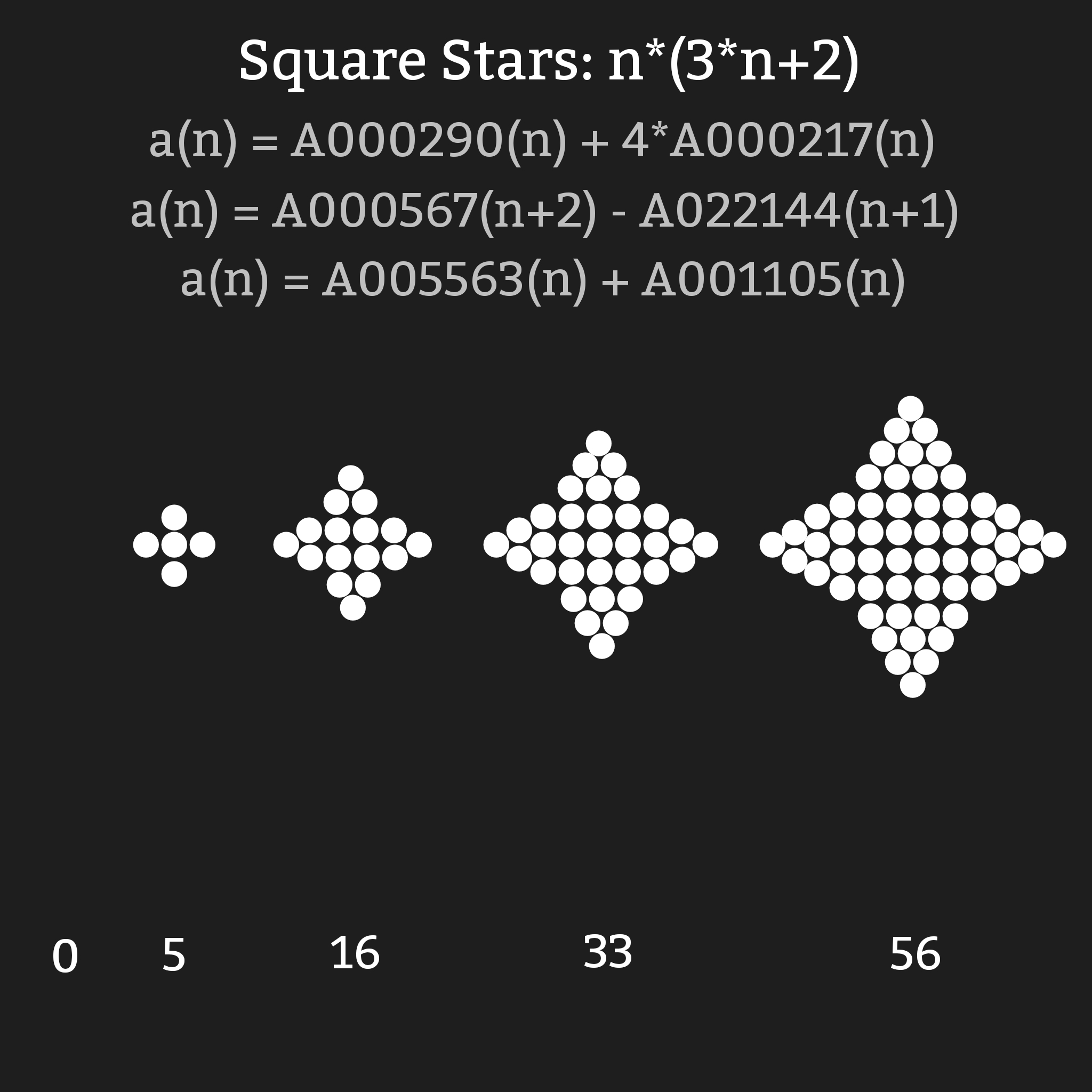
[edit source]1776 = 24 × 3 × 37. It is the 24th square star number.[150] A total of 1776 pieces could be seen in a 7 × 7 × 7 × 7 Rubik's Tesseract.
1782
[edit source]1782 = 2 × 34 × 11. It is a heptagonal number.[102]
1783
[edit source]1783 is a de Polignac prime.[136]
1785
[edit source]1785 = 3 × 5 × 7 × 17. It is a square pyramidal number.[87]
1786
[edit source]1786 = 2 × 19 × 47. It is a centered triangular number.[76]
1787
[edit source]1787 is a super-prime. It is the sum of eleven consecutive primes: 1787 = 137 + 139 + 149 + 151 + 157 + 163 + 167 + 173 + 179 + 181 + 191.
1792
[edit source]1792 = 28 × 7. It is a Granville number.
1794
[edit source]1794 = 2 × 3 × 13 × 23. It is a nonagonal number.[75]
1800 to 1899
[edit source]- 1801 = cuban prime, sum of five and nine consecutive primes (349 + 353 + 359 + 367 + 373 and 179 + 181 + 191 + 193 + 197 + 199 + 211 + 223 + 227)[143]
- 1803 = number of decahexes that tile the plane isohedrally but not by translation or by 180-degree rotation (Conway criterion)[151]
- 1806 = pronic number,[22] primary pseudoperfect number,[152] only number for which n equals the denominator of the nth Bernoulli number,[153] Schröder number[154]
- 1807 = fifth term of Sylvester's sequence[155]
- 1811 = Sophie Germain prime
- 1820 = pentagonal number,[30] pentatope number,[111]
- 1821 = member of the Mian–Chowla sequence[9]
- 1823 = super-prime, safe prime[11]
- 1825 = octagonal number[54]
- 1827 = vampire number[93]
- 1828 = meandric number, open meandric number
- 1829 = composite de Polignac number[69]
- 1830 = 60th triangular number[15]
- 1831 = smallest prime with a gap of exactly 16 to next prime (1847)[156]
- 1832 = sum of totient function for first 77 integers
- 1833 = number of atoms in a decahedron with 13 shells[157]
- 1834 = octahedral number,[131] sum of the cubes of the first five primes
- 1835 = absolute value of numerator of [158]
- 1837 = star number[35]
- 1841 = solution to the postage stamp problem with 3 denominations and 29 stamps,[159]
- 1842 = number of unlabeled rooted trees with 11 nodes[160]
- 1847 = super-prime
- 1851 = sum of the first 32 primes
- 1853 = sum of primitive roots of 27-th prime,[161] Mertens function zero
- 1854 = number of permutations of 7 elements with no fixed points,[162] Mertens function zero
- 1855 = rencontres number: number of permutations of [7] with exactly one fixed point[163]
- 1856 = sum of totient function for first 78 integers
- 1859 = composite de Polignac number[69]
- 1860 = number of squares in the Aztec diamond of order 30[164]
- 1861 = centered square number,[8]
- 1862 = forms a Ruth–Aaron pair with 1863 under second definition
- 1863 = forms a Ruth–Aaron pair with 1862 under second definition
- 1867 = prime de Polignac number[136]
- 1870 = decagonal number[115]
- 1871 = the first prime of the 2 consecutive twin prime pairs: (1871, 1873) and (1877, 1879)[165]
- 1872 = first Zagreb index of the complete graph K13[166]
- 1873 = number of Narayana's cows and calves after 21 years[98]
- 1880 = the 10th element of the self convolution of Lucas numbers[167]
- 1882 = number of linearly separable Boolean functions in 4 variables[168]
- 1883 = number of conjugacy classes in the alternating group A28[134]
- 1887 = number of edges in the hexagonal triangle T(34)[74]
- 1889 = Sophie Germain prime, highly cototient number[20]
- 1891 = 61st triangular number,[15] sum of 5 consecutive primes (367 + 373 + 379 + 383 + 389) hexagonal number,[14] centered pentagonal number,[21] centered triangular number[76]
- 1892 = pronic number[22]
- 1896 = member of the Mian-Chowla sequence[9]
- 1897 = member of Padovan sequence,[32] number of triangle-free graphs on 9 vertices[169]

1900 to 1999
[edit source]- 1901 = Sophie Germain prime, centered decagonal number
- 1902 = number of symmetric plane partitions of 27[170]
- 1903 = generalized Catalan number[171]
- 1905 = Fermat pseudoprime[172]
- 1907 = safe prime,[11] balanced prime[37]
- 1909 = hyperperfect number[173]
- 1913 = super-prime
- 1918 = heptagonal number[102]
- 1926 = pentagonal number[30]
- 1931 = Sophie Germain prime
- 1933 = centered heptagonal number,[63]
- 1934 = sum of totient function for first 79 integers
- 1941 = maximal number of regions obtained by joining 16 points around a circle by straight lines[174]
- 1948 = number of strict solid partitions of 20[36]
- 1951 = cuban prime[143]
- 1952 = number of covers of {1, 2, 3, 4}[175]
- 1953 = hexagonal prism number,[176] 62nd triangular number[15]
- 1956 = nonagonal number[75]
- 1957 = = total number of ordered k-tuples (k=0,1,2,3,4,5,6) of distinct elements from an 6-element set[177]
- 1964 = number of linear forests of planted planar trees with 8 nodes[178]
- 1966 = sum of totient function for first 80 integers
- 1967 = least edge-length of a square dissectable into at least 30 squares in the Mrs. Perkins's quilt problem[179]
- σ(1968) = σ(1967) + σ(1966)[180]
- 1969 = Only value less than four million for which a "mod-ification" of the standard Ackermann Function does not stabilize[181]
- 1970 = number of compositions of two types of 9 having no even parts[182]
- 1973 = Sophie Germain prime, Leonardo prime
- 1975 = number of partitions of 28 with nonnegative rank[183]
- 1976 = octagonal number[54]
- 1979 = number of squares between 452 and 454,[147] smallest number that is the sum of 4 positive cubes in at least 4 ways[184]
- 1980 = pronic number,[22] highly abundant number with a greater sum of proper divisors than all smaller numbers[185]
- 1984 = 11111000000 in binary, nonunitary perfect number,[186]
- 1985 = centered square number[8]
- 1987 = 300th prime number
- 1988 = sum of the first 33 primes,[187]
- 1990 = Stella octangula number
- 1991 = 11 × 181, the 46th Gullwing number,[188] palindromic composite number with only palindromic prime factors[189]
- 1999 = centered triangular number,[76] number of regular forms in a myriagram.

Prime numbers
[edit source]There are 135 prime numbers between 1000 and 2000:[190][191]
- 1009, 1013, 1019, 1021, 1031, 1033, 1039, 1049, 1051, 1061, 1063, 1069, 1087, 1091, 1093, 1097, 1103, 1109, 1117, 1123, 1129, 1151, 1153, 1163, 1171, 1181, 1187, 1193, 1201, 1213, 1217, 1223, 1229, 1231, 1237, 1249, 1259, 1277, 1279, 1283, 1289, 1291, 1297, 1301, 1303, 1307, 1319, 1321, 1327, 1361, 1367, 1373, 1381, 1399, 1409, 1423, 1427, 1429, 1433, 1439, 1447, 1451, 1453, 1459, 1471, 1481, 1483, 1487, 1489, 1493, 1499, 1511, 1523, 1531, 1543, 1549, 1553, 1559, 1567, 1571, 1579, 1583, 1597, 1601, 1607, 1609, 1613, 1619, 1621, 1627, 1637, 1657, 1663, 1667, 1669, 1693, 1697, 1699, 1709, 1721, 1723, 1733, 1741, 1747, 1753, 1759, 1777, 1783, 1787, 1789, 1801, 1811, 1823, 1831, 1847, 1861, 1867, 1871, 1873, 1877, 1879, 1889, 1901, 1907, 1913, 1931, 1933, 1949, 1951, 1973, 1979, 1987, 1993, 1997, 1999
Notes
[edit source]References
[edit source]

- ↑ "chiliad". Merriam-Webster.
{{cite web}}: CS1 maint: url-status (link) - ↑ Sloane, N. J. A. (ed.). "Sequence A195163 (1000-gonal numbers: a(n) equal to n*(499*n - 498))". The On-Line Encyclopedia of Integer Sequences. OEIS Foundation.
- ↑ Sloane, N. J. A. (ed.). "Sequence A122189 (Heptanacci numbers)". The On-Line Encyclopedia of Integer Sequences. OEIS Foundation.
- ↑ Sloane, N. J. A. (ed.). "Sequence A036063 (Increasing gaps among twin primes: size)". The On-Line Encyclopedia of Integer Sequences. OEIS Foundation.
- ↑ Sloane, N. J. A. (ed.). "Sequence A332307 (Array read by antidiagonals: T(m,n) is the number of (undirected) Hamiltonian paths in the m X n grid graph)". The On-Line Encyclopedia of Integer Sequences. OEIS Foundation. Retrieved 8 January 2023.
- 1 2 Sloane, N. J. A. (ed.). "Sequence A020473 (Egyptian fractions: number of partitions of 1 into reciprocals of positive integers <= n)". The On-Line Encyclopedia of Integer Sequences. OEIS Foundation.
- 1 2 3 4 5 6 7 8 9 10 11 12 13 14 15 Sloane, N. J. A. (ed.). "Sequence A005384 (Sophie Germain primes p: 2p+1 is also prime)". The On-Line Encyclopedia of Integer Sequences. OEIS Foundation.
- 1 2 3 4 5 6 7 8 9 Sloane, N. J. A. (ed.). "Sequence A001844 (Centered square numbers)". The On-Line Encyclopedia of Integer Sequences. OEIS Foundation.
- 1 2 3 4 5 6 7 8 Sloane, N. J. A. (ed.). "Sequence A005282 (Mian-Chowla sequence)". The On-Line Encyclopedia of Integer Sequences. OEIS Foundation.
- 1 2 Sloane, N. J. A. (ed.). "Sequence A005897 (6*n^2 + 2 for n > 0)". The On-Line Encyclopedia of Integer Sequences. OEIS Foundation.
- 1 2 3 4 5 6 7 8 9 10 11 12 Sloane, N. J. A. (ed.). "Sequence A005385 (Safe primes p: (p-1)/2 is also prime)". The On-Line Encyclopedia of Integer Sequences. OEIS Foundation.
- ↑ Sloane, N. J. A. (ed.). "Sequence A007053 (Number of primes <= 2^n)". The On-Line Encyclopedia of Integer Sequences. OEIS Foundation.
- ↑ Sloane, N. J. A. (ed.). "Sequence A004023 (Indices of prime repunits: numbers n such that 11...111 (with n 1's)... is prime)". The On-Line Encyclopedia of Integer Sequences. OEIS Foundation.
- 1 2 3 4 5 6 7 8 9 Sloane, N. J. A. (ed.). "Sequence A000384 (Hexagonal numbers)". The On-Line Encyclopedia of Integer Sequences. OEIS Foundation.
- 1 2 3 4 5 6 7 8 9 10 11 12 13 14 15 16 17 18 Sloane, N. J. A. (ed.). "Sequence A000217 (Triangular numbers)". The On-Line Encyclopedia of Integer Sequences. OEIS Foundation.
- ↑ Sloane, N. J. A. (ed.). "Sequence A007522 (Primes of the form 8n+7, that is, primes congruent to -1 mod 8)". The On-Line Encyclopedia of Integer Sequences. OEIS Foundation. Retrieved 10 October 2023.
- ↑ Sloane, N. J. A. (ed.). "Sequence A002865 (Number of partitions of n that do not contain 1 as a part)". The On-Line Encyclopedia of Integer Sequences. OEIS Foundation.
- ↑ Sloane, N. J. A. (ed.). "Sequence A000025 (Coefficients of the 3rd-order mock theta function f(q))". The On-Line Encyclopedia of Integer Sequences. OEIS Foundation.
- ↑ Sloane, N. J. A. (ed.). "Sequence A336130 (Number of ways to split a strict composition of n into contiguous subsequences all having the same sum)". The On-Line Encyclopedia of Integer Sequences. OEIS Foundation.
- 1 2 3 4 5 6 7 Sloane, N. J. A. (ed.). "Sequence A100827 (Highly cototient numbers: records for a(n) in A063741)". The On-Line Encyclopedia of Integer Sequences. OEIS Foundation.
- 1 2 3 4 5 6 7 Sloane, N. J. A. (ed.). "Sequence A005891 (Centered pentagonal numbers)". The On-Line Encyclopedia of Integer Sequences. OEIS Foundation.
- 1 2 3 4 5 6 7 8 Sloane, N. J. A. (ed.). "Sequence A002378 (Oblong (or promic, pronic, or heteromecic) numbers)". The On-Line Encyclopedia of Integer Sequences. OEIS Foundation.
- ↑ Sloane, N. J. A. (ed.). "Sequence A007504 (Sum of the first n primes)". The On-Line Encyclopedia of Integer Sequences. OEIS Foundation.
- ↑ Sloane, N. J. A. (ed.). "Sequence A127337 (Numbers that are the sum of 10 consecutive primes)". The On-Line Encyclopedia of Integer Sequences. OEIS Foundation.
- ↑ Sloane, N. J. A. (ed.). "Sequence A006879 (Number of primes with n digits.)". The On-Line Encyclopedia of Integer Sequences. OEIS Foundation.
- ↑ Sloane, N. J. A. (ed.). "Sequence A347565 (Primes p such that A241014(A000720(p)) is +1 or -1)". The On-Line Encyclopedia of Integer Sequences. OEIS Foundation.
- 1 2 Sloane, N. J. A. (ed.). "Sequence A006567 (Emirps (primes whose reversal is a different prime))". The On-Line Encyclopedia of Integer Sequences. OEIS Foundation.
- ↑ Sloane, N. J. A. (ed.). "Sequence A273873 (Number of strict trees of weight n)". The On-Line Encyclopedia of Integer Sequences. OEIS Foundation.
- ↑ Sloane, N. J. A. (ed.). "Sequence A073592 (Euler transform of negative integers)". The On-Line Encyclopedia of Integer Sequences. OEIS Foundation.
- 1 2 3 4 5 6 7 8 9 10 Sloane, N. J. A. (ed.). "Sequence A000326 (Pentagonal numbers)". The On-Line Encyclopedia of Integer Sequences. OEIS Foundation.
- ↑ Sloane, N. J. A. (ed.). "Sequence A067128 (Ramanujan's largely composite numbers)". The On-Line Encyclopedia of Integer Sequences. OEIS Foundation.
- 1 2 3 Sloane, N. J. A. (ed.). "Sequence A000931 (Padovan sequence)". The On-Line Encyclopedia of Integer Sequences. OEIS Foundation.
- ↑ Sloane, N. J. A. (ed.). "Sequence A006753 (Smith numbers)". The On-Line Encyclopedia of Integer Sequences. OEIS Foundation.
- ↑ Sloane, N. J. A. (ed.). "Sequence A031157 (Numbers that are both lucky and prime)". The On-Line Encyclopedia of Integer Sequences. OEIS Foundation.
- 1 2 3 4 5 Sloane, N. J. A. (ed.). "Sequence A003154 (Centered 12-gonal numbers. Also star numbers)". The On-Line Encyclopedia of Integer Sequences. OEIS Foundation.
- 1 2 3 Sloane, N. J. A. (ed.). "Sequence A323657 (Number of strict solid partitions of n)". The On-Line Encyclopedia of Integer Sequences. OEIS Foundation.
- 1 2 3 4 5 6 7 8 9 Sloane, N. J. A. (ed.). "Sequence A006562 (Balanced primes)". The On-Line Encyclopedia of Integer Sequences. OEIS Foundation.
- 1 2 Sloane, N. J. A. (ed.). "Sequence A007629 (Repfigit (REPetitive FIbonacci-like diGIT) numbers (or Keith numbers))". The On-Line Encyclopedia of Integer Sequences. OEIS Foundation.
- ↑ Sloane, N. J. A. (ed.). "Sequence A319560 (Number of non-isomorphic strict T_0 multiset partitions of weight n)". The On-Line Encyclopedia of Integer Sequences. OEIS Foundation.
- ↑ Sloane, N. J. A. (ed.). "Sequence A028916 (Friedlander-Iwaniec primes: Primes of form a^2 + b^4)". The On-Line Encyclopedia of Integer Sequences. OEIS Foundation.
- 1 2 3 Sloane, N. J. A. (ed.). "Sequence A000009 (Expansion of Product_{m > 0} (1 + x^m); number of partitions of n into distinct parts; number of partitions of n into odd parts)". The On-Line Encyclopedia of Integer Sequences. OEIS Foundation.
- ↑ Sloane, N. J. A. (ed.). "Sequence A318949 (Number of ways to write n as an orderless product of orderless sums)". The On-Line Encyclopedia of Integer Sequences. OEIS Foundation.
- 1 2 Sloane, N. J. A. (ed.). "Sequence A006748 (Number of diagonally symmetric polyominoes with n cells)". The On-Line Encyclopedia of Integer Sequences. OEIS Foundation.
- ↑ Sloane, N. J. A. (ed.). "Sequence A210000 (Number of unimodular 2 X 2 matrices having all terms in {0,1,...,n})". The On-Line Encyclopedia of Integer Sequences. OEIS Foundation.
- ↑ Sloane, N. J. A. (ed.). "Sequence A033995 (Number of bipartite graphs with n nodes)". The On-Line Encyclopedia of Integer Sequences. OEIS Foundation.
- 1 2 Sloane, N. J. A. (ed.). "Sequence A076980 (Leyland numbers: 3, together with numbers expressible as n^k + k^n nontrivially, i.e., n,k > 1 (to avoid n = (n-1)^1 + 1^(n-1)))". The On-Line Encyclopedia of Integer Sequences. OEIS Foundation.
- ↑ Sloane, N. J. A. (ed.). "Sequence A062801 (Number of 2 X 2 non-singular integer matrices with entries from {0,...,n})". The On-Line Encyclopedia of Integer Sequences. OEIS Foundation.
- 1 2 3 4 5 6 Sloane, N. J. A. (ed.). "Sequence A000096 (n*(n+3)/2)". The On-Line Encyclopedia of Integer Sequences. OEIS Foundation.
- ↑ Van Ekeren, Jethro; Lam, Ching Hung; Möller, Sven; Shimakura, Hiroki (2021). "Schellekens' list and the very strange formula". Advances in Mathematics. 380 107567. Amsterdam: Elsevier. arXiv:2005.12248. doi:10.1016/j.aim.2021.107567. MR 4200469. S2CID 218870375. Zbl 1492.17027.
- 1 2 "Sloane's A000101 : Increasing gaps between primes (upper end)". The On-Line Encyclopedia of Integer Sequences. OEIS Foundation. Retrieved 10 July 2016.
- 1 2 "Sloane's A097942 : Highly totient numbers". The On-Line Encyclopedia of Integer Sequences. OEIS Foundation. Retrieved 12 June 2016.
- 1 2 3 4 "Sloane's A080076 : Proth primes". The On-Line Encyclopedia of Integer Sequences. OEIS Foundation. Retrieved 12 June 2016.
- 1 2 Sloane, N. J. A. (ed.). "Sequence A001845 (Centered octahedral numbers (crystal ball sequence for cubic lattice))". The On-Line Encyclopedia of Integer Sequences. OEIS Foundation. Retrieved 2 June 2022.
- 1 2 3 4 5 Sloane, N. J. A. (ed.). "Sequence A000567 (Octagonal numbers: n*(3*n-2). Also called star numbers)". The On-Line Encyclopedia of Integer Sequences. OEIS Foundation.
- ↑ Sloane, N. J. A. (ed.). "Sequence A055887 (Number of ordered partitions of partitions)". The On-Line Encyclopedia of Integer Sequences. OEIS Foundation.
- ↑ "A000256 - OEIS". oeis.org.
- ↑ "1179 (number)". The encyclopedia of numbers.
- ↑ "A000031 - OEIS". oeis.org.
- ↑ Higgins, Peter (2008). Number Story: From Counting to Cryptography. New York: Copernicus. p. 61. ISBN 978-1-84800-000-1.
- 1 2 "Sloane's A042978 : Stern primes". The On-Line Encyclopedia of Integer Sequences. OEIS Foundation. Retrieved 12 June 2016.
- ↑ Sloane, N. J. A. (ed.). "Sequence A005449 (Second pentagonal numbers: n*(3*n + 1)/2)". The On-Line Encyclopedia of Integer Sequences. OEIS Foundation.
- ↑ Sloane, N. J. A. (ed.). "Sequence A002061 (Central polygonal numbers: n^2 - n + 1)". The On-Line Encyclopedia of Integer Sequences. OEIS Foundation.
- 1 2 3 4 5 6 Sloane, N. J. A. (ed.). "Sequence A069099 (Centered heptagonal numbers)". The On-Line Encyclopedia of Integer Sequences. OEIS Foundation.
- ↑ Meehan, Eileen R., Why TV is not our fault: television programming, viewers, and who's really in control Lanham, MD: Rowman & Littlefield, 2005
- ↑ Sloane, N. J. A. (ed.). "Sequence A051890 (2*(n^2 - n + 1))". The On-Line Encyclopedia of Integer Sequences. OEIS Foundation.
- ↑ "A265070 - OEIS". oeis.org.
- ↑ "1204 (number)". The encyclopedia of numbers.
- ↑ Sloane, N. J. A. (ed.). "Sequence A240574 (Number of partitions of n such that the number of odd parts is a part)". The On-Line Encyclopedia of Integer Sequences. OEIS Foundation.
- 1 2 3 4 5 6 7 8 Sloane, N. J. A. (ed.). "Sequence A098237 (Composite de Polignac numbers)". The On-Line Encyclopedia of Integer Sequences. OEIS Foundation.
- ↑ Sloane, N. J. A. (ed.). "Sequence A337070 (Number of strict chains of divisors starting with the superprimorial A006939(n))". The On-Line Encyclopedia of Integer Sequences. OEIS Foundation.
- ↑ Higgins, ibid.
- ↑ Sloane, N. J. A. (ed.). "Sequence A000070 (Sum_{0..n} A000041(k))". The On-Line Encyclopedia of Integer Sequences. OEIS Foundation.
- ↑ Sloane, N. J. A. (ed.). "Sequence A053767 (Sum of first n composite numbers)". The On-Line Encyclopedia of Integer Sequences. OEIS Foundation.
- 1 2 Sloane, N. J. A. (ed.). "Sequence A140091 (3*n*(n + 3)/2)". The On-Line Encyclopedia of Integer Sequences. OEIS Foundation.
- 1 2 3 4 5 6 "Sloane's A001106 : 9-gonal (or enneagonal or nonagonal) numbers". The On-Line Encyclopedia of Integer Sequences. OEIS Foundation. Retrieved 12 June 2016.
- 1 2 3 4 5 6 7 8 9 Sloane, N. J. A. (ed.). "Sequence A005448 (Centered triangular numbers: 3n(n-1)/2 + 1)". The On-Line Encyclopedia of Integer Sequences. OEIS Foundation.
- ↑ Sloane, N. J. A. (ed.). "Sequence A006355 (Number of binary vectors of length n containing no singletons)". The On-Line Encyclopedia of Integer Sequences. OEIS Foundation.
- ↑ Sloane, N. J. A. (ed.). "Sequence n*(n+2)". The On-Line Encyclopedia of Integer Sequences. OEIS Foundation.
- ↑ "Sloane's A001110 : Square triangular numbers". The On-Line Encyclopedia of Integer Sequences. OEIS Foundation. Retrieved 12 June 2016.
- ↑ "A046177 - OEIS". oeis.org. Retrieved 18 December 2024.
- 1 2 3 "Sloane's A016754 : Odd squares: a(n) = (2n+1)^2. Also centered octagonal numbers". The On-Line Encyclopedia of Integer Sequences. OEIS Foundation. Retrieved 12 June 2016.
- ↑ Sloane, N. J. A. (ed.). "Sequence A303815 (Generalized 29-gonal (or icosienneagonal) numbers)". The On-Line Encyclopedia of Integer Sequences. OEIS Foundation.
- ↑ Sloane, N. J. A. (ed.). "Sequence A249911 (60-gonal (hexacontagonal) numbers)". The On-Line Encyclopedia of Integer Sequences. OEIS Foundation.
- ↑ "A004111 - OEIS". oeis.org.
- ↑ Sloane, N. J. A. (ed.). "Sequence A008302 (Triangle of Mahonian numbers T(n,k): coefficients in expansion of Product{0..n-1} (1 + x + ... + x^i), where k ranges from 0 to A000217(n-1). Also enumerates permutations by their major index)". The On-Line Encyclopedia of Integer Sequences. OEIS Foundation.
- ↑ "A006154 - OEIS". oeis.org.
- 1 2 3 Sloane, N. J. A. (ed.). "Sequence A000330 (Square pyramidal numbers)". The On-Line Encyclopedia of Integer Sequences. OEIS Foundation.
- ↑ "Sloane's A005898 : Centered cube numbers". The On-Line Encyclopedia of Integer Sequences. OEIS Foundation. Retrieved 12 June 2016.
- ↑ Sloane, N. J. A. (ed.). "Sequence A126796 (Number of complete partitions of n)". The On-Line Encyclopedia of Integer Sequences. OEIS Foundation.
- ↑ oeis.org/A305843
- ↑ "Sloane's A033819 : Trimorphic numbers". The On-Line Encyclopedia of Integer Sequences. OEIS Foundation. Retrieved 12 June 2016.
- ↑ Sloane, N. J. A. (ed.). "Sequence A000328". The On-Line Encyclopedia of Integer Sequences. OEIS Foundation.
- 1 2 3 4 5 "Sloane's A014575 : Vampire numbers". The On-Line Encyclopedia of Integer Sequences. OEIS Foundation. Retrieved 12 June 2016.
- 1 2 "Sloane's A002182 : Highly composite numbers". The On-Line Encyclopedia of Integer Sequences. OEIS Foundation. Retrieved 12 June 2016.
- ↑ Sloane, N. J. A. (ed.). "Sequence A003238 (Number of rooted trees with n vertices in which vertices at the same level have the same degree)". The On-Line Encyclopedia of Integer Sequences. OEIS Foundation.
- 1 2 3 Sloane, N. J. A. (ed.). "Sequence A072895 (Least k for the Theodorus spiral to complete n revolutions)". The On-Line Encyclopedia of Integer Sequences. OEIS Foundation.
- ↑ Sloane, N. J. A. (ed.). "Sequence A084849 (1 + n + 2*n^2)". The On-Line Encyclopedia of Integer Sequences. OEIS Foundation.
- 1 2 Sloane, N. J. A. (ed.). "Sequence A000930 (Narayana's cows sequence)". The On-Line Encyclopedia of Integer Sequences. OEIS Foundation.
- ↑ Sloane, N. J. A. (ed.). "Sequence A001792 ((n+2)*2^(n-1))". The On-Line Encyclopedia of Integer Sequences. OEIS Foundation.
- ↑ Sloane, N. J. A. (ed.). "Sequence A054735 (Sums of twin prime pairs)". The On-Line Encyclopedia of Integer Sequences. OEIS Foundation.
- ↑ Sloane, N. J. A. (ed.). "Sequence A216492 (Number of inequivalent connected planar figures that can be formed from n 1 X 2 rectangles (or dominoes) such that each pair of touching rectangles shares exactly one edge, of length 1, and the adjacency graph of the rectangles is a tree)". The On-Line Encyclopedia of Integer Sequences. OEIS Foundation.
- 1 2 3 4 5 6 Sloane, N. J. A. (ed.). "Sequence A000566 (Heptagonal numbers (or 7-gonal numbers): n*(5*n-3)/2)". The On-Line Encyclopedia of Integer Sequences. OEIS Foundation.
- ↑ Sloane, N. J. A. (ed.). "Sequence A059993 (Pinwheel numbers: 2*n^2 + 6*n + 1)". The On-Line Encyclopedia of Integer Sequences. OEIS Foundation.
- ↑ Sloane, N. J. A. (ed.). "Sequence A000055 (Number of trees with n unlabeled nodes)". The On-Line Encyclopedia of Integer Sequences. OEIS Foundation.
- 1 2 "Sloane's A002559 : Markoff (or Markov) numbers". The On-Line Encyclopedia of Integer Sequences. OEIS Foundation. Retrieved 12 June 2016.
- 1 2 Sloane, N. J. A. (ed.). "Sequence A005894 (Centered tetrahedral numbers)". The On-Line Encyclopedia of Integer Sequences. OEIS Foundation.
- 1 2 3 "Sloane's A000292 : Tetrahedral numbers". The On-Line Encyclopedia of Integer Sequences. OEIS Foundation. Retrieved 12 June 2016.
- 1 2 Sloane, N. J. A. (ed.). "Sequence A024916 (Sum_1^n sigma(k))". The On-Line Encyclopedia of Integer Sequences. OEIS Foundation.
- ↑ "A316473 - OEIS". oeis.org.
- ↑ Sloane, N. J. A. (ed.). "Sequence A000032 (Lucas numbers: L(n-1) + L(n-2))". The On-Line Encyclopedia of Integer Sequences. OEIS Foundation.
- 1 2 "Sloane's A000332 : Binomial coefficient binomial(n,4) = n*(n-1)*(n-2)*(n-3)/24". The On-Line Encyclopedia of Integer Sequences. OEIS Foundation. Retrieved 12 June 2016.
- ↑ Sloane, N. J. A. (ed.). "Sequence A005945 (Number of n-step mappings with 4 inputs)". The On-Line Encyclopedia of Integer Sequences. OEIS Foundation.
- ↑ Sloane, N. J. A. (ed.). "Sequence A000111 (Euler or up/down numbers: e.g.f. sec(x) + tan(x))". The On-Line Encyclopedia of Integer Sequences. OEIS Foundation.
- ↑ "Sloane's A001567 : Fermat pseudoprimes to base 2". The On-Line Encyclopedia of Integer Sequences. OEIS Foundation. Retrieved 12 June 2016.
- 1 2 3 "Sloane's A001107 : 10-gonal (or decagonal) numbers". The On-Line Encyclopedia of Integer Sequences. OEIS Foundation. Retrieved 12 June 2016.
- ↑ "Sloane's A050217 : Super-Poulet numbers". The On-Line Encyclopedia of Integer Sequences. OEIS Foundation. Retrieved 12 June 2016.
- ↑ Sloane, N. J. A. (ed.). "Sequence A054552 (4*n^2 - 3*n + 1)". The On-Line Encyclopedia of Integer Sequences. OEIS Foundation.
- ↑ Sloane, N. J. A. (ed.). "Sequence A109308 (Lesser emirps (primes whose digit reversal is a larger prime))". The On-Line Encyclopedia of Integer Sequences. OEIS Foundation.
- 1 2 Sloane, N. J. A. (ed.). "Sequence A051400 (Smallest value of x such that M(x) equals n, where M() is Mertens's function A002321)". The On-Line Encyclopedia of Integer Sequences. OEIS Foundation.
- ↑ "Sloane's A000682 : Semimeanders". The On-Line Encyclopedia of Integer Sequences. OEIS Foundation. Retrieved 12 June 2016.
- ↑ Sloane, N. J. A. (ed.). "Sequence A002445 (Denominators of Bernoulli numbers B_{2n})". The On-Line Encyclopedia of Integer Sequences. OEIS Foundation.
- 1 2 Sloane, N. J. A. (ed.). "Sequence A001359 (Lesser of twin primes)". The On-Line Encyclopedia of Integer Sequences. OEIS Foundation.
- ↑ Sloane, N. J. A. (ed.). "Sequence A001764 (binomial(3*n,n)/(2*n+1) (enumerates ternary trees and also noncrossing trees))". The On-Line Encyclopedia of Integer Sequences. OEIS Foundation.
- ↑ "Sloane's A000108 : Catalan numbers". The On-Line Encyclopedia of Integer Sequences. OEIS Foundation. Retrieved 12 June 2016.
- ↑ Sloane, N. J. A. (ed.). "Sequence A033548 (Honaker primes: primes P(k) such that sum of digits of P(k) equals sum of digits of k)". The On-Line Encyclopedia of Integer Sequences. OEIS Foundation.
- 1 2 3 Sloane, N. J. A. (ed.). "Sequence A006832 (Discriminants of totally real cubic fields)". The On-Line Encyclopedia of Integer Sequences. OEIS Foundation.
- ↑ Hadamard, J. (1893), "Résolution d'une question relative aux déterminants", Bulletin des Sciences Mathématiques, 17: 240–246
- ↑ Fujiwara, M. (2005), Introduction to Truly Beautiful Mathematics, pp. 100–101
- ↑ Sloane, N. J. A. (ed.). "Sequence A028569 (n*(n + 9))". The On-Line Encyclopedia of Integer Sequences. OEIS Foundation.
- ↑ Sloane, N. J. A. (ed.). "Sequence A064410 (Number of partitions of n with zero crank)". The On-Line Encyclopedia of Integer Sequences. OEIS Foundation.
- 1 2 "Sloane's A005900 : Octahedral numbers". The On-Line Encyclopedia of Integer Sequences. OEIS Foundation. Retrieved 12 June 2016.
- ↑ "Sloane's A000078 : Tetranacci numbers". The On-Line Encyclopedia of Integer Sequences. OEIS Foundation. Retrieved 12 June 2016.
- 1 2 Sloane, N. J. A. (ed.). "Sequence A084647 (Hypotenuses for which there exist exactly 3 distinct integer triangles)". The On-Line Encyclopedia of Integer Sequences. OEIS Foundation.
- 1 2 Sloane, N. J. A. (ed.). "Sequence A000702 (number of conjugacy classes in the alternating group A_n)". The On-Line Encyclopedia of Integer Sequences. OEIS Foundation.
- ↑ Sloane, N. J. A. (ed.). "Sequence A000084 (Number of series-parallel networks with n unlabeled edges. Also called yoke-chains by Cayley and MacMahon)". The On-Line Encyclopedia of Integer Sequences. OEIS Foundation.
- 1 2 3 4 Sloane, N. J. A. (ed.). "Sequence A065381 (Primes not of the form p + 2^k)". The On-Line Encyclopedia of Integer Sequences. OEIS Foundation.
- 1 2 Sloane, N. J. A. (ed.). "Sequence A008406 (Triangle T(n,k) read by rows, giving number of graphs with n nodes and k edges))". The On-Line Encyclopedia of Integer Sequences. OEIS Foundation.
- ↑ Sloane, N. J. A. (ed.). "Sequence A006327 (Fibonacci(n) - 3. Number of total preorders)". The On-Line Encyclopedia of Integer Sequences. OEIS Foundation.
- ↑ "Sloane's A000045 : Fibonacci numbers". The On-Line Encyclopedia of Integer Sequences. OEIS Foundation. Retrieved 12 June 2016.
- 1 2 Sloane, N. J. A. (ed.). "Sequence A046092 (4 times triangular numbers)". The On-Line Encyclopedia of Integer Sequences. OEIS Foundation.
- ↑ Sloane, N. J. A. (ed.). "Sequence A046931 (Prime islands: least prime whose adjacent primes are exactly 2n apart)". The On-Line Encyclopedia of Integer Sequences. OEIS Foundation.
- ↑ "Sloane's A001599 : Harmonic or Ore numbers". The On-Line Encyclopedia of Integer Sequences. OEIS Foundation. Retrieved 12 June 2016.
- 1 2 3 "Sloane's A002407 : Cuban primes". The On-Line Encyclopedia of Integer Sequences. OEIS Foundation. Retrieved 12 June 2016.
- ↑ Sloane, N. J. A. (ed.). "Sequence A000230 (smallest prime p such that there is a gap of exactly 2n between p and next prime)". The On-Line Encyclopedia of Integer Sequences. OEIS Foundation.
- ↑ Sloane, N. J. A. (ed.). "Sequence A000787 (Strobogrammatic numbers: the same upside down)". The On-Line Encyclopedia of Integer Sequences. OEIS Foundation.
- ↑ "Sloane's A000073 : Tribonacci numbers". The On-Line Encyclopedia of Integer Sequences. OEIS Foundation. Retrieved 12 June 2016.
- 1 2 Sloane, N. J. A. (ed.). "Sequence A028387 (n + (n+1)^2)". The On-Line Encyclopedia of Integer Sequences. OEIS Foundation.
- ↑ "Sloane's A007850 : Giuga numbers". The On-Line Encyclopedia of Integer Sequences. OEIS Foundation. Retrieved 12 June 2016.
- ↑ Sloane, N. J. A. (ed.). "Sequence A001523 (Number of stacks, or planar partitions of n; also weakly unimodal compositions of n)". The On-Line Encyclopedia of Integer Sequences. OEIS Foundation.
- ↑ Sloane, N. J. A. (ed.). "Sequence A045944 (Rhombic matchstick numbers: n*(3*n+2))". The On-Line Encyclopedia of Integer Sequences. OEIS Foundation.
- ↑ Sloane, N. J. A. (ed.). "Sequence A075213 (Number of polyhexes with n cells that tile the plane isohedrally but not by translation or by 180-degree rotation (Conway criterion))". The On-Line Encyclopedia of Integer Sequences. OEIS Foundation.
- ↑ "Sloane's A054377 : Primary pseudoperfect numbers". The On-Line Encyclopedia of Integer Sequences. OEIS Foundation. Retrieved 12 June 2016.
- ↑ Kellner, Bernard C.; 'The equation denom(Bn) = n has only one solution'
- ↑ Sloane, N. J. A. (ed.). "Sequence A006318 (Large Schröder numbers)". The On-Line Encyclopedia of Integer Sequences. OEIS Foundation. Retrieved 22 May 2016.
- ↑ "Sloane's A000058 : Sylvester's sequence". The On-Line Encyclopedia of Integer Sequences. OEIS Foundation. Retrieved 12 June 2016.
- ↑ Sloane, N. J. A. (ed.). "Sequence A000230 (smallest prime p such that there is a gap of exactly 2n between p and next prime, or -1 if no such prime exists)". The On-Line Encyclopedia of Integer Sequences. OEIS Foundation.
- ↑ Sloane, N. J. A. (ed.). "Sequence A004068 (Number of atoms in a decahedron with n shells)". The On-Line Encyclopedia of Integer Sequences. OEIS Foundation.
- ↑ Sloane, N. J. A. (ed.). "Sequence A001905 (From higher-order Bernoulli numbers: absolute value of numerator of D-number D2n(2n-1))". The On-Line Encyclopedia of Integer Sequences. OEIS Foundation.
- ↑ Sloane, N. J. A. (ed.). "Sequence A001208 (solution to the postage stamp problem with 3 denominations and n stamps)". The On-Line Encyclopedia of Integer Sequences. OEIS Foundation.
- ↑ Sloane, N. J. A. (ed.). "Sequence A000081 (Number of unlabeled rooted trees with n nodes (or connected functions with a fixed point))". The On-Line Encyclopedia of Integer Sequences. OEIS Foundation.
- ↑ Sloane, N. J. A. (ed.). "Sequence A088144 (Sum of primitive roots of n-th prime)". The On-Line Encyclopedia of Integer Sequences. OEIS Foundation.
- ↑ Sloane, N. J. A. (ed.). "Sequence A000166 (Subfactorial or rencontres numbers, or derangements: number of permutations of n elements with no fixed points)". The On-Line Encyclopedia of Integer Sequences. OEIS Foundation.
- ↑ Sloane, N. J. A. (ed.). "Sequence A000240 (Rencontres numbers: number of permutations of [n] with exactly one fixed point)". The On-Line Encyclopedia of Integer Sequences. OEIS Foundation.
- ↑ ""Aztec Diamond"". Retrieved 20 September 2022.
- ↑ Sloane, N. J. A. (ed.). "Sequence A007530 (Prime quadruples: numbers k such that k, k+2, k+6, k+8 are all prime)". The On-Line Encyclopedia of Integer Sequences. OEIS Foundation.
- ↑ Sloane, N. J. A. (ed.). "Sequence A011379 (n^2*(n+1))". The On-Line Encyclopedia of Integer Sequences. OEIS Foundation.
- ↑ Sloane, N. J. A. (ed.). "Sequence A004799 (Self convolution of Lucas numbers)". The On-Line Encyclopedia of Integer Sequences. OEIS Foundation.
- ↑ Sloane, N. J. A. (ed.). "Sequence A000609 (Number of threshold functions of n or fewer variables)". The On-Line Encyclopedia of Integer Sequences. OEIS Foundation.
- ↑ Sloane, N. J. A. (ed.). "Sequence A006785 (Number of triangle-free graphs on n vertices)". The On-Line Encyclopedia of Integer Sequences. OEIS Foundation.
- ↑ Sloane, N. J. A. (ed.). "Sequence A005987 (Number of symmetric plane partitions of n)". The On-Line Encyclopedia of Integer Sequences. OEIS Foundation.
- ↑ Sloane, N. J. A. (ed.). "Sequence A023431 (Generalized Catalan Numbers)". The On-Line Encyclopedia of Integer Sequences. OEIS Foundation.
- ↑ Sloane, N. J. A. (ed.). "Sequence A001567 (Fermat pseudoprimes to base 2, also called Sarrus numbers or Poulet numbers)". The On-Line Encyclopedia of Integer Sequences. OEIS Foundation.
- ↑ "Sloane's A034897 : Hyperperfect numbers". The On-Line Encyclopedia of Integer Sequences. OEIS Foundation. Retrieved 12 June 2016.
- ↑ Sloane, N. J. A. (ed.). "Sequence A000127 (Maximal number of regions obtained by joining n points around a circle by straight lines. Also number of regions in 4-space formed by n-1 hyperplanes)". The On-Line Encyclopedia of Integer Sequences. OEIS Foundation.
- ↑ Sloane, N. J. A. (ed.). "Sequence A055621 (Number of covers of an unlabeled n-set)". The On-Line Encyclopedia of Integer Sequences. OEIS Foundation.
- ↑ Sloane, N. J. A. (ed.). "Sequence A005915 (Hexagonal prism numbers)". The On-Line Encyclopedia of Integer Sequences. OEIS Foundation.
- ↑ Sloane, N. J. A. (ed.). "Sequence A000522 (Total number of ordered k-tuples of distinct elements from an n-element set)". The On-Line Encyclopedia of Integer Sequences. OEIS Foundation.
- ↑ Sloane, N. J. A. (ed.). "Sequence A030238 (Backwards shallow diagonal sums of Catalan triangle A009766)". The On-Line Encyclopedia of Integer Sequences. OEIS Foundation.
- ↑ Sloane, N. J. A. (ed.). "Sequence A089046 (Least edge-length of a square dissectable into at least n squares in the Mrs. Perkins's quilt problem)". The On-Line Encyclopedia of Integer Sequences. OEIS Foundation.
- ↑ Sloane, N. J. A. (ed.). "Sequence A065900 (Numbers n such that sigma(n) equals sigma(n-1) + sigma(n-2))". The On-Line Encyclopedia of Integer Sequences. OEIS Foundation.
- ↑ Jon Froemke & Jerrold W. Grossman (February 1993). "A Mod-n Ackermann Function, or What's So Special About 1969?". The American Mathematical Monthly. 100 (2). Mathematical Association of America: 180–183. doi:10.2307/2323780. JSTOR 2323780.
- ↑ Sloane, N. J. A. (ed.). "Sequence A052542 (2*a(n-1) + a(n-2))". The On-Line Encyclopedia of Integer Sequences. OEIS Foundation.
- ↑ Sloane, N. J. A. (ed.). "Sequence A064174 (Number of partitions of n with nonnegative rank)". The On-Line Encyclopedia of Integer Sequences. OEIS Foundation.
- ↑ Sloane, N. J. A. (ed.). "Sequence A343971 (Numbers that are the sum of four positive cubes in four or more ways)". The On-Line Encyclopedia of Integer Sequences. OEIS Foundation.
- ↑ Sloane, N. J. A. (ed.). "Sequence A034090 (Numbers k whose sum of proper divisors exceeds that of all smaller numbers)". The On-Line Encyclopedia of Integer Sequences. OEIS Foundation.
- ↑ Sloane, N. J. A. (ed.). "Sequence A064591 (Nonunitary perfect numbers)". The On-Line Encyclopedia of Integer Sequences. OEIS Foundation.
- ↑ Sloane, N. J. A. (ed.). "Sequence A007504 (Sum of the first n primes)". The On-Line Encyclopedia of Integer Sequences. OEIS Foundation.
- ↑ Sloane, N. J. A. (ed.). "Sequence A187220 (Gullwing sequence)". The On-Line Encyclopedia of Integer Sequences. OEIS Foundation.
- ↑ Sloane, N. J. A. (ed.). "Sequence A046351 (Palindromic composite numbers with only palindromic prime factors)". The On-Line Encyclopedia of Integer Sequences. OEIS Foundation.
- ↑ Sloane, N. J. A. (ed.). "Sequence A038823 (Number of primes between n*1000 and (n+1)*1000)". The On-Line Encyclopedia of Integer Sequences. OEIS Foundation.
- ↑ Stein, William A. (10 February 2017). "The Riemann Hypothesis and The Birch and Swinnerton-Dyer Conjecture". wstein.org. Retrieved 6 February 2021.
| |||||||||
| |||||||||
| |||||||||
| |||||||||