


Radical (chemistry)
In chemistry, a radical, also known as a free radical, is an atom, molecule, or ion that has at least one unpaired valence electron.[1] With some exceptions, these unpaired electrons make radicals highly chemically reactive.
Radicals are important in combustion, atmospheric chemistry, polymerization, plasma chemistry, biochemistry, and many other chemical processes. A majority of natural products are generated by radical-generating enzymes. In living organisms, the radicals superoxide and nitric oxide and their reaction products regulate many processes, such as control of vascular tone and thus blood pressure. They also play a key role in the intermediary metabolism of various biological compounds. Such radicals are also messengers in a process dubbed redox signaling. A radical may be trapped within a solvent cage or be otherwise bound.
Organic radicals
[edit]Formation by redox
[edit]
Radical anions form by one-electron reductions of organic compounds. Although the transformation is simple in concept, few organic compounds reduce at potentials accessible in the laboratory. Stability is conferred to the radical anion when the charge can be delocalized. Example of observable radical anions are alkali metal naphthenides, anthracenides, and ketyls.
One-electron oxidation of organic compounds gives S=1/2 derivatives. Although the transformation is simple in concept, few organic compounds oxidize at potentials accessible in the laboratory. The formation of radical cations is an important process in mass spectrometry, which employ high voltages to strip electrons from gaseous samples. On a preparative scale, easily oxidized organic compounds require multiple electron donating substituents. Tetrathiafulvalene forms an isolable radical cation.
Formation by H-atom abstraction
[edit]
The abstraction of an H atom from organic compounds generates radicals. Although the transformation is simple conceptually, the C-H bond is typically very strong and resists cleavage (hence the considerable stability of hydrocarbons). As reflected in tables of bond dissociation energies, C-H bonds require more than 100 kcal to break homolytically. Allylic (and benzylic) C-H bonds and especially doubly allylic (and doubly benzylic) C-H bonds are weaker and susceptible to scission. The C−H bond is weakened in triphenylmethyl (trityl) derivatives. The stabilizing effects of unsaturated substituents can be attributed to resonance effects. An effect specific to radicals is the captodative effect.[2]
Similarly labile are C-H bonds adjacent to ethers and amines, which have lone pairs of electrons, which stabilize the resulting carbon-centered radicals (R•) by delocalization.[3][4] The ability of adjacent lone pairs to stabilize radicals is called the α effect.[5]

Bonding
[edit]

In molecular orbital theory, a radical features a so-called the "singly-occupied molecular orbital" or SOMO.[6]: 977 [7] In the absence of steric bulk, the electron in the SOMO is poised to form a bond by dimerization of the radical. Suppressing this tendency and hence stabilizing the radical, is a major focus on radical chemistry, both steric and electronic effect apply.

Many of the above functional groups are electron-donating, but electron donation is not necessary to achieve SOMO delocalization, and electron withdrawal functions just as well.[6]: 978 Indeed, radicals are particularly stable if they can delocalize into both an electron-withdrawing and an electron-donating group, the "capto-dative effect".[8]
In the electron-donating case, the SOMO interacts with the lower energy lone pair to form a new, lower-energy, filled, delocalized bond orbital and a new, higher-energy antibonding SOMO (in net, a three-electron bond). Because the new bonding orbital contains more electrons than the SOMO, the resulting electronic state reduces molecular energy.[6]: 979
In the electron-withdrawing case, the SOMO interacts with an empty σ* or π* antibonding orbital. That antibonding orbital has less energy than the isolated SOMO, as does the resulting hybrid orbital.[6]: 978
Reactions
[edit]Pioneering studies into free radical reactions have been the discovery of the triphenylmethyl radical by Moses Gomberg (1900) and the lead-mirror experiment[9] described by Friedrich Paneth in 1927. In this last experiment tetramethyllead is decomposed at elevated temperatures to methyl radicals and elemental lead in a quartz tube. The gaseous methyl radicals are moved to another part of the chamber in a carrier gas where they react with lead in a mirror film which slowly disappears.
Recombination
[edit]For most radicals in solution, a dominant reaction is simply their dimerization, also called recombination. The overall reaction rate can be written as:[10]
![{\displaystyle \ {\text{rate}}=k_{\text{obs}}[I]^{3/2}\,}](https://wikimedia.org/api/rest_v1/media/math/render/svg/2d7469aa73ce024cef4f7dfb148339d6bb16253c)
with a broken-order dependence of 1.5 with respect to the initiating species.
The reactivity of different compounds toward a certain radical is measured in so-called competition experiments. Compounds bearing carbon–hydrogen bonds react with radicals in the order primary < secondary < tertiary < benzyl < allyl reflecting the order in C–H bond dissociation energy[10]
Addition of radicals to unsaturated substrates
[edit]

In free-radical additions, a radical adds to a spin-paired substrate, usually an alkene. This addition generates a new radical, which can add to yet another alkene, etc. This behavior underpins radical polymerization, technology that produces many plastics.[11][12] [13] When they add to unsaturated substrates, e.g. alkenes, a chain reactions ensues, leading to polymerization. The overall process can usually be divided into three distinct processes. These are initiation, propagation, and termination.[citation needed]
- Initiation reactions are those that result in a net increase in the number of radicals. They may involve the formation of radicals from stable species as in Reaction 1 above or they may involve reactions of radicals with stable species to form more radicals.
- Propagation reactions are those reactions involving radicals in which the total number of radicals remains the same.
- Termination reactions are those reactions resulting in a net decrease in the number of radicals. Typically two radicals combine to form a more stable species, for example:
Halogenation
[edit]Free-radical substitution,[14] for instance free-radical halogenation.[15] Free radical chlorination is used for the industrial production of some chlorinated solvents:[16]
- Cl2 → 2Cl·
- CH4 + Cl· → CH3· + HCl
- CH3· + Cl2 → CH3Cl + Cl·
Other reactions
[edit]Free radicals engage in many reactions, including:
- radical-nucleophilic aromatic substitution, radicals add to an aryl halide. The halide is dispaced concomitant with the addition of an electron[17] a special case of nucleophilic aromatic substitution.
- Decarboxylation. The benzoyloxy radical breaks down into a phenyl radical and a carbon dioxide.[18]
- Intramolecular free radical reactions (substitution or addition) such as the Hofmann–Löffler reaction[19] or the Barton reaction[20]
- Free radical rearrangement reactions, which are less common than carbocation rearrangements[21] due to the instability of the 1,2-rearrangement[21][22] and restricted to certain functional groups (e.g. aryl, vinyl).[22][23]
- Fragmentation reactions or homolysis,[24] for instance the Norrish reaction,[25] the Hunsdiecker reaction[26] and certain decarboxylations.[27] For fragmentations taking place in mass spectrometry see mass spectrum analysis.
- Carbon–carbon coupling reactions, for example manganese-mediated coupling reactions.[28]
- Elimination reactions[29]
Free radicals can be formed by photochemical reaction and thermal fission reaction or by oxidation reduction reaction. Specific reactions involving free radicals are combustion, pyrolysis and cracking.[30]
Combustion
[edit]
Combustion consists of radical chain reactions. Because combustion occurs at high temperatures, a range of radicals are generated that are not observed at room temperature.
Lead deactivates radicals. When gasoline-air mixtures are combusted in the presence of tetraethyl lead, the lead atoms suppress uncontrolled combustion of unburnt residues (engine knocking) or premature ignition (preignition).[citation needed]
In biology and medicine
[edit]

Radicals play important roles in biology. Many of these are necessary for life, such as the intracellular killing of bacteria by phagocytic cells such as granulocytes and macrophages. Some nitrogen oxides are involved in cell signalling processes,[32] known as redox signaling.
Fats and fatty acids
[edit]Unsaturated fatty acids and especially polyunsaturated fatty acids and their derived triglycerides have a rich radical chemistry. For example, radical attack of linoleic acid produces a series of 13-hydroxyoctadecadienoic acids and 9-hydroxyoctadecadienoic acids, which appear to regulate localized tissue inflammatory and/or healing responses, pain perception, and the proliferation of malignant cells. Radical attacks on arachidonic acid and docosahexaenoic acid produce a similar but broader array of signaling products.[33]
Disease
[edit]Radicals may also be involved in Parkinson's disease, senile and drug-induced deafness, and Alzheimer's.[34] The classic free-radical syndrome, the iron-storage disease hemochromatosis, is typically associated with a constellation of free-radical-related symptoms including movement disorder, psychosis, skin pigmentary melanin abnormalities, deafness, arthritis, and diabetes mellitus. The free-radical theory of aging proposes that radicals underlie the aging process itself. Similarly, the process of mitohormesis suggests that repeated exposure to radicals may extend life span.[citation needed]
Because radicals are necessary for life, the body has a number of mechanisms to minimize radical-induced damage and to repair damage that occurs, such as the enzymes superoxide dismutase, catalase, glutathione peroxidase and glutathione reductase. In addition, antioxidants play a key role in these defense mechanisms. These are often the three vitamins, vitamin A, vitamin C and vitamin E and polyphenol antioxidants. Furthermore, there is good evidence indicating that bilirubin and uric acid can act as antioxidants to help neutralize certain radicals. Bilirubin comes from the breakdown of red blood cells' contents, while uric acid is a breakdown product of purines. Too much bilirubin, though, can lead to jaundice, which could eventually damage the central nervous system, while too much uric acid causes gout.[35]
Reactive oxygen species
[edit]Reactive oxygen species or ROS are species such as superoxide, hydrogen peroxide, and hydroxyl radical, commonly associated with cell damage. ROS form as a natural by-product of the normal metabolism of oxygen and have important roles in cell signaling. Two important oxygen-centered radicals are superoxide and hydroxyl radical. They derive from molecular oxygen under reducing conditions. However, because of their reactivity, these same radicals can participate in unwanted side reactions resulting in cell damage. Excessive amounts of these radicals can lead to cell injury and death, which may contribute to many diseases such as cancer, stroke, myocardial infarction, diabetes and major disorders.[36] Many forms of cancer are thought to be the result of reactions between radicals and DNA, potentially resulting in mutations that can adversely affect the cell cycle and potentially lead to malignancy.[37] Some of the symptoms of aging such as atherosclerosis are also attributed to radical induced oxidation of cholesterol to 7-ketocholesterol.[38] In addition, radicals contribute to alcohol-induced liver damage.[39] Radicals produced by cigarette smoke are implicated in inactivation of alpha 1-antitrypsin in the lung. This process promotes the development of emphysema.[citation needed]
Oxybenzone has been found to form radicals in sunlight, and therefore may be associated with cell damage as well. This only occurred when it was combined with other ingredients commonly found in sunscreens, like titanium oxide and octyl methoxycinnamate.[40]
Reactive oxygen species are also used in controlled reactions involving singlet dioxygen known as type II photooxygenation reactions after Dexter energy transfer (triplet-triplet annihilation) from natural triplet dioxygen and triplet excited state of a photosensitizer. Typical chemical transformations with this singlet dioxygen species involve, among others, conversion of cellulosic biowaste into new poylmethine dyes.[41]


Inorganic, main group, and related non-carbon radicals
[edit]
Radicals consisting of main group elements are pervasive and significant. The occurrence of radicals is especially for the most electronegative atoms, N, O, and the halogens. The N- and O-based radicals are described below as well as under the topics of atmospheric chemistry.
Many main-group radicals are in notional equilibrium with closed-shell dimers. For example, nitrogen dioxide equilibrates with dinitrogen tetroxide, and tributyltin radicals equilibrate with hexabutyldistannane. Measurable concentrations of the radicals are sometime observable, unlike the situation for organic radicals.[42] Some homolysis reactions are particularly important because they initiate other radical reactions. The homolysis of halogens occurs under light and is the basis of commercial halogenation reactions. Homolysis makes two new radicals from a spin-paired molecule by breaking a covalent bond, leaving each of the fragments with one of the electrons in the bond.[6]
Hydrogen radical
[edit]The H-H bond is one of the strongest chemical (single) bonds. The consequence of this fact is the rarity of H*, which is invoked in flames but not in organic chemistry. Ironically H* is the most abundant matter in the universe owing to its dilute nature, its dimerization is precluded. The homolytic bond dissociation energies, usually abbreviated as "ΔH °" are a measure of bond strength. Splitting H2 into 2 H•, for example, requires a ΔH ° of +435 kJ/mol, while splitting Cl2 into two Cl• requires a ΔH ° of +243 kJ/mol.
Oxygen-base radicals
[edit]
Relevant is the guideline that radicals are stabilized when localized on electronegative atoms. A source of many important radicals are compounds containing the hydroxyl group. Illustrative is α-tocopherol (vitamin E). The tocopherol radical itself is insufficiently stable for isolation, but the parent molecule is a highly effective hydrogen-atom donor.
The O-O bond is often weak and compounds containing this moiety fragment to give oxygen-based radicals. Dibenzoyl peroxide readily forms a pair benzoyloxy radicals, which acts as an initiator for many radical reactions.[43]

Water-derived radicals are rarely observed but are significant because of our aqueous environment.


Dioxygen (O2) is an important example of a stable diradical. Singlet oxygen is less stable. One electron reduction of dioxygen gives superoxide, O2-, which is a more conventional S = 1/2 radical that forms salts.[44]
Nitrogen-based radicals
[edit]Electronegative elements often form stable (isolable or observable) radicals. A major example is nitric oxide (NO). Another example is the anion in Fremy's salt (Potassium nitrosodisulfonate, (KSO3)2NO). Many thiazyl radicals are known, despite limited π resonance stabilization (see below).[45][46]
TEMPO
[edit]
Several factors that stabilize radicals are illustrated by the 2,2,6,6-tetramethylpiperidinyloxyl (TEMPO), a commercially available red crystalline compound. The radical is delocalized over the N-O bond. The four methyl substituents shield the N-hydroxypiperidinyl core radical. The vicinal nitrogen and oxygen lone pairs weaken any bonds that might form to oxygen, keeping the radical stabilized. Consequently, TEMPO behaves, aside from its paramagnetism, like a normal organic compound.[47]
Metal ions
[edit]Many metal salts are paramagnetic owing to the fact that many metal ions have unpaired electrons. Commonly encountered examples are all salts of ferric and cupric ions and almost all lanthanide ions. Although they have unpaired electrons, these metal complexes are often not discussed as free radicals. The presence of unpair electrons in these complexes is manifested in their magnetic properties such as their use in MRI.
Atmospheric radicals
[edit]The most common radical in the lower atmosphere is molecular dioxygen.
Photodissociation of molecules can produces radicals. In the lower atmosphere, important radical are produced by the photodissociation of nitrogen dioxide to an oxygen atom and nitric oxide (see eq. 1.1), which plays a key role in smog formation—and the photodissociation of ozone to give the excited oxygen atom O(1D) (see eq. 1.2 below). The net and return reactions are also shown (eq. 1.3 and eq. 1.4, respectively).
| eq. 1.1 |
![{\displaystyle {\mathrm {NO} {\vphantom {A}}_{\smash[{t}]{2}}{}\mathrel {\xrightarrow {\mathrm {h} ~\mathrm {\nu } } } {}\mathrm {NO} {}+{}\mathrm {O} }}](https://wikimedia.org/api/rest_v1/media/math/render/svg/5da627b27ee3e5b4dc45b156c54a91e1d79ffbd1)
| eq. 1.2 |
![{\displaystyle {\mathrm {O} {}+{}\mathrm {O} {\vphantom {A}}_{\smash[{t}]{2}}{}\mathrel {\longrightarrow } {}\mathrm {O} {\vphantom {A}}_{\smash[{t}]{3}}}}](https://wikimedia.org/api/rest_v1/media/math/render/svg/42d7c91ba2c43510408c3018ea096a9dff936d00)
| eq. 1.3 |
![{\displaystyle {\mathrm {NO} {\vphantom {A}}_{\smash[{t}]{2}}{}+{}\mathrm {O} {\vphantom {A}}_{\smash[{t}]{2}}{}\mathrel {\xrightarrow {\mathrm {h} ~\mathrm {\nu } } } {}\mathrm {NO} {}+{}\mathrm {O} {\vphantom {A}}_{\smash[{t}]{3}}}}](https://wikimedia.org/api/rest_v1/media/math/render/svg/eae7fc4c91c01822b8db1423a88911a1eb56a171)
| eq. 1.4 |
![{\displaystyle {\mathrm {NO} {}+{}\mathrm {O} {\vphantom {A}}_{\smash[{t}]{3}}{}\mathrel {\longrightarrow } {}\mathrm {NO} {\vphantom {A}}_{\smash[{t}]{2}}{}+{}\mathrm {O} {\vphantom {A}}_{\smash[{t}]{2}}}}](https://wikimedia.org/api/rest_v1/media/math/render/svg/0544e0d0f68112d969a60168581b41199aa642b7)
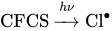
In the upper atmosphere, the photodissociation of normally unreactive chlorofluorocarbons (CFCs) by solar ultraviolet radiation is an important source of radicals (see eq. 1 below). These reactions give the chlorine radical, Cl•, which catalyzes the conversion of ozone to O2, thus facilitating ozone depletion (eq. 2.2–eq. 2.4 below).
| eq. 2.1 |
| eq. 2.2 |
![{\displaystyle {\mathrm {Cl} {\vphantom {A}}^{\bullet }{}+{}\mathrm {O} {\vphantom {A}}_{\smash[{t}]{3}}{}\mathrel {\longrightarrow } {}\mathrm {ClO} {\vphantom {A}}^{\bullet }{}+{}\mathrm {O} {\vphantom {A}}_{\smash[{t}]{2}}}}](https://wikimedia.org/api/rest_v1/media/math/render/svg/fa07f2a9383831fc6e1e76b5c68fc254e6d492f9)
| eq. 2.3 |
![{\displaystyle {\mathrm {O} {\vphantom {A}}_{\smash[{t}]{3}}{}\mathrel {\xrightarrow {\mathrm {h} ~\mathrm {\nu } } } {}\mathrm {O} {}+{}\mathrm {O} {\vphantom {A}}_{\smash[{t}]{2}}}}](https://wikimedia.org/api/rest_v1/media/math/render/svg/3acd85b4a5f671e0a421576bf91c3352bec070c1)
| eq. 2.4 |
![{\displaystyle {\mathrm {O} ~{}+{}\mathrm {ClO} {\vphantom {A}}^{\bullet }{}\mathrel {\longrightarrow } {}\mathrm {Cl} {\vphantom {A}}^{\bullet }{}+{}\mathrm {O} {\vphantom {A}}_{\smash[{t}]{2}}}}](https://wikimedia.org/api/rest_v1/media/math/render/svg/1121aff72c85cf5088e882d39a6b503682da313a)
| eq. 2.5 |
![{\displaystyle {2\,\mathrm {O} {\vphantom {A}}_{\smash[{t}]{3}}{}\mathrel {\xrightarrow {\mathrm {h} ~\mathrm {\nu } } } {}3\,\mathrm {O} {\vphantom {A}}_{\smash[{t}]{2}}}}](https://wikimedia.org/api/rest_v1/media/math/render/svg/afc621f0abb1c9cfc08b3cf82f43d9fc60a29c40)
Such reactions cause the depletion of the ozone layer, especially since the chlorine radical is free to engage in another reaction chain; consequently, the use of chlorofluorocarbons as refrigerants has been restricted.
History and nomenclature
[edit]
Until late in the 20th century the word "radical" was used in chemistry to indicate any connected group of atoms, such as a methyl group or a carboxyl, whether it was part of a larger molecule or a molecule on its own. A radical is often known as an R group. The qualifier "free" was then needed to specify the unbound case. Following recent nomenclature revisions, a part of a larger molecule is now called a functional group or substituent, and "radical" now implies "free". However, the old nomenclature may still appear in some books.[citation needed]
The term radical was already in use when the now obsolete radical theory was developed. Louis-Bernard Guyton de Morveau introduced the phrase "radical" in 1785 and the phrase was employed by Antoine Lavoisier in 1789 in his Traité Élémentaire de Chimie. A radical was then identified as the root base of certain acids (the Latin word "radix" meaning "root"). Historically, the term radical in radical theory was also used for bound parts of the molecule, especially when they remain unchanged in reactions. These are now called functional groups. For example, methyl alcohol was described as consisting of a methyl "radical" and a hydroxyl "radical". Neither are radicals in the modern chemical sense, as they are permanently bound to each other, and have no unpaired, reactive electrons; however, they can be observed as radicals in mass spectrometry when broken apart by irradiation with energetic electrons.[citation needed]
In a modern context the first organic (carbon–containing) radical identified was the triphenylmethyl radical, (C6H5)3C•. This species was discovered by Moses Gomberg in 1900. In 1933 Morris S. Kharasch and Frank Mayo proposed that free radicals were responsible for anti-Markovnikov addition of hydrogen bromide to allyl bromide.[48][49]
In most fields of chemistry, the historical definition of radicals contends that the molecules have nonzero electron spin. However, in fields including spectroscopy and astrochemistry, the definition is slightly different. Gerhard Herzberg, who won the Nobel prize for his research into the electron structure and geometry of radicals, suggested a looser definition of free radicals: "any transient (chemically unstable) species (atom, molecule, or ion)".[50] The main point of his suggestion is that there are many chemically unstable molecules that have zero spin, such as C2, C3, CH2 and so on. This definition is more convenient for discussions of transient chemical processes and astrochemistry; therefore researchers in these fields prefer to use this loose definition.[51]
Depiction in chemical reactions
[edit]In chemical equations, radicals are frequently denoted by a dot placed immediately to the right of the atomic symbol or molecular formula as follows:
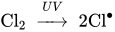
Radical reaction mechanisms use single-headed arrows to depict the movement of single electrons:

The homolytic cleavage of the breaking bond is sometimes drawn with a "fish-hook" arrow.
See also
[edit]- Radical clock
- Electron pair
- Globally Harmonized System of Classification and Labelling of Chemicals
- Hofmann–Löffler reaction
- Free radical research
References
[edit]- ↑ IUPAC Gold Book radical (free radical) PDF Archived 2017-03-02 at the Wayback Machine
- ↑ Anslyn, E. V.; Dougherty, D. A. Modern Physical Organic Chemistry. p. 573, ISBN 978-1-891389-31-3
- ↑ Hicks 2010, p. 231.
- ↑ Griller, David; Ingold, Keith U. (1976). "Persistent carbon-centered radicals". Accounts of Chemical Research. 9: 13–19. doi:10.1021/ar50097a003.
- ↑ Hicks, Robin G., ed. (2010). Stable Radicals. Wiley. pp. 317–318. ISBN 978-0-470-77083-2.
- 1 2 3 4 5 Clayden, Jonathan; Greeves, Nick; Warren, Stuart G. (2012). Organic chemistry (2nd ed.). Oxford: Oxford University Press. ISBN 978-0-19-927029-3. OCLC 761379371.
- ↑ Carey, Francis A.; Sundberg, Richard J. (1984). Advanced Organic Chemistry. Vol. A: Structures and Mechanisms (2 ed.). New York: Plenum. ISBN 0-306-41087-7. LCCN 84-8229.
- ↑ Carey & Sundberg 1984, p. 651. Smith 2023, p. 256 writes: "There is some evidence in favor of the captodative effect, some of it from ESR studies. However, there is also experimental and theoretical evidence against it," with extensive citations on both sides.
- ↑ Über die Darstellung von freiem Methyl Berichte der deutschen chemischen Gesellschaft (A and B Series) Volume 62, Issue 5, Pages 1335–47 Fritz Paneth, Wilhelm Hofeditz doi:10.1002/cber.19290620537
- 1 2 Advanced Organic Chemistry F.A. Carey R.J. Sundberg ISBN 0-306-41198-9
- ↑ Gridnev, Alexei A.; Ittel, Steven D. (2001). "Catalytic Chain Transfer in Free-Radical Polymerizations". Chemical Reviews. 101 (12): 3611–3660. doi:10.1021/cr9901236. PMID 11740917.
- ↑ Monroe, Bruce M.; Weed, Gregory C. (1993). "Photoinitiators for free-radical-initiated photoimaging systems". Chemical Reviews. 93: 435–448. doi:10.1021/cr00017a019.
- ↑ McMurry, John; Emeritus, Professor (2023-09-20). "6.6 Radical Reactions - Organic Chemistry | OpenStax". openstax.org. Retrieved 2025-07-05.
- ↑ March Jerry; (1985). Advanced organic chemistry reactions, mechanisms and structure (3rd ed.). New York: John Wiley & Sons, inc. ISBN 0-471-85472-7
- ↑ Simic, Michael G. (1981-02-01). "Free radical mechanisms in autoxidation processes". Journal of Chemical Education. 58 (2): 125. doi:10.1021/ed058p125. ISSN 0021-9584.
- ↑ Ohligschläger, André; Menzel, Katharina; Ten Kate, Antoon; Martinez, Javier Ruiz; Frömbgen, Christoph; Arts, Josje; McCulloch, Archie; Rossberg, Manfred; Lendle, Wilhelm; Pfleiderer, Gerhard; Tögel, Adolf; Torkelson, Theodore R.; Beutel, Klaus K. (2019). "Chloromethanes". Ullmann's Encyclopedia of Industrial Chemistry. pp. 1–31. doi:10.1002/14356007.a06_233.pub4. ISBN 978-3-527-30673-2.
- ↑ Rossi, Roberto A. (1982-06-01). "Phenomenon of radical anion fragmentation in the course of aromatic SRN reactions". Accounts of Chemical Research. 15 (6): 164–170. doi:10.1021/ar00078a001. ISSN 0001-4842.
- ↑ Su, Wei-Fang (2013), "Radical Chain Polymerization", in Su, Wei-Fang (ed.), Principles of Polymer Design and Synthesis, Lecture Notes in Chemistry, vol. 82, Berlin, Heidelberg: Springer, pp. 137–183, doi:10.1007/978-3-642-38730-2_7, ISBN 978-3-642-38730-2
- ↑ Wolff, Manfred E. (2002-05-01). "Cyclization of N-Halogenated Amines (The Hofmann-Löffler Reaction)". Chemical Reviews. 63: 55–64. doi:10.1021/cr60221a004. Retrieved 2025-07-05.
- ↑ Barton, Derek H. R.; Hesse, Robert H.; Pechet, Maurice M.; Smith, Leslie C. (1979-01-01). "The mechanism of the barton reaction". Journal of the Chemical Society, Perkin Transactions 1: 1159–1165. doi:10.1039/P19790001159. hdl:1893/35137. ISSN 1364-5463.
- 1 2 Anslyn, E. V.; Dougherty, D. A. Modern Physical Organic Chemistry. p. 683, ISBN 978-1-891389-31-3
- 1 2 "12.2: Radical Reactions". Chemistry LibreTexts. 2022-01-18. Retrieved 2025-07-05.
- ↑ Beckwith, A. L. J.; Ingold, K. U. (1980-01-01), de Mayo, Paul (ed.), "Essay 4 - Free-Radical Rearrangements", Organic Chemistry: A Series of Monographs, Rearrangements in Ground and Excited States, vol. 42, Academic Press, pp. 161–310, doi:10.1016/B978-0-12-481301-4.50010-3, retrieved 2025-07-05
- ↑ Chemistry (IUPAC), The International Union of Pure and Applied. "IUPAC - homolysis (H02851)". goldbook.iupac.org. doi:10.1351/goldbook.H02851. Retrieved 2025-07-05.
- ↑ Majhi, Sasadhar (2021-10-01). "Applications of Norrish type I and II reactions in the total synthesis of natural products: a review". Photochemical & Photobiological Sciences. 20 (10): 1357–1378. Bibcode:2021PhPhS..20.1357M. doi:10.1007/s43630-021-00100-3. ISSN 1474-9092. PMID 34537894.
- ↑ Johnson, Robert G.; Ingham, Robert K. (1956-04-01). "The Degradation Of Carboxylic Acid Salts By Means Of Halogen - The Hunsdiecker Reaction". Chemical Reviews. 56 (2): 219–269. doi:10.1021/cr50008a002. ISSN 0009-2665.
- ↑ Li, Liubo; Yao, Yan; Fu, Niankai (2023). "Free Carboxylic Acids: The Trend of Radical Decarboxylative Functionalization". European Journal of Organic Chemistry. 26 (21) e202300166. doi:10.1002/ejoc.202300166. ISSN 1099-0690.
- ↑ Melikyan, Gagik G. (2004), "Carbon–Carbon Bond-Forming Reactions Promoted by Trivalent Manganese", Organic Reactions, John Wiley & Sons, Ltd, pp. 427–675, doi:10.1002/0471264180.or049.03, ISBN 978-0-471-26418-7, retrieved 2025-07-05
- ↑ Anslyn, E. V.; Dougherty, D. A. Modern Physical Organic Chemistry. p. 596, ISBN 978-1-891389-31-3
- ↑ Robert T. Morrison, Robert N. Boyd, and Robert K. Boyd, Organic Chemistry, 6th edition (Benjamin Cummings), 1992, ISBN 0-13-643669-2
- ↑ Broderick, J.B.; Duffus, B.R.; Duschene, K.S.; Shepard, E.M. (2014). "Radical S-Adenosylmethionine Enzymes". Chemical Reviews. 114 (8): 4229–317. doi:10.1021/cr4004709. PMC 4002137. PMID 24476342.
- ↑ Pacher P, Beckman JS, Liaudet L (2007). "Nitric oxide and peroxynitrite in health and disease". Physiol. Rev. 87 (1): 315–424. doi:10.1152/physrev.00029.2006. PMC 2248324. PMID 17237348.
- ↑ Njie-Mbye, Ya Fatou; Kulkarni-Chitnis, Madhura; Opere, Catherine A.; Barrett, Aaron; Ohia, Sunny E. (2013). "Lipid peroxidation: pathophysiological and pharmacological implications in the eye". Frontiers in Physiology. 4: 366. doi:10.3389/fphys.2013.00366. PMC 3863722. PMID 24379787.
- ↑ Floyd, R.A. (1999). "Neuroinflammatory processes are important in neurodegenerative diseases: An hypothesis to explain the increased formation of reactive oxygen and nitrogen species as major factors involved in neurodegenerative disease development". Free Radical Biology and Medicine. 26 (9–10): 1346–55. doi:10.1016/s0891-5849(98)00293-7. PMID 10381209.
- ↑ An overview of the role of radicals in biology and of the use of electron spin resonance in their detection may be found in Rhodes C.J. (2000). Toxicology of the Human Environment – the critical role of free radicals. London: Taylor and Francis. ISBN 978-0-7484-0916-7.
- ↑ Rajamani Karthikeyan; Manivasagam T; Anantharaman P; Balasubramanian T; Somasundaram ST (2011). "Chemopreventive effect of Padina boergesenii extracts on ferric nitrilotriacetate (Fe-NTA)-induced oxidative damage in Wistar rats". J. Appl. Phycol. 23 (2): 257–63. Bibcode:2011JAPco..23..257K. doi:10.1007/s10811-010-9564-0. S2CID 27537163.
- ↑ Mukherjee, P.K.; Marcheselli, V.L.; Serhan, C.N.; Bazan, N.G. (2004). "Neuroprotecin D1: A docosahexanoic acid-derived docosatriene protects human retinal pigment epithelial cells from oxidative stress". Proceedings of the National Academy of Sciences of the USA. 101 (22): 8491–96. Bibcode:2004PNAS..101.8491M. doi:10.1073/pnas.0402531101. PMC 420421. PMID 15152078.
- ↑ Lyons, MA; Brown, AJ (1999). "7-Ketocholesterol". Int. J. Biochem. Cell Biol. 31 (3–4): 369–75. doi:10.1016/s1357-2725(98)00123-x. PMID 10224662.
- ↑ Wu, Defeng; Cederbaum, Arthur I. (2003). "Alcohol, Oxidative Stress, and Free Radical Damage". Alcohol Research & Health: the Journal of the National Institute on Alcohol Abuse and Alcoholism. 27 (4): 277–84. PMID 15540798.
- ↑ Serpone, N; Salinaro, A; Emeline, AV; Horikoshi, S; Hidaka, H; Zhao, JC (2002). "An in vitro systematic spectroscopic examination of the photostabilities of a random set of commercial sunscreen lotions and their chemical UVB/UVA active agents". Photochemical & Photobiological Sciences. 1 (12): 970–81. Bibcode:2002PhPhS...1..970S. doi:10.1039/b206338g. PMID 12661594. S2CID 27248506.
- ↑ Desvals, Arthur; Fortino, Mariagrazia; Lefebvre, Corentin; Rogier, Johann; Michelin, Clément; Alioui, Samy; Rousset, Elodie; Pedone, Alfonso; Lemercier, Gilles; Hoffmann, Norbert (2022-05-16). "Synthesis and characterization of polymethine dyes carrying thiobarbituric and carboxylic acid moieties" (PDF). New Journal of Chemistry. 46 (19): 8971–8980. doi:10.1039/D2NJ00684G. ISSN 1369-9261. S2CID 248165785.
- ↑ Power, Philip P. (2003) [19 July 2002]. "Persistent and stable radicals of the heavier main group elements and related species". Chemical Reviews. 103 (3). American Chemical Society: 789–810. doi:10.1021/cr020406p. PMID 12630853.
- ↑ "Diacyl Peroxides". polymerdatabase.com. Retrieved 2020-12-08.
- ↑ Hayyan, M.; Hashim, M.A.; Anjkut, I.M. (2016). "Superoxide Ion: Generation and Chemical Implications". Chem. Rev. 116 (5): 3029–85. doi:10.1021/acs.chemrev.5b00407. PMID 26875845.
- ↑ Oakley, Richard T. (1988). "Cyclic and Heterocyclic Thiazenes" (PDF). Progress in Inorganic Chemistry. Cyclic and Heterocyclic Thiazenes (section). Vol. 36. pp. 299–391. doi:10.1002/9780470166376.ch4. ISBN 978-0-470-16637-6. Archived from the original (PDF) on 2015-09-23. Retrieved 2011-03-31.
- ↑ Rawson, J; Banister, A; Lavender, I (1995). The Chemistry of Dithiadiazolylium and Dithiadiazolyl Rings**Dedicated to Dr. Z. V. Hauptman, in appreciation of his important contribution to sulfur-nitrogen and carbon-sulfur-nitrogen chemistry. Advances in Heterocyclic Chemistry. Vol. 62. pp. 137–247. doi:10.1016/S0065-2725(08)60422-5. ISBN 978-0-12-020762-6.
- ↑ Montanari, F.; Quici, S.; Henry-Riyad, H.; Tidwell, T. T. (2005). "2,2,6,6-Tetramethylpiperidin-1-oxyl". Encyclopedia of Reagents for Organic Synthesis. John Wiley & Sons. doi:10.1002/047084289X.rt069.pub2. ISBN 0471936235.
- ↑ Kharasch, M. S. (1933). "The Peroxide Effect in the Addition of Reagents to Unsaturated Compounds. I. The Addition of Hydrogen Bromide to Allyl Bromide". Journal of the American Chemical Society. 55 (6): 2468–2496. Bibcode:1933JAChS..55.2468K. doi:10.1021/ja01333a041.
- ↑ Yan, M; Lo, JC; Edwards, JT; Baran, PS (2016). "Radicals: Reactive Intermediates with Translational Potential". J Am Chem Soc. 138 (39): 12692–12714. Bibcode:2016JAChS.13812692Y. doi:10.1021/jacs.6b08856. PMC 5054485. PMID 27631602.
- ↑ G. Herzberg (1971), "The spectra and structures of simple free radicals", ISBN 0-486-65821-X.
- ↑ 28th International Symposium on Free Radicals Archived 2007-07-16 at the Wayback Machine.
| International | |
|---|---|
| National | |
| Other | |
