


// Workers AI · dad joke modeWhat did Chaetopappa ericoides say? I'm a little "hair-brained".
| Chaetopappa ericoides | |
|---|---|
 | |
Scientific classification  | |
| Kingdom: | Plantae |
| Clade: | Embryophytes |
| Clade: | Tracheophytes |
| Clade: | Angiosperms |
| Clade: | Eudicots |
| Clade: | Asterids |
| Order: | Asterales |
| Family: | Asteraceae |
| Genus: | Chaetopappa |
| Species: | C. ericoides |
| Binomial name | |
| Chaetopappa ericoides | |
| Synonyms[1] | |
|
Synonymy
| |

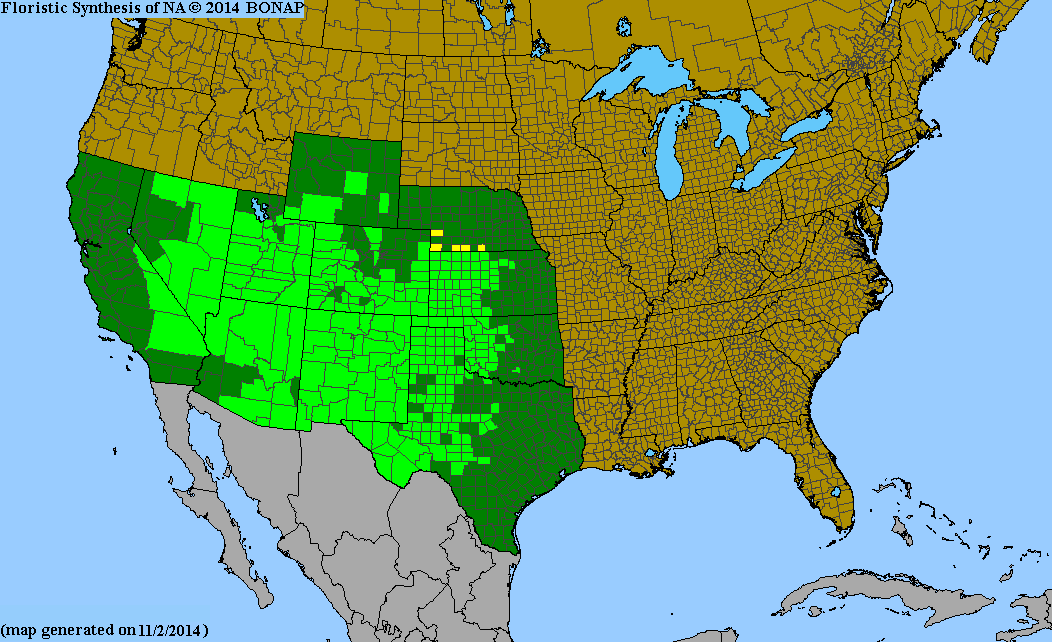
Chaetopappa ericoides is a species of flowering plant in the family Asteraceae known by the common names rose heath and heath-leaved chaetopappa. It is native to the southwestern and western Great Plains regions of the United States, plus northern Mexico. It is found in California, Nevada, Arizona, Utah, New Mexico, Colorado, Wyoming, Texas, Oklahoma, Kansas, Nebraska, Chihuahua, Coahuila, Sonora, Durango, Zacatecas, San Luis Potosí, and Nuevo León.[2][3]
Chaetopappa ericoides is a petite perennial herb reaching heights between 5 and 15 centimeters (2–6 inches). The hairy, glandular stem grows from a woody caudex and branches several times. The green leaves are up to about a centimeter long and are glandular and bristly. The tiny flower head is 1 or 2 centimeters wide with white or pinkish ray florets around a center of yellow disc florets. Each head has a base of pointed purple-tipped greenish phyllaries. The fruit is a hairy, round achene with a bristly white pappus.[4][5]
Uses
[edit]Among the Zuni people, an infusion of whole pulverized plant applied is rubbed on the body for the pain from a cold, swellings, and rheumatism. A warm infusion of the plant is also taken to hasten parturition.[6]
References
[edit]- ↑ The Plant List, Chaetopappa ericoides (Torr.) G.L.Nesom
- ↑ Biota of North America Program 2014 county distribution map
- ↑ SEINET Southwestern Biodiversity, Arizona Chapter, Chaetopappa ericoides photos, description, range map
- ↑ Flora of North America, Rose-heath, Chaetopappa ericoides (Torrey) G. L. Nesom
- ↑ Nuttall, Thomas 1840. Transactions of the American Philosophical Society, new series 7: 299 as Eucephalus ericoides
- ↑ Stevenson, Matilda Coxe 1915 Ethnobotany of the Zuni Indians. SI-BAE Annual Report #30, p.55
External links
[edit]- USDA Plants Profile forChaetopappa ericoides (rose heath)
- {http://www.calflora.org/cgi-bin/species_query.cgi?where-taxon=Chaetopappa+ericoides Calflora Database: Chaetopappa ericoides (Rose heath, Heath leaved chaetopappa)]
- Jepson Manual eFlora (TJM2) treatment of Chaetopappa ericoides
- Southwestern Colorado Wildflowers
- Czech Botany: Chaetopappa ericoides photos — captions in Czech.
- Wildflowers West.org: photos
- UC Calphotos Photos gallery of Chaetopappa ericoides
 | This Astereae article is a stub. You can help Wikipedia by adding missing information. |
 | This Medicinal plants-related article is a stub. You can help Wikipedia by adding missing information. |
- NatureServe secure species
- Chaetopappa
- Flora of Northeastern Mexico
- Flora of Northwestern Mexico
- Flora of the Southwestern United States
- Flora of the South-Central United States
- Flora of the Great Basin
- Flora of the Great Plains (North America)
- Flora of the California desert regions
- Plants used in traditional Native American medicine
- Plants described in 1827
- Astereae stubs
- Medicinal plant stubs