


Gordyene


Gordyene or Corduene[a] (Ancient Greek: Γορδυηνή, romanized: Gordyēnḗ or Κορδυηνή, Kordyēnḗ; Armenian: Կորդուք, romanized: Korduk'; Hebrew: קרטיגיני, romanized: Kartigini;[1] Classical Syriac: Beth Qardu) was an ancient historical region, located on the upper course of the Tigris, south of Lake Van, in present-day southeastern Turkey.
Gordyene was situated between the countries of Armenia, Adiabene, and Atropatene. Since antiquity, the people of Gordyene have been identified with the Karduchoi, a people who inhabited the mountainous area south of the Botan River c. 401 BC. Gordyene became an independent kingdom sometime between 165–164 BC and 95 BC, after the collapse of Seleucid power and before the conquest of Mesopotamia by the Parthians. It was vassalized by the Armenian king Tigranes the Great in the 1st century BC, who overthrew and killed its king. Its subsequent political history is the subject of differing interpretations by scholars. It either regained its independence (as a vassal state of the Parthians) or formed part of the kingdom of Adiabene until its conquest by the Romans under Trajan (r. 98–117). Under Trajan's successor Hadrian (r. 117–138), it either reverted to Adiabene or was granted to Armenia. With the Peace of Nisibis in 298, the Romans gained suzerainty over Gordyene and other territories located, from the Roman perspective, on the far side of the Tigris. The nature of the political relationship between the princes of Gordyene and the kings of Armenia in the 4th century is a matter of scholarly dispute. In 363, the Romans officially ceded Gordyene (which they had apparently already lost by 359) to the Sasanian Empire.
Ancient sources attest to Gordyene's fertility and its wealth of natural resources, such as wheat, wine, pastures, naphtha, and cardamom. Its urban settlements were of strategic significance as they were situated near important mountain passes and river crossings. The archaeological site of Eski Finik (and nearby Eski Hendek) has been identified with Pinaca, one of the cities of Gordyene mentioned by the Greek geographer Strabo. Other archaeological sites in the area have also been connected with Gordyene.
History
Karduchoi
Gordyene originated as the territory of Karduchoi (or Carduchii), a tribe first mentioned in the Anabasis of Xenophon, an eyewitness account of the retreat of the Greek mercenary army of the Ten Thousand to the Black Sea in 401 BC.[2][b] Gordyene is explicitly identified with the Karduchoi in the works of Strabo (died 24 AD) and Pliny the Elder (23/24–79 AD). According to Xenophon's account, the Karduchoi inhabited the mountainous region south of the Kentrites River (today's Botan) and north of the modern-day city of Cizre. Xenophon indicates that the Karduchoi were economically sufficient; they had their own crafts and lived off of agriculture in the mountain valleys. They were a warlike mountain people who specialized in archery and guerrilla warfare. After 401 BC, they expanded beyond their original territory south of the Botan River into the Upper Tigris valley located between the Batman and Khabur rivers. In particular, the rich Silopi plain came under their control.[2][c]

The origin of the Karduchoi is uncertain. According to Michał Marciak, it can only be inferred from the information given by Classical authors such as Xenophon and Plutarch (died after 119 AD) that the Karduchoi were of non-Armenian origin.[2] The Iranologist and Kurdologist Garnik Asatrian considers the Karduchoi to have been an indigenous people inhabiting the area before the arrival of the Iranians.[4] Others have speculated that the Carduchi spoke an Old Iranian language.[5][6][7] The name Karduchoi has been connected with the Akkadian word qardu ("strong," "heroic").[8]
Political history up to 363 AD
.svg)
In the period between the collapse of Seleucid power and conquest of Mesopotamia by the Parthians (i.e. sometime between 165–164 BC and 95 BC), the Karduchoi established an independent kingdom. Gordyene came under Parthian rule either in about 145–141 BCE, together with neighboring Adiabene, or later, during the reign of the Parthian king Mithradates II (122–87 BC); Marciak considers the latter option more probably.[2]
Gordyene was vassalized by the Armenian king Tigranes the Great (r. 95–55 BC), who expanded it by taking territory from Parthian Adiabene.[9] According to Plutarch's Life of Lucullus, the Gordyeni were one of the peoples whose cities Tigranes destroyed so that their inhabitants could populate his new capital of Tigranocerta.[10] The only king of Gordyene who is explicitly identified in ancient sources, Zarbienus, was dethroned and killed by Tigranes in the winter of 71/70 BC.[2] Plutarch reports that Zarbienus sought an alliance with the Romans during Lucullus' campaign against Tigranes. Tigranes discovered his intentions and had him killed along with his wife and children before the Roman forces reached Armenia. When his army arrived in Gordyene, Lucullus honored Zarbienus with rich funeral rites and called him called him his companion and a confederate of the Romans.[11] Lucullus' forces withdrew in the spring of 67 BC, after which Gordyene became the subject of a territorial dispute between Tigranes and the Parthian king Phraates III (r. 69–57 BC). The Parthians took Gordyene by force in 67 or 66 BC, but the territory was soon returned to Armenia through the intervention of Pompey.[12][d]

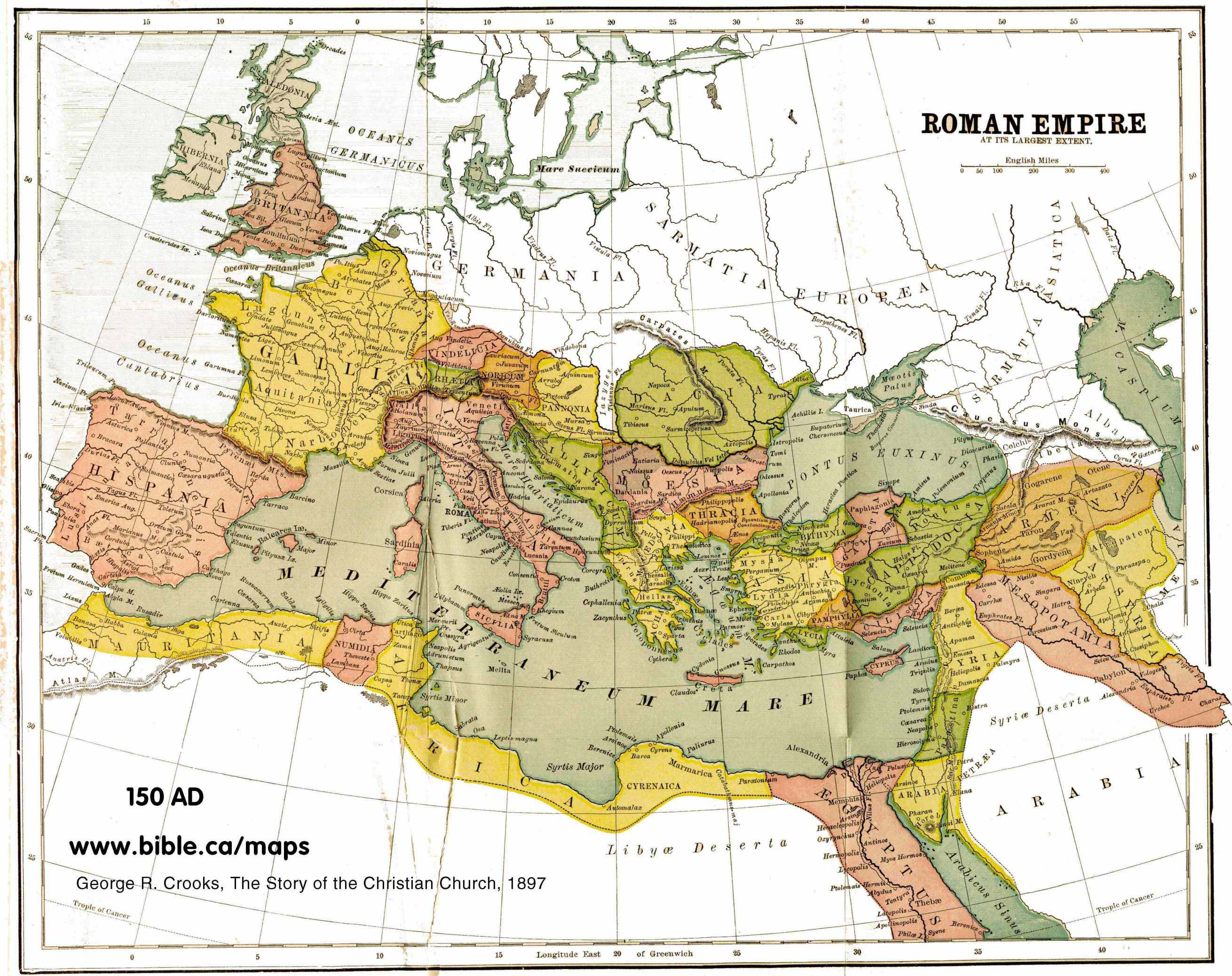
According to Robert H. Hewsen, Gordyene emerged as a separate state in the aftermath of the collapse of Tigranes' empire and was subsequently given to various rulers by the Romans. It then regained its independence as a Parthian vassal state.[14] Marciak, however, states that Gordyene came under the control of the kingdom of Adiabene until at least 115 AD.[2] The Roman emperor Trajan (r. 98–117) conquered Gordyene during his campaign in northern Mesopotamia.[15][16] A certain local ruler named Manisarus is mentioned in the narrative of John Xiphilinus (an 11th-century epitomizer of Dio Cassius) of Trajan's campaign. It has been suggested that this Manisarus was the king of Gordyene at the time, but this identification is rejected by Marciak.[17] Hewsen writes that Trajan's successor Hadrian (r. 117–138) seems to have granted Gordyene to Armenia. Hewsen asserts that Gordyene (as Korchayk) was a part of Armenia at the time of the country's Christianization (c. 314) and thus assumes that it had been part of Armenia for the two intervening centuries since Hadrian's settlement.[3] Marciak, on the other hand, believes that Gordyene likely remained under Adiabenian rule after 115, possibly until 298.[2]
In 298, the Sasanian king Narseh (r. 293–303) was defeated by the caesar Galerius in Armenia and sued for peace.[18] According to the Peace of Nisibis concluded that year, the Romans acquired several territories located, from their perspective, on the far side of the Tigris River, and thus called regiones Transtigritanae: Ingilene, Sophene, Arzanene, "[the territories] of the Karduenoi" (i.e. Gordyene, possibly as part of a larger territory), and Zabdicene.[19] The Romans gained dicio over the transtigritane territories; dicio, as opposed to dominium, meant that internal matters were left to local authorities while Rome gained influence over the territories' foreign policy and possibly the right to a limited military presence.[20] At least in the 4th century, the Romans recruited military units in these territories; the Notitia Dignitatum records the names of three such units: ala quintadecima Flavia Carduenorum, equites sagittarii Cordueni, and cohors quartadecima Valeria Zabdenorum.[21][22] As the 5th-century Armenian history Buzandaran Patmutiwnk depicts the rulers of the territories ceded in 298 as having retained a place in the life of the Armenian kingdom, Hewsen (following Cyril Toumanoff) concludes that a form of "dual subordination" had been established whereby these princes answered to both the Armenian king and the Roman emperor.[23] Marciak and others have criticized this view, considering such an arrangement to be impractical.[24] According to the Buzandaran Patmutiwnk, during the reign of the King Khosrov III of Armenia (r. c. 330 – 338/339) the prince of Korduk (i.e. Gordyene), named Jon, was one of the loyal vassals of the King who suppressed the rebellion of the bdeashkh (military viceroy) of Arzanene.[25]
According the Marciak, the Sasanians must have reacquired Gordyene by 359, as the Roman soldier and historian Ammianus Marcellinus, who was sent on a scouting mission to Gordyene just before the Persian invasion in 359, reports that country was under Persian rule through a satrap named Iovinianus. Iovinianus, whose name is Roman and who once lived in Roman territory as a hostage, may have been a member of a local dynasty that hereditarily ruled Gordyene in the 4th century.[26][e] Gordyene was officially ceded to the Sasanians in 363 and subsequently formed part of the new Sasanian province of Arbayistan.[2]
Corduene was a bishop's see of the Church of the East since at least 424.[29][page needed][30]
6th and 7th centuries
In 578, the Byzantine emperor Maurice defeated the Sassanid army led by Chosroes I, and conquered Corduene and incorporated it once again in the Roman Empire. The Roman army also liberated 10,000 Christian captives of the Sassanids.[31] According to Khwarizmi, Arabs conquered the area along with Nisbis and Tur Abdin in 640.[32]
Geography
Borders
The original territory of the Karduchoi was the mountainous region south of the Botan River (a tributary of the Tigris) and north of the modern-day city of Cizre, on the Tigris, in southeastern Turkey. After 401 BC, the Karduchoi expanded into the Upper Tigris valley located between the Batman and Khabur rivers.[2] According to historian Michał Marciak, the Botan formed the western limit of Gordyene's presence in the Tigris valley for most of its ancient history. Before 95 BC, Gordyene expanded west of the Botan into the region later known as Arzanene; but, the two regions were separate again in the late 3rd and 4th centuries AD. Gordyene bordered Adiabene to the east; Marciak tentatively places the eastern border on the Little Khabur. He also considers it likely that Gordyene expanded north of the Botan River into the region of Moxoene. The Tigris formed its southern border, although there was interaction with the nomads of Mesopotamia which could have led to "at least a slight migration" of people from Gordyene over the Tigris.[33] Geographically, the Gordyaean mountains were often considered to be part of the Armenian Taurus.[2]
An alternative reconstruction of Gordyene's borders and their historical development is given by Robert H. Hewsen. Hewsen proposed that the original "kingdom" of the Karduchoi lay just west of the Zagros Mountains and east of the Little Khabur; this area must have been known as Korchayk or Korchēk to the Armenians.[34] To the west of this kingdom, between the Little Khabur and the Tigris (i.e. where Marciak places the original territory of the Karduchoi)[35] was the district of Tmorik (consisting of two districts: Korduk/Corduene in the west, and Tmorik proper in the east), which was conquered by Armenia in the mid-2nd century BC. Gordyene and Tmorik were apparently combined under the Armenian king Tigranes the Great (r. 95–55 BC), creating the large kingdom of Gordyene which Roman sources knew, spanning from the Tigris to the Zagros Mountains. Gordyene was again separated into two parts after its return to Armenia by the Roman emperor Hadrian (r. 117–138). The western part half was a principality called Korduk, and the eastern half was called Korchēk or possibly Kordrik and was probably crown land of the Armenian kings. Within Armenia, the prince of Korduk was the bdeashkh or vitaxa (military viceroy) of the "Assyrian March" (i.e. defending Armenia's border from the direction of Assyria).[36]
Economy and settlements

Both Classical and Talmudic sources attest to Gordyene's fertility and its wealth of natural resources (wheat, wine, pastures, naphtha, cardamom). Agriculture appears to have developed even further after the expansion of the Karduchoi into the Upper Tigris valley.[2] Strabo records a tradition according to which Gordyene was settled by Gordys, son of Triptolemus, who most notably features in Greek mythology as the founder of agriculture. In Marciak's view, this association with Triptolemus "emphasizes the image of Gordyene as a country of fabulous agricultural wealth."[37] Archaeological evidence indicates that the region was at its most prosperous during the Hellenistic period. Urbanization occurred in Gordyene during this period. Strabo records the existence of three cities of Gordyene, all located near the Tigris: Sareisa, Satalca, and Pinaca. Pinaca, which is called Bezabde and Phaenicha in the 4th-century history of Ammianus Marcellinus, has been identified with the archaeological site of Eski Finik (and nearby Eski Hendek) in modern-day Turkey.[2] Hewsen writes that Pinaca was perhaps the capital of the kingdom of Gordyene.[14] Eski Eruh and Shakh have been tentatively proposed as the sites of both Saresia and Satalca. The archaeological sites of the Kasrik area and Çattepe are also associated with Gordyene.[2] According to Strabo, the Gordyaeans were famed as master-builders and skilled in the making of siege engines, for which purpose they were used by Tigranes the Great.[38]

Gordyene's urban settlements had strategic significance, as they were situated near mountain passes and river crossings. Two important routes were in this area: the Bitlis Pass which took one north through the Taurus Mountains past Lake Van to Armenia and its capital of Artaxata; and the Tigris crossings which lay on the way from Nisibis to Media and Babylonia.[2]
In Jewish sources
This region is traditionally identified with the landing site in Deluge mythology. In the targumim, Noah's landing place after the flood is given as 'Qadron' or 'Qardu'.[39][40] Jacob Neusner identifies the targumim's locations with Corduene.[41] According to the Aggadah, Noah landed in Corduene in Armenia.[citation needed] The early 3rd century BCE Babylonian writer Berossus was also of the opinion that Xisuthros[needs context] landed with his ship in Corduene.[42] Josephus cited the evidence of Berossus as proof that the Flood was not a myth and also mentioned that the remains of the Ark were still visible in the district of Carron,[dubious – discuss] presumably identical with Korduene.[43]
Jewish sources trace the origins of the people of Corduene to the marriage of Jinns of King Solomon with 500 beautiful Jewish women.[44][45][46][47][48]

Gordyene, Karduchoi, and the Kurds
Some identify Gordyene and the Karduchoi with the modern Kurds.[49] It has been suggested that Corduene was proto-Kurdish.[50]
Other modern scholars reject a Kurdish connection.[51][52] Historian John Limbert, writing in 1968, states that "older scholarship believed that the modern Kurds were direct descendants of the Kardukhoi" but that "this view has been widely disputed since the beginning of the twentieth century."[53] According to some scholars, it is more likely that the Kurds were descended from the Cyrtians, who appear in the works of Polybius, Livy, and Strabo.[54][51][55]
There were numerous forms of this name, partly due to the difficulty of representing kh in Latin. The spelling Karduchoi is itself probably borrowed from Armenian, since the termination -choi represents the Armenian language plural suffix -k'.[56] The singular form of the word is "Kardu". Xenophon writes that he learned the name of the tribe from an Armenian.[57][58]
See also
Notes
- ↑ Alternative forms: Gorduene, Cordyene, Cardyene, Carduene, Gordyaea, Korduene, and Gordian.
- ↑ Robert H. Hewsen, however, writes, "it is not at all certain that the Gordyaians were the same people as the Kardoukhoi".[3]
- ↑ See below for Hewsen's alternative reconstruction of Gordyene's geographical evolution.
- ↑ Appian (2nd century AD) writes that Pompey gave Sophene and Gordyene to Ariobarzanes I of Cappadocia after having originally granted it to Tigranes' son (also named Tigranes). Several scholars have doubted that Gordyene could have been assigned to Cappadocia, as this contradicts the testimonies of Plutarch (Life of Pompey 36.2).and Dio Cassius (38.5.4) on the region becoming the subject of a territorial dispute between Armenia and the Parthian Empire and ultimately being given back to Armenia by Pompey. [13]
- ↑ Garsoïan writes that Iovinianus should probably be identified with the Prince Jon of Korduk‘ mentioned in the Buzandaran Patmutiwnk.[27] Hewsen writes "Whether or not the Jon of [Buzandaran Patmutiwnk] is the same individual as the Jovianianus [sic] of [Ammianus Marcellinus], or rather his father or grandfather, is uncertain.[28]
References
Citations
- ↑ Efraim Elimelech Urbach, I. Abrahams, The Sages, 1089 pp., Magnes Press, 1979, ISBN 965-223-319-6, p.552
- 1 2 3 4 5 6 7 8 9 10 11 12 13 14 Marciak 2021.
- 1 2 Hewsen 2001, p. 44.
- ↑ Asatrian 2009, p. 83.
- ↑ Harvey & Slocum 2018.
- ↑ Chahin 1996, p. 109.
- ↑ See the authors cited in Asatrian 2009, p. 83, note 34.
- ↑ Marciak 2017, p. 217.
- ↑ Gray 2015.
- ↑ Plutarch, Life of Lucullus, 26.1.
- ↑ Plutarch, Life of Lucullus, 29.6–8.
- ↑ Marciak 2017, p. 245.
- ↑ Marciak 2017, pp. 132, 244–245.
- 1 2 Hewsen 2001, p. 56.
- ↑ Marciak 2017, pp. 246–247.
- ↑ Hewsen 1988–1989, p. 282.
- ↑ Marciak 2017, pp. 246–248.
- ↑ Frye 1983, pp. 130–131.
- ↑ Marciak 2017, pp. 37–38, 188–189.
- ↑ Marciak 2017, p. 249.
- ↑ Lightfoot 2005, p. 490, note 53.
- ↑ Marciak 2017, p. 144.
- ↑ Hewsen 1988–1989, pp. 283–284.
- ↑ See Marciak 2017, pp. 147–154 and the authors cited in note 242.
- ↑ Buzandaran Patmutiwnk 3.9 (Garsoïan 1989, pp. 76–77).
- ↑ Marciak 2017, pp. 145, 248–250, citing Ammianus Marcellinus 18.6.20.
- ↑ Garsoïan 1989, p. 381.
- ↑ Hewsen 1988–1989, p. 284.
- ↑ Wilmshurst 2011.
- ↑ The Acts of Mar Mari the Apostle, page 15, Amir Harrak, Published 2005 BRILL, 110 pages, ISBN 90-04-13050-0
- ↑ George Frederick Young,East and West Through Fifteen Centuries: Being a General History from B.C. 44 to A.D. 1453, Vol.II, 674 pp., Longman, Green and Co. Publishers, 1916, p.336
- ↑ Palmer 1990, p. 158.
- ↑ Marciak 2017, p. 202.
- ↑ Hewsen 1988–1989, p. 289.
- ↑ Marciak 2017, pp. 198–199.
- ↑ Hewsen 1988–1989, pp. 289–294.
- ↑ Marciak 2017, p. 210.
- ↑ Strabo 16.1.24.
- ↑ "Targum Jonathan Genesis 8:4". Sefaria.org. Retrieved 15 May 2020.
- ↑ "Targum Onkelos Genesis 8:4". Sefaria.org. Retrieved 15 May 2020.
- ↑ Jacob Neusner, The Jews in Pagan Armenia, Journal of the American Oriental Society, pp.230–240, 1964, p.233
- ↑ Bernhard Heller, Ginzberg's Legends of the Jews, The Jewish Quarterly Review, pp. 51–66, Center for Advanced Judaic Studies, University of Pennsylvania, 1933, p. 57
- ↑ Louis H. Feldman, Josephus' Portrait of Noah and Its Parallels in Philo, Pseudo-Philo's Biblical Antiquities and Rabbinic Midrashim, Proceedings of the American Academy for Jewish Research, pp.31–57, 1988, p.47
- ↑ Baron Patrick Balfour Kinross, Within the Taurus: a journey in Asiatic Turkey, 1970, 191 pages, see p. 89
- ↑ George Smith, The Cornhill Magazine, Volume 167, 1954, sp. 228
- ↑ Peter Schäfer, Catherine Hezser, The Talmud Yerushalmi and Graeco-Roman Culture, Volume 3, Mohr Siebeck, 2002 – 486 pages, s p. 80
- ↑ Adolf Büchler, Studies in Jewish history, Oxford University Press, 1956, 279 pages, s p. 84
- ↑ Israel Abrahams, Adolf Büchler, The Foundations of Jewish life: three studies, Arno Press, 1973, 512 pages, s p. 84
- ↑ "Kurds. The Columbia Encyclopedia, Sixth Edition. 2001–07". Archived from the original on 18 October 2006. Retrieved 31 January 2006.
- ↑ Hewsen 1988–1989, p. 281.
- 1 2 Marciak 2017, pp. 220–221.
- ↑ Asatrian 2009, p. 82.
- ↑ Limbert 1968, p. 44.
- ↑ Dandamayev 1990, p. 806.
- ↑ Wiesehöfer 2006a.
- ↑ M.Th. Houtsma, E.J. Brill's first encyclopaedia of Islam, 1913–1936, ISBN 90-04-08265-4, see p.1133
- ↑ Limbert 1968, p. 44: "The kh ending of their name is apparently an Armenian plural ending of Kardu, for Xenophon writes that he learned the name of the tribe from an Armenian".
- ↑ G. R. Driver (1923), "The Name Kurd and Its Philological Connexions", The Journal of the Royal Asiatic Society of Great Britain and Ireland, Jul. 1923, No. 3 (Jul. 1923), pp. 393–403
Bibliography
- Asatrian, Garnik (2009). "Prolegomena to the Study of the Kurds". Iran and the Caucasus. 13 (1). Brill: 1–57. doi:10.1163/160984909X12476379007846. JSTOR 25597392. (registration required)
- Cameron, Hamish (2018). Making Mesopotamia: Geography and Empire in a Romano-Iranian Borderland. Brill. ISBN 978-9004388628.
- Chahin, M. (1996). Before the Greeks. Cambridge: Lutterworth Press. ISBN 978-0-7188-2950-6.
- Dandamayev, Muhammad (1990). "Carduchi". In Yarshater, Ehsan (ed.). Encyclopædia Iranica. Vol. IV/7: Calendars II–Cappadocia. London and New York: Routledge & Kegan Paul. p. 806. ISBN 978-0-71009-130-7.
- Frye, Richard N. (1983). "The Political History of Iran under the Sassanians". In Yarshater, Ehsan (ed.). The Cambridge History of Iran: The Seleucid, Parthian and Sasanian Periods. Vol. 3(1). Cambridge: Cambridge University Press. ISBN 0-521-20092-X.
- Garsoïan, Nina G. (1989). The Epic Histories Attributed to Pʻawstos Buzand (Buzandaran Patmutʻiwnkʻ). Cambridge, MA: Harvard University Press. ISBN 0-674-25865-7.
- Gray, Eric William (22 December 2015). Grig, Lucy (ed.). "Gordyene". Oxford Classical Dictionary (Online ed.). doi:10.1093/acrefore/9780199381135.013.2868. Retrieved 18 September 2026.
- Harvey, Scott L.; Slocum, Jonathan (2018). "Old Iranian Online: Series Introduction". The University of Texas at Austin Linguistics Research Center. Archived from the original on 24 September 2018. Retrieved 25 October 2006.
- Hewsen, Robert H. (1988–1989). "Introduction to Armenian Historical Geography IV: The Vitaxates of Arsacid Armenia. A Reexamination of the Territorial Aspects of the Institution (Part One)". Revue des Études Arméniennes. 21: 271–319.
- Hewsen, Robert H. (2001). Armenia: A Historical Atlas. University of Chicago Press. ISBN 0-226-33228-4.
- Lightfoot, C. S. (2005). "Armenia and the Eastern Marches". In Bowman, Alan; Cameron, Averil; Garnsey, Peter (eds.). The Cambridge Ancient History. Vol. 12: The Crisis of Empire, AD 193–337 (2nd ed.). Cambridge University Press. pp. 481–497. doi:10.1017/CHOL9780521301992.020. ISBN 9781139053921.
- Limbert, John (1968). "The Origins and Appearance of the Kurds in Pre-Islamic Iran". Iranian Studies. 13 (2). Cambridge University Press: 41–51. doi:10.1080/00210866808701350. JSTOR 4309997. (registration required)
- Marciak, Michał (2017). Sophene, Gordyene, and Adiabene: Three Regna Minora of Northern Mesopotamia Between East and West. BRILL. ISBN 978-9004350700.
- Marciak, Michał (2021). "Gordyene". In Yarshater, Ehsan (ed.). Encyclopædia Iranica (Online ed.). Encyclopædia Iranica Foundation.
- Palmer, A. N. (1990). Monk and Mason on the Tigris Frontier: The Early History of Tur Abdin. Cambridge University Press. p. 158. ISBN 0-521-36026-9.
- Toumanoff, Cyril (1961). "Introduction to Christian Caucasian History: II: States and Dynasties of the Formative Period". Traditio. 17. Cambridge University Press: 1–106. doi:10.1017/S0362152900008473. JSTOR 27830424. S2CID 151524770. (registration required)
- Wiesehöfer, Josef (2006a). "Carduchi". In Salazar, Christine F.; Landfester, Manfred; Gentry, Francis G. (eds.). Brill's New Pauly. Brill Online.
- Wiesehöfer, Josef (2006b). "Gordyaea". In Salazar, Christine F.; Landfester, Manfred; Gentry, Francis G. (eds.). Brill's New Pauly. Brill Online.
- Wilmshurst, David (2011). The Martyred Church: A History of the Church of the East. London: East & West Publishing. ISBN 9781907318047.
External links
- Corduene or Gordyene, Classical Dictionary of Biography, Mythology and Geography.
- Geography, Strabo, Book XVI, Chapter 1, Section 24.
- Map of Gordyene between Assyria and Lake Van
|  | |
† Italy was never constituted as a province, instead retaining a special juridical status until Diocletian's reforms. | ||